A Plastic Surgeon’s Honest Perspective: Fillers, Lip Lifts, Threads, and What’s Actually Happening Inside Your Face
Featuring Dr. Ben Talei, Facial Plastic Surgeon, Beverly Hills
He was our first plastic surgeon guest on Facially Conscious. That is not an accident. Dr. Ben Talei is the Beverly Hills facial plastic surgeon behind the Cupid Lift and the AuraLyft. He trained at UC San Diego for medical school, did his residency in Head and Neck Surgery at Cornell, and completed a fellowship in facial plastics before opening his Beverly Hills practice in 2014. He teaches internationally as a professor in Monterrey and Mexico City, and publishes his surgical techniques in peer-reviewed journals, including the Aesthetic Surgery Journal. He also, it turns out, has very little interest in being diplomatic when the truth would be more useful.
In this episode, Dr. Vicki Rapaport, Trina Renea L.E., and Julie Falls asked him everything we'd been storing up for exactly this conversation. Here is what we learned.
What Years of Filler Actually Do to a Face
Dr. Vicki opened with the question that lives in the background of every filler conversation: if a patient has been doing fillers, threads, and heat treatments for years, what does a surgeon actually find when they go in?
Dr. Talei was precise. Every intervention — filler, radiofrequency, threads, lasers — changes the tissue to some degree. Done tastefully and skillfully, the effects are manageable. Done repeatedly and aggressively over the years, the soft tissue becomes denser and harder to work with. Not impossible to operate on — he was clear about that — but more complex. A less experienced surgeon might stop short and give a partial result. A surgeon with real skill can navigate the obstacle course.
The permanent fillers — silicone, Artefill, Bellafill — he consistently counsels against. They keep forming scar tissue indefinitely. There is no compelling advantage over temporary options.
Sculptra, Radiesse, Hyaluronic Acid: The Honest Version
Dr. Talei explained what Sculptra actually does in precise terms: particles injected into the mid-layer of the face cause the body to react and form scar tissue — small granulomas, grayish in color, that mimic fat well enough to create the volumizing effect. The “collagen stimulation” framing is, in his words, a twisted way of describing scar tissue formation. He'll use Sculptra for the right patient — someone very gaunt or with HIV lipodystrophy, which was the original intended use. But patients deserve to know what is actually happening.
Radiesse he finds limited advantage in. In soft tissue, it can form permanent calcium nodules — a significant problem if placed superficially near thin-skin areas like the under-eye.
His consistent preference: hyaluronic acid fillers. Predictable. Workable. And if something goes wrong — dissolve it. The safety net is built in.
On practitioner quality, he was equally direct. About 10% of practitioners, in his view, are skilled enough that he would trust them with his own face. The rest, he would not. That is not arrogance. That is an honest assessment of where expertise actually sits in this industry.
The Cupid Lift: What It Is and Why It Works
The subnasal lip lift has existed since 1971, traced to Cardoso and Sperli. For decades, however, it was limited largely to older, fair-skinned patients because scarring was significant. Dr. Talei solved this by applying the same principle that transformed the modern facelift: working in the deep plane.
In traditional facelifting, pulling the skin or muscle created tension — and tension created the pulled, unnatural look that gave plastic surgery a bad reputation for decades. The deep plane approach releases the middle glide layer of the face, moves it, and sets it back down. No pulling. No tightening. Which means no pulled look.
Dr. Talei applied the same logic to the lip. He mapped anatomy that had never been properly described, built the deep plane release into the lip lift, and published an 823-patient series in the Aesthetic Surgery Journal — his first paper on the technique. More recently, he published the Cupid Lift algorithm in the same journal: a mathematical design guide for surgeons learning the technique, because, as he explained, if he couldn't teach it repeatably, the failure was his.
Dr. Vicki explained the age rationale clearly: the distance between the base of the nose (the columella) and the top of the upper lip is very short on babies. It elongates as we age. Restoring that ratio surgically is one of the most reliable markers of a youthful face — and one of the least detectable interventions when done well.
The procedure takes about an hour under local anesthesia. The first week: significant swelling. By three months: most patients are unrecognizable as having had anything done. In the majority of cases, results are essentially permanent — or close enough that a second procedure, if ever needed, would be decades away.
Cost: $5,000 at Cupid Center training locations; up to $15,000 with Dr. Talei directly.
Trina raised the jowl question: what happens if a patient also has downward pull at the corners of the mouth? Dr. Talei's answer: a subnasal lift on a patient with angular depression at the corners can exaggerate that downturn. A skilled surgeon assesses the whole picture — what needs to be treated together, what might be made worse in isolation. That is the assessment a patient should expect before any surgical conversation.
Thread Lifts: What They Can Do, What They Cannot, and How Many Is Too Many
Trina brought up threads — noting that she was hearing more about them from clients and had found Dr. Talei's Instagram commentary while researching. His position was direct: threads do not lift. They contract and stiffen, which gives the appearance of a lift. The honest version to give a patient: “I am tightening this area. It will last somewhere between three and nine months. That range is real because I genuinely don't know exactly how long it will hold for you.” That, he said, is a responsible way to offer the procedure.
The irresponsible version: telling patients that threads form collagen, are healthy, and should be repeated indefinitely.
On how many is too many: once a year for three years, he said, is probably fine. Every six months for a decade is where soft tissue quality begins to change permanently. And when surgeons see tissue changes in patients who've had threads, it is almost never from threads alone — it is from everything cumulatively: filler, heat treatments, threads, all of it accumulating over time.
He noted one thread application he finds genuinely useful: MyEllevate, developed by Dr. Greg Mueller — an internal neck lift technique that uses sutures differently from how most practitioners use threads. A legitimate procedure, in his view.
Radiofrequency: What Dr. Talei Actually Recommends
For actual skin tightening, his recommendation was unambiguous: Profound by Syneron Candela, by a clear margin. Bipolar injectable radiofrequency — pairs of needles depositing energy between them in a controlled field rather than dispersing it outward. One treatment. A week of downtime. Results that reduce visible shadows by roughly 30% and produce elastin, hyaluronic acid, and collagen, not just heat contracture.
Morpheus8 he considers a strong second, with more versatility for shallower work on pores, acne, and surface texture.
Ultherapy, despite being among the most popular devices, receives a more cautious assessment. As Dr. Talei noted: when something is exceedingly popular in aesthetic medicine, that is often a reason to look more carefully — not less.
On lasers: he finds them genuinely transformative for clearing sun damage. But he does not consider them something to repeat indefinitely. Clear and Brilliant on the gentle end carries very low risk. CO2 and Fraxel require experience and the right patient. He is not against lasers. He is against using them without understanding what they actually do.
The Teaching Philosophy
One of the most memorable exchanges in this episode had nothing to do with procedures. When the topic turned to teaching, Dr. Talei was clear: competition is for the mediocre. The greatest surgeons have an open-door policy. They teach everything because someone taught them, and to hoard that knowledge as if you invented it would be an offense to the people who gave it to you.
Trina drew the connection directly to her own practice. She trains estheticians the same way: train them, then they work on you, then you work on them, then they work on you again. Quality control is the standard — not just sending someone out after a demonstration.
Dr. Talei is building this philosophy into Cupid Lips on Sunset, a dedicated lip procedure center opening soon in Beverly Hills, which will include a teaching center and the Cupid Compendium — an online video library of techniques for injectors and surgeons who want real training, not just whoever they happen to work for.
On the Future of Plastic Surgery
Dr. Talei sees regenerative medicine improving recovery timelines significantly in the coming years. But the shift he finds most interesting already happened: social media. Since approximately 2013, practitioners can no longer hide behind a technique that stopped evolving. Patients see results side by side. They ask why their surgeon isn't doing what someone else is doing. After enough of those conversations, surgeons have to adapt — or get left behind. The result, he said, has been more dramatic improvement in surgical outcomes over the past seven years than in the previous fifty combined.
Join the Facially Conscious Substack for extended content and deeper dives → https://faciallyconscious.substack.com/
And for Trina's personal take on this episode — as the esthetician in the room — read her Substack → https://trinarenea.substack.com/
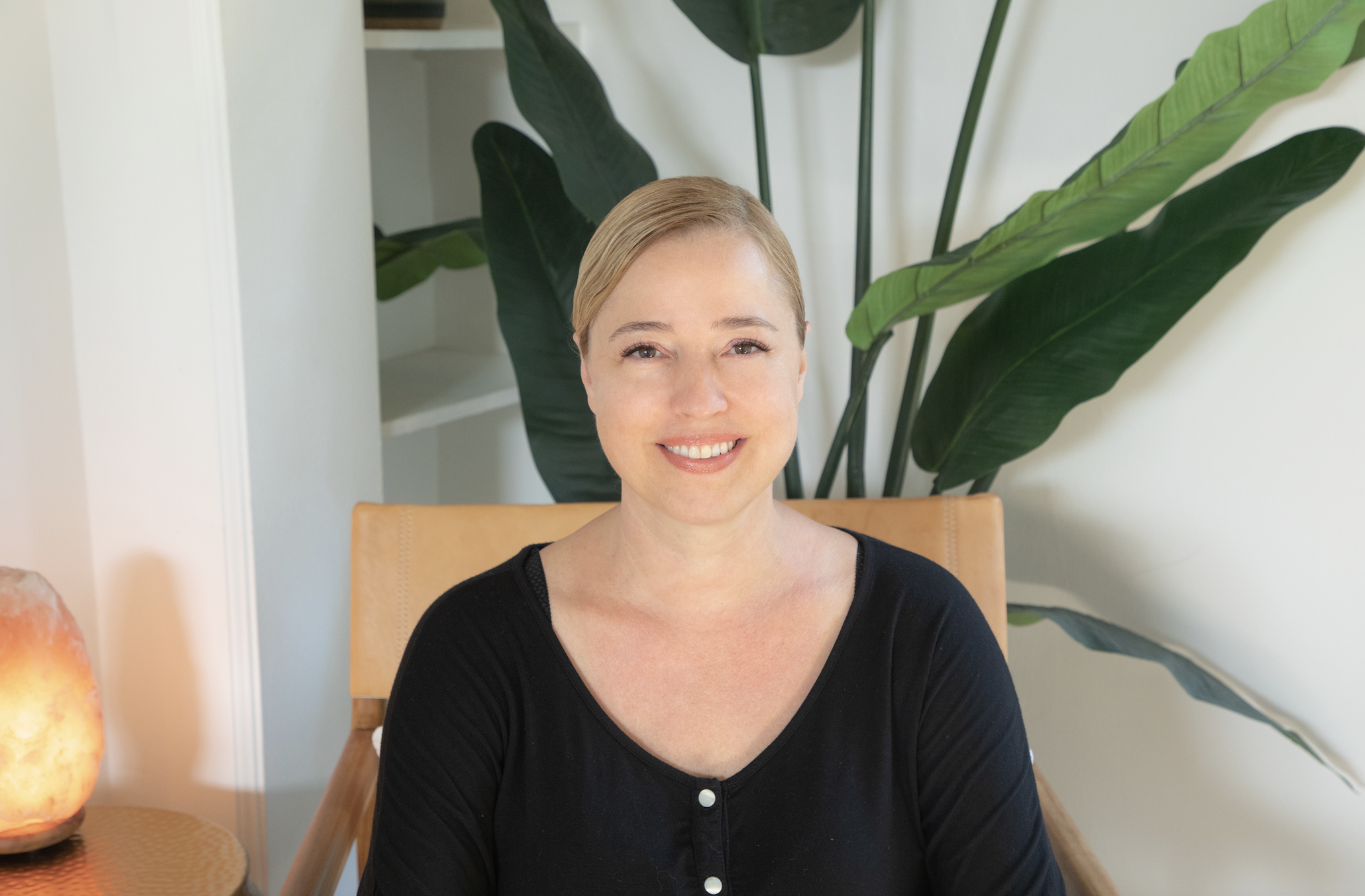
The Skin Master
Co-host | When Trina Renea became an esthetician she realized the key to success was lifelong learning - a goal that sets her apart from most skin care practitioners.
For over 30 years, she’s explored the fields of cosmetic chemistry, medical esthetics, dermatology, and plastic surgery, becoming an expert in a wide expanse of professional skin care brands, equipment, and treatments. She is a member of the Society of Cosmetic Chemists with three certifications in cosmetic sciences from UCLA and continues to attend spa, medical, esthetic, and scientific conferences worldwide.
Now considered a skin master due to her broad expertise, Trina is a consultant to the Southern California beauty industry and medical esthetic community, selecting and training staff, developing treatments, guiding product selection, and helping professionals best serve their clients.
In 2004, she founded the Facial Bungalow, a clinical spa offering advanced skin care technologies where she continues to work one-on-one with clients to this day. In 2008 she created Trina Renea Skincare.