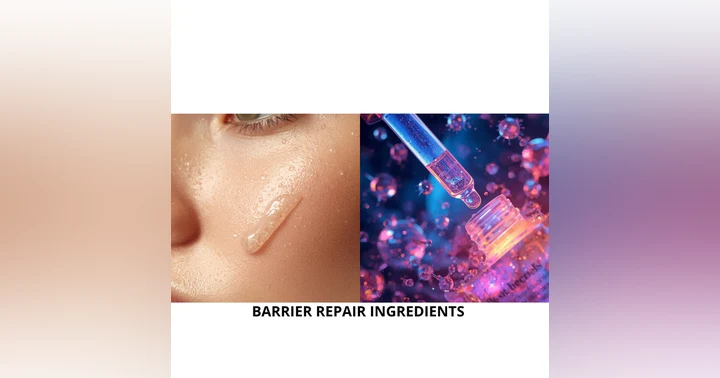
Skin Barrier Repair Explained: Signs of a Damaged Barrier, Key Ingredients & How to Restore Skin Health

 Apple Podcasts
 Spotify
 Castro
 RSS Feed
 In this episode of the Facially Conscious Podcast, hosts Trina Renea and Rebecca Gadberry take a focused, science-informed look at one of the most essential aspects of skin health: the skin barrier.
Often referred to as the skin’s first line of defense, the barrier plays a critical role in hydration, inflammation control, acne management, and overall skin resilience. This conversation explores how barrier repair ingredients—including ceramides, plant oils, antioxidants, and occlusives—work together to support and protect the skin.
We break down commonly discussed practices like slugging, explain the role of oxidation in skin aging and barrier disruption, and clarify how different ingredient categories function within a well-formulated skincare routine. Whether you’re experiencing dry skin, breakouts, sensitivity, or simply want to understand how to care for your skin more intentionally, this episode offers grounded guidance rooted in professional esthetic knowledge and skincare science.
This discussion is designed to help listeners better understand how to support the skin barrier without overcomplicating routines or relying on trends—making it especially helpful for skincare-curious individuals, professionals, and anyone feeling overwhelmed by conflicting skincare advice.
In this episode, we cover:
What the skin barrier is and why it matters
How ceramides, oils, and antioxidants support barrier repair
The role of occlusives and when practices like slugging may be appropriate
How oxidation affects skin health
Practical guidance for building a barrier-supportive skincare routine
Have a question? Send us an email at info@faciallyconscious.com
LIKE, FOLLOW & REVIEW US ON INSTAGRAM, & WHERE YOU LISTEN TO PODCASTS!
Visit our website www.faciallyconscious.com
Linktree | Facially Conscious
Join our new Patreon and Substack for more content from Facially Conscious
Follow Our Hosts On Instagram
Trina Renea - Medically-trained master esthetician and celebrities’ secret weapon
Linktree | Trina Renea, @trinareneaskincare, trinarenea.com and Substack
Julie Falls- Our educated consumer is here to represent you! @juliefdotcom
Dr. Vicki Rapaport -Board Certified dermatologist with practices in Beverly Hills and Culver City @rapaportdermatology and https://www.rapdermbh.com/
Rebecca Gadberry - Our resident skincare scientist and regulatory and marketing expert. @rgadberry_skincareingredients
Credits
Produced and Recorded by The Field Audio
[Intro] Hey, everyone. Welcome back to Facially Conscious, with myself, Trina Renea, esthetician, and Rebecca Gadberry, the cosmetic ingredient guru, highly acclaimed educator, and award-winning journalist. She is the cosmetic industry leader.
We are gathered here together with you to talk about this crazy world of aesthetics. It's confusing out there in this big, wide world. That's why we're here to help explain it to you all, subject by subject. We will be your go-to girls. And from our perspective, without giving medical advice, we will keep things facially conscious.
Let's get started.
01:01 Trina Renea: Hello, everybody, and welcome back to our update on the skin barrier, a continuation, actually, of Episode 17 about skin barrier. We wanted to go a little more deep into some of the most common barrier repair ingredients.
And, of course, we're going to do that with Ms. Rebecca Gadberry.
01:23 Rebecca Gadberry: And Miss Trina Belton.
01:25 Trina Renea: I'm here.
01:27 Rebecca Gadberry: Hello.
01:26 Trina Renea: I actually in the business go as Trina Renea.
01:30 Rebecca Gadberry: I know. I forgot.
01:31 Trina Renea: Trina Belton is my secret married name.
01:34 Rebecca Gadberry: Should we edit that out then?
01:37 Trina Renea: No, it's fine.
01:38 Rebecca Gadberry: Okay.
01:40 Trina Renea: No, it's fine. I go as both, actually, but it's just easier to not have to change it in business.
01:47 Rebecca Gadberry: Yes, when you were your punk rocker star yourself, you.
01:50 Trina Renea: Yes. Shh. Just kidding. No, I actually love that part of my life. I'm proud of it. But I also love this part of my life, so this is so fun.
02:03 Rebecca Gadberry: There's so many different parts of life to love, aren't there?
02:06 Trina Renea: So many different chapters. Hopefully, all of us get to live different chapters, right?
02:12 Rebecca Gadberry: I hope so, yeah.
02:13 Trina Renea: Yeah.
02:14 Rebecca Gadberry: My husband said last night, “I think we just got into Chapter Four.”
02:18 Trina Renea: Oh, nice.
02:20 Rebecca Gadberry: I hope, I don't know what that means yet. I'm going to talk to him about that.
02:25 Trina Renea: You didn't ask him when he said it? “What does that mean?”
02:27 Rebecca Gadberry: Well, we were walking down some stairs.
02:30 Trina Renea: Did one of you trip?
02:31 Rebecca Gadberry: No, but I thought I might if I paid attention to what he said. Anyway, we're getting off into the philosophy part of life. Let's get back to skincare.
02:42 Trina Renea: Yes. Well, welcome, everybody, to Facially Conscious. And we're going to get a little deeper into some skin barrier ingredients for those of you who want to know stuff like that. That's what these little episodes are for, to be a little more scientific and chemistic. What's that word?
03:01 Rebecca Gadberry: Chemistic. I like the word. I don't know if it exists.
03:05 Trina Renea: Get more into chemistry.
03:08 Rebecca Gadberry: Chemistic. I like that.
03:09 Trina Renea: You'll be our chemistic person.
03:12 Rebecca Gadberry: Oh, a mystic chemistic.
03:17 Trina Renea: All right. Let's hear about these barrier repair ingredients because, right now, this weather we are in February, it's cold. Everybody's skin is dried out. So what are we supposed to do about that? What do you look for? I know what to look for but our audience doesn't, so let's tell them some things, some ingredients to look for.
03:43 Rebecca Gadberry: Right.
03:42 Trina Renea: I like to talk about the ingredients with people, not product specific because there's a million products. So I'd rather have them know what to look for and that's what I like to educate.
03:42 Rebecca Gadberry: And where to look, because you can have the name of an ingredient, then you're standing in a store or you're talking to your esthetician or your doctor about the ingredient but you have no way to source it for your skin. So how do you look for that?
Well, here's a little tip that I've used for years. That is, when you go to Google, you can, at the very top, there's all those little words that say “All” and “Images”. There's a word that says “Shopping”. Click on Shopping and then enter the ingredient that you're looking for. You'll get a bunch of returns on products that contain that ingredient.
04:35 Trina Renea: Interesting. I never thought to do that. It's so smart.
04:39 Rebecca Gadberry: Yeah. Or you can talk to a knowledgeable esthetician, like yourself. And when you say, “Well, I want something with ceramides in it.” You're going to know the product that you carry that has ceramides.
But if you go into a drugstore or even possibly a Sephora, which I've done repeatedly over the years, and asked for a product that contains ceramides, a lot of people don't know their product lines, so they don't know how to find it.
05:12 Trina Renea: Well, especially the salespeople in Sephora.
05:12 Rebecca Gadberry: I'm not going to trash the salespeople in Sephora.
05:12 Trina Renea: I am. Just kidding.
05:20 Rebecca Gadberry: I've met a lot of good ones.
05:21 Trina Renea: No, there are, but, I mean, it is a selling…
05:24 Rebecca Gadberry: Environment.
05:25 Trina Renea: Yes. So, ingredients I would not trust your salesperson to know. They know about products. They have to learn about them when they're selling them, but they're often not savvy on ingredients. If you get a good one in there, sure. They should hire estheticians.
05:25 Rebecca Gadberry: Some do. As a matter of fact, I know some Sephora that do hire estheticians, but, again, that's another story.
05:55 Trina Renea: So let's talk about the skin barrier.
05:56 Rebecca Gadberry: Yes, let's talk about ceramides.
05:59 Trina Renea: Ceramides, that's such a good one.
05:59 Rebecca Gadberry: Let’s talk about ceramides because we started there.
06:02 Trina Renea: Such a good ingredient, right?
06:03 Rebecca Gadberry: Yes. And there are some product lines, like CeraVe, that you can find online or you can find in your drugstore or supermarket that do contain ceramides. You can tell because “cera” is in the name of the product.
But usually you're not that lucky. It's not that easy. So you can just go online and enter the word “ceramide”, which begins with the C, not an S.
06:30 Trina Renea: So did CeraVe make their product line specifically because of the ceramides? Was that their whole log?
06:36 Rebecca Gadberry: I don't work for CeraVe, so I really don't know what they are up to.
06:42 Trina Renea: Do you? I feel like you do.
06:44 Rebecca Gadberry: Anyway, ceramide is spelled C-E-R-A-M-I-D-E. There are a lot of different ceramides that are in the skin. They're part of the mortar that Dr. Vicki and you and I have been talking about for several episodes now. And that mortar is not only made up of those natural moisturizing factors that we were talking about in the Hydrating Ingredient episode, but they also form the fatty part or the lipid part, the water-holding part of the lipids.
So if you think of the lipids kind of like a layer cake, they occur in layers between the skin cells. So you'll have a water-loving layer, then you'll have an oil-loving layer, then you'll have a water-loving layer, then your oil-loving layer. There will be an illustration in the show notes about this so you can visualize it.
The cell makes those lipids. The reason that you have...
07:49 Trina Renea: The lipids are a cake, is that what you’re saying?
07:53 Rebecca Gadberry: They're like that layer cake. And so you have an oil-loving layer, a water-loving layer, and an oil-loving layer. We know that oil, when it surrounds water, is going to hold the water in. You can't evaporate water through the oil or through the lipids. Lipids are oil-loving. So they layer the moisture between the skin.
If you only put in water and you don't put in enough lipids and your skin isn't making enough lipids, you're going to let the water go where it's going to evaporate just as easily as you put it in. For instance, when you take a bath, you can feel a little dry when you get in the bath or maybe your skin feels normal. You get in the bath, you're in there for a while, and you notice your skin is getting pruney, especially your fingertips.
08:43 Trina Renea: Yeah, why does that happen?
08:45 Rebecca Gadberry: Because the skin is taking in so much water.
08:49 Trina Renea: But your skin would turn into a balloon instead of shriveling.
08:52 Rebecca Gadberry: Thankfully, your barrier is working in most places. But in the fingertips and in the tips of your toes, you don't have the same kind of barrier that you do on the rest of your body. That's a really big sign that there's too much water in your skin, that pruney look. It doesn't mean that you have the same amount of water in the rest of your skin, but you have a lot of water in your skin.
So when you get out, that water will evaporate. And when it evaporates, it can evaporate more water than what you started with when you got into the bathtub, which makes your skin dry and tight. What you need to do is to keep that water in the skin. What you can do is to do what's called slugging, which is a new concept, which I used to do when I was a teenager in the ‘60s. That's where you take a super rich product, like the CeraVe or something like that, or you take petroleum jelly, like Vaseline. You put it on the surface of your skin while you're still wet getting out from the bath. That helps to seal the water in. So you'll supersaturate the skin but you'll keep the water in. It won't evaporate.
10:11 Trina Renea: So when your skin is wet, can you put— I’ve never tried to actually put an Aquaphor or Vaseline over it, because I think of it as like oil. Even though it's not oil or grease almost. Like you feel like it's not going to stick to your skin with the water on there.
10:30 Rebecca Gadberry: What I used to do, and I'm sure that you can do this too today, is just tamp it down with a towel first to get any excess water so it's not repulsing the product you're putting on. Then put it on while the skin is still moist.
10:46 Trina Renea: Right, right. Gotcha. So, towel dry a little bit but just don't wait much time before you put it on right away.
10:53 Rebecca Gadberry: Put it on right away and just pat your skin dry. Don't towel it down.
10:58 Trina Renea: And that will help hold the water in.
10:59 Rebecca Gadberry: Right.
11:00 Trina Renea: Because the oils, like in the ceramides, like you said, surround the water and hold it in so it will actually go into your skin.
11:08 Rebecca Gadberry: It will help hold it in the skin. And if you want to use something that will definitely stay longer in your skin, ceramides are a good bet for that. You're looking for ceramides in your product.
There are a number of ceramides that can be used in a product. If you see only one ingredient named ceramide, it's probably not as good as an ingredient that might have multiple ceramides with different letters after them like ceramide EOS or NP. They all mean something different. We'll post those on the show notes as well.
So when you have a product that you're looking for, you might see the group of ceramides more towards the upper half rather than at the very beginning. If you're looking for a product that just has one ceramide in it, yeah, you want to see it like the third or fourth ingredient probably, depending on how many emulsifiers are in there.
But the ceramide itself, if you are younger and you have a normal to slightly dry skin, one ceramide should do it. If you're older, meaning 40 and up, you're going to want to look for multiple ceramides the drier your skin is.
12:35 Trina Renea: Will they be labeled multiple ceramides on there, like ceramide this, ceramide that?
12:38 Rebecca Gadberry: You'll see multiple ceramides. Yeah. You'll see in the ingredient list, you'll see multiple ceramides.
I'll give you the listing for an ingredient that's kind of it's a blend of all the important ceramides that you want to see in the skin, and we'll put that on the show notes. And then we'll put in a few of the single ceramides that you might find as well. So when you go into that Google and you enter under Shopping, you'll find the products that have different ceramides in them.
13:14 Trina Renea: Okay. And are ceramides okay, I mean obviously for the body, but also for the face? They won't clog the skin?
13:22 Rebecca Gadberry: They're absolutely okay for the face. If you are prone to pore clogging or comedogenic complexion, you want to use a lighter version of a ceramide product. You'd probably look for ceramides in the middle of the label.
13:43 Trina Renea: Because also when you have acne, you're using ingredients that are drying your skin. And so you'll often find acneic people who have oily skin, all of a sudden their skin is super dry because the doctor’s products that they're putting them on or they're on Accutane or whatever, and their skin is so dry. But they're afraid to use the thicker moisturizers because they're afraid it will clog their pores.
14:09 Rebecca Gadberry: Right. And that doesn't mean that it's going to clog the pores, as you know. When you're using Accutane, it's drying up the sebaceous gland or the oil gland that goes down into the lower part of the skin. But it's also drying out or damaging the cells that produce the lipids, which are two different things. There's lipids between your skin cells and there's sebum or skin oil that comes out of your sebaceous gland that comes up through your hair follicle.
A lot of products that work to relieve sebum also have that washout effect, that washes out the good lipids between your skin cells so you get really dry, almost painful skin. So helping to repair the barrier at the same time…
14:59 Trina Renea: Benzoyl peroxide.
15:00 Rebecca Gadberry: Yes, benzoyl peroxide will do that. So helping to repair the barrier at the same time that you're drying out the sebaceous glands, the oil glands, is a good thing. You're not going to wind up with pore clogs or clogged pores.
15:17 Trina Renea: Right. So ceramides are okay for every skin type.
15:20 Rebecca Gadberry: Right. It just depends upon how much you use.
15:24 Trina Renea: So are there other ingredients besides ceramides that will do the trick?
15:28 Rebecca Gadberry: Well, it depends upon what you mean by do the trick. Because if you want total barrier repair, let's say you have really damaged skin. It's red, it's scaly, it may even bleed on occasion, then you need a total barrier repair product. That's a product that includes not only ceramides, but cholesterol, believe it or not, or phytosterol, which is a form of cholesterol from a plant. You need free fatty acids, like stearic acid or one of those types of acids. And then you need omegas, which are in plant oils. So, avocado oil, borage oil, olive oil, hemp seed oil, kukui nut oil, rosehip, sunflower, safflower. All of these have these omegas in them.
They go rancid very easily, so they smell like the oil has been out in the sun for too long. It will smell off. It won't smell like an oil when you smell it, so you know if your product has gone bad. Then that can cause blackheads because it oxidizes the sebum in the pore.
16:47 Trina Renea: So you're saying those oils need to be preserved?
16:51 Rebecca Gadberry: Need to be preserved, and you're looking for like a vitamin E or a tocopherol in there to help preserve the product.
There's also an ingredient called tocopherol linoleate, which is a combination of vitamin E and an omega.
Then, finally, once you've created this barrier, you need to protect it as well, because these lipids are very oxidizable. They can be oxidized by air, by tobacco smoke, by smog, a number of things that the skin comes in contact with.
17:29 Trina Renea: Can you explain really quickly what oxidize means to people?
17:32 Rebecca Gadberry: Yes. It means that the lipid is no longer effective at doing its job. If you think of olive oil and it sits in a clear bottle on your counter in the sun, in a month to two months, it's going to oxidize and it's not going to smell like olive oil anymore.
When it oxidizes, it has been affected by free radicals. That change is molecular. It then changes or oxidizes. It passes along the oxidation to the lipids in your skin. It passes along the oxidation to the sebum that's made by your skin, so the sebum can clog your pores. Which is why...
18:21 Trina Renea: Are you talking about the sebum that's on the outside that has been oxidized?
18:25 Rebecca Gadberry: I'm talking about the sebum that's in the pore at the top causing a blackhead. That's what a blackhead is, is oxidized sebum.
18:32 Trina Renea: I often compare, like, if you cut a banana and leave it open, it turns brown at the top.
18:36 Rebecca Gadberry: Right. Yes.
18:37 Trina Renea: That's kind of like your pore.
18:38 Rebecca Gadberry: That's oxidation.
18:40 Trina Renea: Like, the banana is still white underneath, but the tip is black. That's what happens to the oil that's stuck in there, the top. Once it gets to the top, it oxidizes.
18:51 Rebecca Gadberry: Really good analogy. And if you leave the banana out too long, it's going to go dark all the way through, which is why some blackheads, when you squeeze them out, are dark underneath.
18:51 Trina Renea: Because they've continued oxidation.
19:06 Rebecca Gadberry: Right. And when you have oxidation then it makes the skin more sensitive, more susceptible to inflammation and irritants. And when we're talking about the lipid barrier of the skin, the moisture barrier of the skin, we're talking about a barrier that no longer keeps water in and keeps irritants out. We want to keep that barrier from oxidizing. The way that we do that is by using antioxidants like vitamin E or that tocopherol.
Another really good one is cranberry oil. Because cranberry oil, there's different types of vitamin E, which is why you can't just say vitamin E on your label. You don't know what type it is.
19:57 Trina Renea: Is cranberry oil a vitamin E?
19:57 Rebecca Gadberry: Cranberry oil contains eight different forms of vitamin E.
20:04 Trina Renea: Interesting. I did not know that.
20:05 Rebecca Gadberry: They're called tocotrienols and tocopherols. There's four tocotrienols and four tocopherols. They're all antioxidants and they're all antioxidants for the skin's barrier.
20:15 Trina Renea: Is that put into a product that is a skin barrier cream, or is that something that's put in a product that's an antioxidant?
20:23 Rebecca Gadberry: Yes.
20:24 Trina Renea: Both?
20:24 Rebecca Gadberry: Yes.
20:26 Trina Renea: Okay. So people use them for both.
20:28 Rebecca Gadberry: Yeah, people can use them for both.
20:29 Trina Renea: It could be in an antioxidant serum or a moisturizer or something like that.
20:33 Rebecca Gadberry: Right. Or a skin oil.
20:33 Trina Renea: And that helps the skin from oxidizing.
20:36 Rebecca Gadberry: It helps the barrier from oxidizing. Not the skin, but the barrier from oxidizing. You want to look for it in the lower half of the label. It doesn't need to be in there at any great amount.
20:48 Trina Renea: Interesting. So it doesn't have to have a lot to do its work.
20:51 Rebecca Gadberry: No, it doesn't. Right. Avocado also has vitamin E in it, as do safflower and sunflower have antioxidant omegas in them. They're all good for keeping the barrier fresh and effective.
21:06 Trina Renea: And they're somewhere in the middle to lower part of the ingredient list.
21:10 Rebecca Gadberry: Exactly. You might find sunflower oil in the upper part, or safflower oil in the upper part because it can also be a carrier oil.
21:19 Trina Renea: Yes, I've seen those high up in the labels.
21:23 Rebecca Gadberry: So you're looking for sterols, you're looking for ceramides, you're looking for omegas, you're looking for plant oils. All of those help with repairing the barrier of the skin.
21:37 Trina Renea: Okay. Excellent. That's good news for people to look out for.
One thing, just to finish us up here for today, and maybe this will be a different episode depending on what you're about to say, but what about CBDs for this?
21:52 Rebecca Gadberry: CBDs. CBDs are a different breed of dude, because they have a specific omega, omega-3 in them, that helps with acne, believe it or not. Some people say, “I don't want any oil in my product. I don't want any plant oils, nothing.” But there are plant oils that contain omega-3s that work specifically with acne that you do want in your product if you have an acne skin.
When we talk about acne and we talk about CBDs, I know we're going to talk about this here, we'll bring those back in.
22:26 Trina Renea: Okay. Perfect.
22:26 Rebecca Gadberry: But I wanted to finish with this concept of slugging, which we've talked about at the beginning of this episode. If you're not taking a bath and you want to slug, what do you do? So, clean your skin well. Then, while your skin is still hydrated, put a hydrator on, like a hyaluronic acid with glycerin or something, or even a special serum that has a lot of hydrators in it. Then seal that in.
22:54 Trina Renea: Or a mist?
22:56 Rebecca Gadberry: A mist is also good, a mist with hydrators. Then you can put on a rather thicker product with your ceramides and your sterols and your omega-rich oils. You could put that on. Then you can seal that in with your Vaseline or petrolatum. And go to sleep in that. Don't try to wear that around.
23:23 Trina Renea: Right. And then also sleep on your back and try not to get it all to rub off on your pillow.
23:29 Rebecca Gadberry: Right. Or you could put a towel or something over your pillow, or just be ready to watch your pillowcase in the morning.
23:37 Trina Renea: Right. Or just try and stay on your back so it doesn't come off.
23:42 Rebecca Gadberry: Right. I could say some other things, but I'm not going to.
23:46 Trina Renea: All right. Let's close this one up.
23:48 Rebecca Gadberry: Okay.
23:48 Trina Renea: Thanks, everyone, for listening. Have a great day.
23:48 Rebecca Gadberry: Bye.
23:53 Trina Renea: Bye.
[Outro] This podcast is so needed in the world right now. There is so much information out there that it's hard to know who to believe, and if it's right for you. We are very excited to be your guides and bring you Facially Conscious.
You can find info we talked about today in our Show Notes and on Instagram, YouTube, and Facebook. Please Subscribe, Like, and review us wherever you listen to podcasts. This helps others find us.
And if you have any questions or ideas, please send us an email at info@faciallyconscious.com.