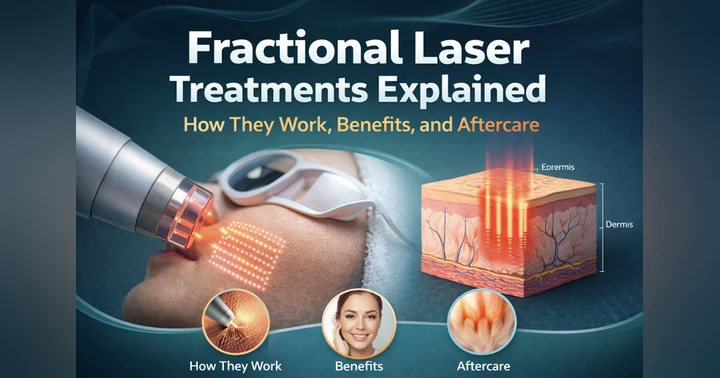
Fractional Laser Treatments Explained: How They Work, Benefits, and Aftercare

 Apple Podcasts
 Spotify
 Castro
 RSS Feed
 In this episode of the Facially Conscious Podcast, we take a closer look at fractional laser treatments, a widely used skin resurfacing procedure performed by board-certified dermatologists and plastic surgeons.
Dr. Vicki Rapaport, our board-certified dermatologist and co-host, guides the conversation by explaining what fractional lasers are, how they work, and how they differ from other types of laser treatments used in dermatology. We explore what fractional laser resurfacing can address—including skin texture, tone, fine lines, and acne scarring—and who may be an appropriate candidate for this procedure.
This episode also focuses on one of the most important—and often overlooked—parts of laser treatment: post-procedure skincare and aftercare. Proper aftercare plays a key role in healing, safety, and results, and Dr. Rapaport shares clear guidance on how to support your skin following fractional laser treatment.
Designed for skincare-curious listeners and professionals alike, this discussion offers grounded, educational insight into laser resurfacing, skin healing, and evidence-informed decision-making—without hype or unrealistic promises.
In this episode, we discuss:
-
What fractional laser treatments are and how they work
-
How fractional lasers differ from other laser procedures
-
What skin concerns fractional lasers can address
-
Who may be a good candidate for laser resurfacing
-
Why aftercare matters and how to support skin healing
-
What to expect before and after a fractional laser procedure
Have a question? Send us an email at info@faciallyconscious.com
LIKE, FOLLOW & REVIEW US ON INSTAGRAM, & WHERE YOU LISTEN TO PODCASTS!
Visit our website www.faciallyconscious.com
Linktree | Facially Conscious
Join our new Patreon and Substack for more content from Facially Conscious
Follow Our Hosts On Instagram
Trina Renea - Medically-trained master esthetician and celebrities’ secret weapon
Linktree | Trina Renea, @trinareneaskincare, trinarenea.com and Substack
Julie Falls- Our educated consumer is here to represent you! @juliefdotcom
Dr. Vicki Rapaport -Board Certified dermatologist with practices in Beverly Hills and Culver City @rapaportdermatology and https://www.rapdermbh.com/
Rebecca Gadberry - Our resident skincare scientist and regulatory and marketing expert. @rgadberry_skincareingredients
Credits
Produced and Recorded by The Field Audio
[Intro] Hey, everyone. Welcome back to Facially Conscious with myself, Trina Renea, esthetician, Dr. Vicki Rapaport, dermatologist, and our fabulous, overly-educated consumer, Julie Falls. We are gathered here together with you to talk about this crazy world of esthetics. It's confusing out there in this big wide world.
That's why we are here to help explain it to you all, subject by subject. We will be your go-to girls, and from our perspective without giving medical advice, we will keep things facially conscious.
Let's get started.
00:54 Trina Renea: Hello, good morning/good afternoon, ladies. How are you doing today?
00:58 Julie Falls: Very well, and you?
01:00 Trina Renea: Good. Happy Saturday.
01:01 Dr. Vicki Rapaport: Good morning. Oh, happy Saturday.
01:02 Trina Renea: We are back.
01:03 Dr. Vicki Rapaport: We must not be French since we're working on Saturdays.
01:07 Julie Falls: Is that the way it goes?
01:09 Dr. Vicki Rapaport: I guess it's the way it goes, yeah. I can't believe you guys didn't watch Emily in Paris. There's this whole episode how they don't work on the weekends. It's so cute.
01:14 Julie Falls: The first season.
01:17 Trina Renea: Well, I don't consider this working, but I consider it hanging out with my friends.
01:26 Julie Falls: Chatting.
01:27 Dr. Vicki Rapaport: Learning.
01:28 Trina Renea: Learning, chatting.
01:29 Dr. Vicki Rapaport: I agree with you.
01:31 Trina Renea: Yeah, it's fun.
01:32 Dr. Vicki Rapaport: Good way to spin it.
01:34 Trina Renea: Thanks. So what are we talking about today?
01:38 Dr. Vicki Rapaport: I would love to talk about fractional lasers.
01:41 Trina Renea: Okay. I love fractional lasers. I have an analogy that I tell my clients about what they are, that I'll tell you later once we say what is a fractional laser.
So, a fractional laser, there are many, many, many fractional lasers out there. A lot of doctors have them and they are for resurfacing. Right?
02:08 Dr. Vicki Rapaport: Right.
02:10 Trina Renea: A laser, in general, is a light amplification by stimulated emission of radiation.
02:20 Dr. Vicki Rapaport: Correct.
02:21 Trina Renea: That is what a laser means. That's a medical term for a laser. Fractional lasers are non-invasive, meaning that, what? What does that mean, non-invasive?
02:32 Dr. Vicki Rapaport: That it doesn't ablate the tissue. So non-invasive means that it does do damage, but you don't have open, ablated skin.
02:42 Trina Renea: Like hamburger meat.
02:44 Dr. Vicki Rapaport: Right, like a CO2 resurfacing laser is an ablative laser. And there are many other lasers that ablate, but fractionated lasers don't ablate.
02:54 Julie Falls: So CO2 is not fractionated.
02:57 Dr. Vicki Rapaport: Correct.
02:58 Julie Falls: Okay, those are two different things.
03:01 Trina Renea: Yeah, it's an ablative laser, the CO2. So CO2 is like the strongest of the lasers. It will remove your epidermis pretty much.
03:13 Dr. Vicki Rapaport: Right, because you remember from past episodes, lasers go after a target, and the target in a CO2 laser is water. Every cell has water in it, so it like ablates every single cell.
03:23 Trina Renea: Right. I have actually sat in a room and watched someone get a CO2 laser. One of the things I'll never forget is the smell of the skin burning. And they had a vacuum that sucks out the smell.
03:38 Julie Falls: If anybody wants the negative side of everything, we've got your girl.
03:44 Trina Renea: Well, I'm going to let you know all the goods and the bads and the ins and the outs of it.
03:50 Julie Falls: That's right. We will not hold back.
03:51 Trina Renea: If you don't like the smell of burnt skin, don't get a CO2.
03:53 Dr. Vicki Rapaport: And also what they're sucking out, Trina, is not only the smell of the laser, but there are carcinogenic particles that are in that dead flesh. I know it sounds disgusting to you but cool to me, because I'm the doc. So that vacuum is protective for the operator.
04:12 Trina Renea: Wow.
04:12 Dr. Vicki Rapaport: Really, the patient who's going to sniff it once in their lifetime, it's not dangerous. But for somebody who's doing it all day long, for the doctors and the providers, those vacuums are really important.
04:24 Trina Renea: I remember when, in your office one time, I was watching you do some cutting something off somebody's head. You had to cauterize it because it was bleeding a lot. And I remember the man saying, “What's that smell?” And I was like, “Oh, my God.” Like, what do you tell a patient when they say what's that smell?
04:51 Dr. Vicki Rapaport: That’s the smell of the cautery.
04:51 Julie Falls: It's you. That’s the smell of your head.
04:54 Trina Renea: It's the smell of your scalp burning.
04:56 Dr. Vicki Rapaport: Well, I say it's the smell of the cautery and we're cauterizing the blood vessels so you don't bleed. They're okay with that answer, usually. But, yes, it is the smell. In a way, it is them. It's their skin burning, but it's mostly for the vasculature.
05:14 Trina Renea: Right, right. Just I'll never forget that moment, because I was like, “Oh, my God, that's the smell of burning skin.”
Okay. So the fractional laser is for resurfacing. So people who want to have some texture in their skin that they want to get rid of, scarring, deep wrinkles, can do a fractional laser and basically get some retextured surface, right?
05:46 Dr. Vicki Rapaport: Right. And the word “fractional” is based on the fact that the laser light is fractionated into energy. The energy is fractionated into different columns. And so it does treat the skin in fractionated ways, but it's really that the light is separated into little small fractions of the actual laser beam. So it goes deep into the dermis.
And again, kind of like the radiofrequency RF microneedling is that the laser beams go down into the dermis and the unlasered areas help heal those channels very, very quickly, but it also coagulates the tissue. So when you're shooting out this fractionated laser energy, it is coagulating and tightening what it is shooting, and then the collagen in between comes and then heals. So everything gets tighter, pore resurfacing, skin resurfacing, small scars, small wrinkles, that kind of thing.
06:45 Trina Renea: Yes. So the way I like to describe it to a client is I will say, think of a checkerboard. You know how you have the white squares and the black squares. The black squares are the ones that the laser is hitting and the white squares are the ones, that's your skin, that's going to heal those burnt spots where the laser is hitting.
It's very microscopic and you can't see it. But if you were to zoom in, it would look like a checkerboard. So you're getting those little spots that are…
And depending on how deep the laser is, whether it's a Fraxel or Clear + Brilliant, is how deep it goes. If you do a Fraxel, it's stronger than a Clear + Brilliant. If you do a CO2, it's stronger than a Fraxel. So you have to do more of.
So if your CO2 laser is the strongest…
07:44 Dr. Vicki Rapaport: CO2 is not fractionated, though, so we don't really compare the two.
07:46 Trina Renea: Right. Don’t compare it. Okay. So Fraxel and Clear + Brilliant.
07:51 Dr. Vicki Rapaport: Versus Clear + Brilliant, right.
07:52 Trina Renea: So a Fraxel you may need three treatments where a Clear + Brilliant you would need six.
07:57 Dr. Vicki Rapaport: Right. That's why people love Clear + Brilliant because there really is no downtime and they definitely see an improvement, but it really is for the young person. For people with lots of sagging and lots of fine lines, a Clear + Brilliant really isn't going to do that much, but you can always try and see what improvement you can get. And if that's what you want downtime-wise and what you can afford, that's fine. You just probably have to do them like every single month, for the rest of your life.
08:22 Trina Renea: Right.
08:23 Julie Falls: Yeah. To me, it was like getting a facial with some microdermabrasion.
08:26 Dr. Vicki Rapaport: Right. But that's information, Julie, that we need to hear because some people love Clear + Brilliant.
08:29 Julie Falls: Yeah, some people love them. Exactly.
08:33 Dr. Vicki Rapaport: It changes their life. So it didn't change your life?
08:36 Julie Falls: It did not change my life.
08:37 Dr. Vicki Rapaport: What did you experience?
08:43 Julie Falls: It was like somebody maybe had done, you know, sandy afterwards. I don't know. For me, a really good Trina facial with the bells and whistles, it's probably the same for me. But I could say, yeah, for a younger person that they're good. It's a lot of sloughing.
09:06 Trina Renea: I personally think it's really expensive for what it does. I don't think the dollar point is worth it. Just get a peel or something.
09:15 Dr. Vicki Rapaport: Or use Retin-A like crazy.
09:17 Trina Renea: Or use Retin-A, yeah.
09:19 Dr. Vicki Rapaport: I'm a big fan of Retin-A.
09:20 Trina Renea: You know, that'll do the same. Clear + Brilliant is a very superficial sunburn, basically, with a little bit of retexturing, I mean, little surface. But I just feel like for the price that you have to pay for it, it's just most people aren't going to do it again.
09:37 Dr. Vicki Rapaport: And, you know, I don't even know how much they are because I don't do it.
09:40 Julie Falls: They're like $350 or something, I think. But we've talked about the fact that not everybody can do Retin-A. I could do a Clear + Brilliant but Retin-A is not great for me.
09:52 Dr. Vicki Rapaport: That's fair. Yeah, that's fair.
09:52 Trina Renea: Can you do retinol?
09:54 Julie Falls: Yeah, of course, retinol, yes. I do lots of retinol products. I do know somebody who just very recently had CO2, and she's bandaged. I mean, there's major downtime with that, correct?
10:11 Trina Renea: Oh, yeah. I mean, you look like hamburger meat afterwards. You know when you get a burn and you get that crusty, creamy-looking crust over a burn, that's what your whole face looks like.
10:25 Julie Falls: Well, apparently, this person eventually had been talking about maybe doing a facelift, because she's very lined. I think the doctor said, “We can't really address these deep, deep lines with a facelift, so let's do this first and then address.”
10:48 Dr. Vicki Rapaport: There are so many plastic surgeons that will do CO2. intraoperatively when they do the facelift. And I guess it just depends on how comfortable the plastic surgeon is in terms of how many things they want to do at once. So, yes, you're right. You can do it before. You can do it during.
But when you do a facelift, you're repositioning tissue but you’re not doing anything to the top.
11:05 Julie Falls: Correct.
11:07 Dr. Vicki Rapaport: I remember years ago, I wrote this article about CO2 resurfacing. And when I did my research, I realized that these plastic surgeons didn't do it. The dermatologists were doing it. I thought, “All these women and men are getting facelifts, but their skin just looks still terrible.” That's where the lasers finally started.
11:23 Julie Falls: And they did start doing it. Yeah, they started including that.
11:25 Dr. Vicki Rapaport: They did start doing it. And I realized, okay, this is going to be better treatment. That's, again, the whole multimodal approach where even a facelift doesn't solve people's every problem.
11:33 Julie Falls: There are doctors, we were talking about Dr. Ben Talei, who I think is phenomenal, who they do have a technique that it does look like wrinkled skin. It definitely is better. But some people pass out that they need more.
11:51 Trina Renea: And CO2 lasers, I think, are effective. I know some doctors who won't even do anything but a CO2 laser. They don't think Fraxels are worth it. They don't think any of the other lasers, they're like, “Why go through all of that, the process of that? Just do a CO2 laser and get it over with.”
12:09 Julie Falls: This is the big guns, yeah.
12:11 Trina Renea: But it's like you're basically replacing your upper epidermis, like the whole thing. So you have to wash your face with vinegar water and you have to put Aquaphor on your face for like 10 days.
12:23 Julie Falls: This is after?
12:24 Trina Renea: Yeah, for like 10 days after and then your skin finally is a light pink resurfaced skin. And then, you know, you have to stay out of the sun. You have to stay in the dark.
12:36 Julie Falls: I remember when I was younger and my mom's friends were starting to get lasers. They would come home and there was a line on their neck. From that line up, they were pink, and then below. It was such an obvious, clear demarcation. I don't know what they were doing in those.
12:59 Trina Renea: They stopped there.
13:00 Julie Falls: Vicki, I know you know what I'm talking about.
13:02 Dr. Vicki Rapaport: Yeah, and the problem is that the CO2 has a chance and risk of scarring in certain areas. You really can't CO2 a chest, and sometimes people don't even CO2 a neck.
The face is very different. The face heals well and does well. But sometimes the lower you go, there's this risk of hypopigmenting, hyperpigmenting and scarring, so a lot of people don't go. And there is that crazy demarcation. That's why we wear sunscreen and hats and we don't get that damage.
But the CO2, you're right about everything you said, Trina. If you're going to go for it and do it, and you want to do one thing, yes, the CO2. But it is not for everybody because it's only for skin types one to two, maybe three.
And what does that mean? A one I describe is like just above albino. You're so fair. A one skin type is like super, super, super fair. Two is a blonde hair, blue eyed person or a redhead with freckles. Three is somebody who's a little bit, still very, very light skinned, but maybe has slightly darker hair, darker eyes.
Once you start getting to the four or five and sixes with the darker skin, you can absolutely not do CO2 because they will either hyperpigment or hypo or scar.
14:10 Trina Renea: Yeah. Also, your skin after a CO2 laser is almost like scar tissue, in a way. It's like so waxy looking. You can always tell. I see it with people when I do facials. It's like the skin’s texture is completely different.
14:29 Dr. Vicki Rapaport: You're right, because most of the sebaceous glands have been ablated. All the stuff that makes your skin act like your skin, the hair follicles, they literally have been ablated. Is it worth it to some people? Yes, it is. But I agree, like let's age gracefully. Let's prep and prevent as much as possible. But, yeah, it's good for some people who really want big change.
14:53 Trina Renea: Yeah.
14:53 Julie Falls: Do you do them, Vicki?
14:54 Dr. Vicki Rapaport: No.
14:55 Julie Falls: You don't do them.
14:56 Dr. Vicki Rapaport: I think they're great for the right person. I just think, again, like I try and do low risk things in my office.
15:01 Julie Falls: That's not your cup of tea.
15:03 Dr. Vicki Rapaport: No.
15:03 Trina Renea: What about fractional lasers? Do you have one of those in your office?
15:05 Dr. Vicki Rapaport: You know what? I used to have fractional laser until we switched to a totally different platform, so I don't have that handpiece anymore. But I used to do it a lot for acne scars, just for like mild resurfacing. And it was great, until I had one patient that hyperpigmented. Same thing that always happens. You can do hundreds and thousands of things and everybody's happy. That one person is the only one I ever think about.
And I just stopped doing it because… I know that's sort of silly because I could pick and choose my patients very carefully. And I picked and chose. She was very fair, but she had this tendency to get a little bit olive skin when she was in the sun. I realized that after.
And she did fade all those hyperpigmented, tiny, tiny, tiny little checkerboard, just like you said, little, little amazing looking, perfect round dots of brown when you looked really carefully. It took her a year for those to go away. And she was lovely.
15:58 Trina Renea: Dang. But at least they went away.
16:00 Dr. Vicki Rapaport: They went away. It just wasn't worth it. So we changed platforms and that handpiece went bye-bye. I was not sad.
16:07 Trina Renea: Yeah. And I want to tell everybody out there, like a lot of doctors who have fractional lasers will push it on their patients because they want to make the money. So if you come in and you say, “I have this issue with my skin,” or whatever, sometimes they'll push a fractional laser on people that they shouldn't.
Then if you hyperpigment or if something happens, they'll be like, “Oh, that must be your skin.” Like they put the blame on you for some reason.
So just be very careful. If you're not a Fitzpatrick I, II, possibly III, I wouldn't recommend doing fractional lasers. I think it's not a good idea, right?
16:49 Julie Falls: Well, somebody just told me that I should think about it for the pink spots that I have here. And then speaking to this plastic surgeon, he said it won't address those.
17:01 Dr. Vicki Rapaport: I think that if it's a really aggressive fractional laser, it might, because remember, you're just getting rid of all the top damage. But the pink spots are actinic damage, which is precancerous. If you're not going deep enough and ablating that, it's not going to do anything.
So there's no downside to trying, but I agree. I just don't think it would do that much for you. And there are so many other options that are better, healthier, and more medically appropriate for that kind of damage.
And some things cannot be improved. No matter how fancy our lasers are, no matter how many things we have out there, topicals and peels, some things just can't get better. And it's frustrating for the doctor. Of course, it's frustrating for the patient. But if you've tried 10 different things and nothing is making it better, it's probably time to give up.
17:51 Trina Renea: Yeah.
17:51 Dr. Vicki Rapaport: 10 different things from 10 different reputable people who've done reputable things.
17:56 Julie Falls: But Trina told me a long time ago that the minute you step outside, after you've done something to your spots, they're going to start working their way back, and that's just the way it is. They're in there. They're going to come back. But if you just have a regular program, maybe with IPL, because I have noticed that they responded to IPL.
18:18 Trina Renea: Yeah, I mean, you can do an IPL once or twice a year and push the melanin back.
18:22 Julie Falls: Yeah, and just stay on it.
18:2418:24 Trina Renea: Yeah, because basically melanin cells, they live within your skin and they go up and down for protection to protect you from sun. So like when you get a suntan, that's all your melanin cells going to the surface and trying to protect your skin from burning. So then when you're out of the sun, your tan goes away, the melanin goes back into your skin. But they have not figured out scientifically how to get rid of melanin cells. They go up and down in your skin.
So if you do like a laser or you use hydroquinone and things like that, or you do IPLs, the surface, you know, black that it's getting rid of, those little peppery spots, they go away but your melanin goes back under, goes down. That's why you're like, “Oh, I look so good.” Because the laser hits the melanin, the melanin goes back down into the skin.
But if you go back out in the sun, this happens all the time with people. They spend all this money to get rid of their pigmentation, they use the hydroquinone, they get their lasers, and then they go on a vacation and they're sitting out in the sun and it all comes back. It's like, what the hell? And they get so frustrated.
So I always try to explain to people how melanin works so that they can understand, yes, the laser will help for sure. Yes, the creams will help. Retin-A will help. Skin lighteners will help. But you have to stay out of the sun. You have to really...
19:53 Dr. Vicki Rapaport: Ding, ding, ding, ding, ding, ding. Trina wins the prize.
19:56 Julie Falls: Yeah, but Vicki, what about the topical that I'm going to be trying?
20:01 Trina Renea: But that's for precancerous spots.
20:04 Dr. Vicki Rapaport: So if you have a brown spot, if you have a freckle, if you have a formed lesion that's brown, you can permanently get rid of that if you've gotten deep enough and you've lifted it up. But what I think Trina is trying to describe is that there's always a potential to make new ones because you have melanocytes, and the melanocytes create melanin that will do this.
And sometimes you might stay out of the sun and you'll still age with brown spots. It's because you've had the damage for 50 years. So all that damage starts to come out.
20:33 Trina Renea: That’s damaged melanin cells.
20:35 Dr. Vicki Rapaport: Yeah. Or you can make new melanocytic damage, but the key is you just have to. And I look at both of you and you both have, and you do too, everybody has V-neck shirts. If you notice with me, I'm always wearing crew neck because I never expose my chest.
20:52 Trina Renea: I know, my chest is ruined.
20:54 Dr. Vicki Rapaport: “Oh, but I wear sunscreen.” Sunscreen alone is not enough. And nobody's as good as a dermatologist. I know that. I don't expect for people to be as good.
21:02 Julie Falls: It's not a V-neck. It's a button-up. I'm going to button it all up.
21:04 Dr. Vicki Rapaport: Okay, it's a button-down. You're right. But I tell people, expose the chest at night. Do not expose it during the day. Never, ever, ever. Especially if you're going to invest and do procedures or products, no sun.
21:13 Trina Renea: But I'm too old now. I've already ruined my chest.
21:17 Dr. Vicki Rapaport: That's another thing that people always say.
21:18 Julie Falls: Your chest has no spots on it, by the way.
21:20 Dr. Vicki Rapaport: If you decided to cover up your chest from now on to the rest of your life, you know how much protection you will give yourself?
21:25 Julie Falls: I noticed a difference.
21:27 Dr. Vicki Rapaport: Yeah, it makes a difference.
21:29 Trina Renea: I don't look good in those, in crew necks.
21:32 Dr. Vicki Rapaport: That's another thing that people say.
21:33 Trina Renea: You know, I have wide shoulders.
21:34 Julie Falls: And I don’t like V-necks.
21:35 Trina Renea: If I wear that kind of shirt, it's just not attractive on me.
21:38 Dr. Vicki Rapaport: So is skin cancer attractive on you?
21:42 Trina Renea: No.
21:41 Julie Falls: But wait. Can we go back to the difference between…
21:44 Dr. Vicki Rapaport: I think buttoning up your shirt makes you extra sexy.
21:47 Julie Falls: I don't like V-necks. I don't like cleavage…
21:51 Trina Renea: You don't have big, old, wide shoulders like I do.
21:51 Julie Falls: They look beautiful. Vicki, getting back to the, what's the name of the liquid chemotherapy?
22:00 Dr. Vicki Rapaport: Either Efudex or Aldara?
22:02 Julie Falls: Aldara. So getting back to the Aldara versus like IPL.
22:05 Dr. Vicki Rapaport: Okay. Oh, yes. Sorry. Yes, you asked that question. I didn't answer it. Sorry. So if you have precancerous lesions that are called actinic keratoses, you've been diagnosed by your dermatologist or your internist or your PA, when you do the topical immunomodulators or topical chemotherapy, it does get rid of them forever, if you have a successful treatment.
22:29 Trina Renea: But that's not a melanin brown spot. That's a totally different spot.
22:32 Dr. Vicki Rapaport: Correct.
22:34 Julie Falls: Like mine, the pinks.
22:36 Dr. Vicki Rapaport: Right. But then again, you had all that damage. Why did those spots pop up there and not anywhere else on your body? They might pop up in new areas and you can use those topicals in those areas.
22:46 Julie Falls: Interesting.
22:47 Dr. Vicki Rapaport: But yes, it is very different than a brown spot.
22:49 Julie Falls: Got it. So mostly we're talking about brown spots. Okay.
22:54 Trina Renea: Okay, so back to fractional lasers. Fractional lasers aren't to treat brown spots. They can actually cause someone who pigments a lot, more pigmentation. So if you hyperpigment easily, I would not recommend doing a fractional laser because there's a 50-50 chance you could hyperpigment. Yeah.
23:15 Julie Falls: Wow.
23:16 Trina Renea: Yeah, you just don't know.
23:17 Julie Falls: Because these doctors are pushing these fractional lasers for pigmentation.
23:23 Trina Renea: Pigmentation is treated with IPLs. There are certain lasers that, BBLs, like certain lasers that target brown and reds in the skin and colors of the skin. Fractionated lasers don't. They're resurfacing, so they're lightly, slightly burning the surface of the skin to resurface the skin. So they're using a laser to like burn the skin. They're not targeting brown spots.
23:50 Dr. Vicki Rapaport: No, but brown spots are one of the indications. Although I agree with you. I think there are more specific lasers that are better for brown spots. And yes, you can hyperpigment. But kind of like the microneedling, it can help, over time, break up some of the pigmented lesions in the right person, if that person's really, really lucky.
24:08 Trina Renea: Right. Go to a good doctor. And that’s what they're doing, and like you trust.
24:10 Dr. Vicki Rapaport: And also to prep for these, should we talk about how to prep for these really fast?
24:13 Trina Renea: Yes.
24:13 Dr. Vicki Rapaport: So some people who have, it's not ablative lasers, but there is still injury. So if people are prone to herpetic lesions, like ulcers on the lips, we'll prep them with Valtrex. We definitely numb them because it's definitely tender. Not quite as tender as microneedling but it can be a little uncomfortable for those deeper ones. I don't know about the Clear + Brilliant. Were you numbed when you did the Clear + Brilliant?
24:38 Julie Falls: I don't remember.
24:39 Dr. Vicki Rapaport: Okay. But, yeah, just again, go to a good doctor, get a good consult, and just do your research.
24:41 Trina Renea: They usually numb people. Sometimes they'll even give people a little bit of, what, Valium, Vicodin, with those lasers?
24:51 Dr. Vicki Rapaport: Yes. So if people are very anxious, a little bit of Valium is great, and then they just needed somebody to drive them home. And then also, the Pro-Nox or the laughing gas can help. Again, just like keep people disassociated.
25:01 Trina Renea: Can I come in and have some laughing gas? I've never had it before. I want to know what it feels like.
25:06 Julie Falls: No, I'll make you have a procedure with it.
25:08 Dr. Vicki Rapaport: Julie is not going to let her just puff on the Pro-Nox.
25:11 Trina Renea: I just want to try it.
25:11 Dr. Vicki Rapaport: Pro-Nox is very safe. Laughing gas is very safe. It's just nitric oxide and oxygen.
25:16 Julie Falls: You’ve never had it, Trina?
25:17 Trina Renea: No.
25:17 Dr. Vicki Rapaport: And the only people who really shouldn't do laughing gas are people who are prone to headaches, like me. So I can't do Pro-Nox because it can create some headaches. But if it does, most people don't care. But, yes, there are people who come in and literally want the laughing gas more than they want the procedure.
25:34 Trina Renea: That’s so funny.
25:34 Julie Falls: Oh, my God.
25:37 Trina Renea: My daughter is 11 and she's getting laughing gas at her doctor's appointment. Oh, God, did I miss it? I think it was Friday. No, maybe it's next Friday. I'm like, I just thought of it. I'm like, wait a second.
25:50 Julie Falls: For what, Trina?
25:51 Trina Renea: She has to have a little baby tooth pulled that she won't take out herself. The doctor gave her some numbing cream to put on it and said, “Just take a tissue and pull it,” and she won't do it. So they're going to give her laughing gas.
But they're charging me $125, so I'm going to tell them that you only charge $50 and I think that's outrageous.
26:08 Dr. Vicki Rapaport: I agree. It does not cost that much. I feel bad charging the $50, but that's basically what it costs. So, $125 seems like a steal.
26:17 Trina Renea: A lot. Now I'm thinking it's a lot. I didn't know before, but now I know. I'm going to be like, “Can you call Dr. Vicki Rapaport because she only charges $50, and I want her to tell you you're charging too much.”
Okay, so you do give them a little bit of numbing cream for a fractional laser and then sometimes a pill, because it does hurt, because you're burning the surface. Feels like a little fire on the skin. I felt it before. It hurts. I had him try it on my hand and I was like, “Ow, that hurt.” What is the cost of one of these lasers? Do you know?
26:59 Dr. Vicki Rapaport: Yes. When I used to do the fractionated resurfacing full face, I think we charged like between $500 and $1,000, depending on how many passes we needed to do. If it was a small area, it could be as low as like 250 bucks. Like, if you're just targeting one acne scar, two acne scars, some acne scars, it can be as low as like $200, $250. But again, they need about three to six.
27:22 Trina Renea: I feel like people are charging like $1,500 and up now for these…
27:26 Dr. Vicki Rapaport: For full face, yeah.
27:27 Trina Renea: For face laser now. They are, I think.
27:32 Dr. Vicki Rapaport: Remember, we're from, this is an LA-based podcast. We're talking West LA prices.
27:37 Julie Falls: Correct.
27:37 Trina Renea: True.
27:39 Dr. Vicki Rapaport: The prices that we talk about on our podcast might be much, much, much higher than where you live. But I know also New York has very high prices, so it can really range.
27:49 Trina Renea: Yeah. I looked up the statistics for 2020 from the American Society of Plastic Surgeons. It says the average cost of a laser skin resurfacing for ablative is around $2,500. And then for a non-ablative, is around $1,400. That's, like, pretty standard, I would think, depending on where you live.
I would say if somebody is not charging a lot, be careful, right? I mean, not that they should only go for high-priced lasers but just be careful who you go to. I think when you're talking about doing a fractional laser, you should definitely go to a reputable dermatologist office. Like, don't get a deal.
28:34 Dr. Vicki Rapaport: Yeah. And if they have before-and-afters, that would be great. Asking for those is really helpful. And if they send you to their Instagram page, I'm okay with that. You just have to be sure that those are definitely their patients and not just before-and-afters from the laser company.
28:49 Trina Renea: And then the downtime for this and how long should you protect your skin?
28:55 Dr. Vicki Rapaport: Downtime for the non-ablative fractional resurfacing lasers, anywhere from one to seven days where you're a little bit rough and sometimes you slough a little bit, but it's actually very easy to cover with makeup. Within 24 hours, you can usually cover with makeup.
Most people don't have a problem. They don't have to stay at home. There's no bandages like a CO2 laser.
29:18 Trina Renea: Yeah. CO2, stay home for a month.
29:23 Dr. Vicki Rapaport: Well, and then about the sunscreen afterwards, what is the answer? I'm going to say forever, right? Aren't you going to say forever?
29:30 Trina Renea: Yeah. Forever and ever. But, really, redoing your sunscreen every couple hours after a treatment like this, like if you're going to be out and about, you should be reapplying, for sure.
29:44 Dr. Vicki Rapaport: Honestly, just you have to have a hat. If people are not wearing hats after a procedure like that, then they haven't been given a good consult. They're just wasting their time and money, because sunscreen alone is just not enough.
29:59 Trina Renea: I did some kind of a laser. I can't even remember what it was, just as kind of a testing to see with Dr. Wang. It brought up some pigmentation I did not know I had underneath, and it was all on the surface. I almost died. I wore a scarf over my head for like three weeks, wrapped around my face when I went outside of my house.
30:26 Julie Falls: Was this the halo?
30:27 Trina Renea: No, it wasn’t.
30:28 Dr. Vicki Rapaport: Was that melasma that it brought up?
30:30 Trina Renea: I have no idea.
30:31 Dr. Vicki Rapaport: Did he tell you? Did you see him afterwards?
30:33 Trina Renea: Yeah.
30:34 Trina Renea: And what did he say?
30:35 Trina Renea: I was working in the office and so he was like, “Wow, I didn't know that…”, because when we first did the laser, I forgot what it was, but it was supposed to be for melasma. So we were just trying it on me. I had a couple brown spots.
When we first did it, it did nothing. That was where the laser company told him to put the settings. So then he was like, “Well, that did nothing, so I'm going to turn it up to this.”
And then it caused all this pigmentation to show up that I didn't even know was there. I was like, “Oh, my God, this better go away.” It was all over the sides of my face where he hit the laser. I was super swollen and red. I had a terrible reaction.
But until those brown spots went away, I literally would walk out of the house with a scarf over my face, covering my face completely. My eyes were sticking out. I would drive to work like that until I got inside my dark room because I was like, there's no way this is staying on my face. Like I'm going to protect it from the sun, not only with sunscreen but also with a scarf. I was serious, but it went away. Thank God.
I'm scared to do things on myself because I'm always that one percent with everything.
Okay. So sometimes with these fractional lasers, you can get itching from the resurfacing areas. So you can put hydrocortisone cream after?
32:11 Dr. Vicki Rapaport: Yeah. Itching, swelling, all that stuff is just the healing process. And if it's really bad enough, prednisone. If people are really, really swollen, we'll give them oral prednisone. And if it's just surface, sometimes we'll give them a little steroid.
32:24 Trina Renea: Okay. All right.
32:25 Dr. Vicki Rapaport: Topical steroid.
32:28 Trina Renea: Julie, you haven't done a fractional laser?
32:30 Julie Falls: No.
32:31 Trina Renea: So you don't do much lasering?
32:33 Julie Falls: I don't do a lot of the big guns yet. I've been lucky. I think many years ago, I went into a doctor's office who said, because of all of my sun exposure growing up in Miami, I was like 18 and I said, “I really don't feel good when I get sunburn. I'm going to stop.” And I stopped cold at like 18. I think this particular doctor, I think it was Michael Groff, said to me, “You know, you reversed a lot of.” It is reversible, so stop.
I think that helped me. I've had Mohs, which is a procedure where they will take something that's cancerous and keep taking more and more and more off of it when looking at it with a computer. They don't dig a huge hole in your face like they used to. I've been lucky. Everything else has been pre-cancer things.
But you guys know my history and my path. I just agree with both of you. First of all, I was going to post some things about even starting with your eating. It's an inside job. I really believe that nutrition and sunscreen and starting early, starting with our children very, very early with protection.
I think I'm rambling, but no, I have not gone that deep. Luckily, I don't think that I've needed to.
34:16 Trina Renea: Have you done a resurfacing laser, Dr. Vicki?
34:19 Dr. Vicki Rapaport: No, I have not.
34:20 Julie Falls: She doesn't even have it in her office.
34:23 Trina Renea: Well, she used to.
34:24 Dr. Vicki Rapaport: I haven't, no. I'm a little bit like Julie. I stopped sunning, probably I was about 24. I don't really remember the moment. It wasn't really pivotal until I sort of decided I was a huge sun baby. I would just want to be tan.
34:41 Trina Renea: Me too.
34:42 Julie Falls: And you look like you could tan.
34:44 Dr. Vicki Rapaport: I think I can tan, yeah. I think. I don't remember. It's been so long. But I feel like that has saved me from having to need to do some of these procedures. And I've always been really, really good about using retinol, Retin-A, and sunscreen and protecting.
But I don't think you were rambling at all. I think that's so important. Remind people just healthful living. You know, during COVID, one of the things that I think was the biggest disgrace, that we didn't teach people how to be more healthful in general. It was the perfect opportunity. We had this like captive audience who wanted to be healthful against COVID. Why didn't we teach them how to exercise more and eat healthier and do all this stuff? I feel like we had a huge loss of opportunity there. So, yes, I loved your little speech over there.
35:29 Julie Falls: Thank you.
35:32 Trina Renea: Yeah. Okay.
35:33 Julie Falls: Have you, Trina?
35:34 Trina Renea: I haven't done. I mean, I've dabbled in little things, but every time I dabble, something tragic happens. I just have to avoid.
35:42 Dr. Vicki Rapaport: And I think that's part of your rosacea. Like, Julie is the rosacea patient that can do a lot of things. You're the rosacea person who can't.
35:51 Julie Falls: Interesting.
35:51 Trina Renea: Right. I mean, I swell.
35:52 Dr. Vicki Rapaport: You blow up and, yes.
35:54 Trina Renea: My skin, like the histamine, whatever, I just swell up and, I don't know. I turn red easily, you know.
36:02 Dr. Vicki Rapaport: Yeah, I know.
36:03 Trina Renea: I think I have rosacea on my chest. I don't know what that is.
36:06 Dr. Vicki Rapaport: I think you do too.
36:07 Trina Renea: All right. Well, that's great. My takeaway is, I have rosacea on my chest.
Okay. So does everyone understand what a fractional laser is now? Yes, we do.
36:19 Julie Falls: Yes, thank you.
36:21 Trina Renea: My takeaway today on fractional lasers is be careful who you get it from and make sure that you have the right skin type to do it. It's super important so you don't damage your skin.
36:34 Julie Falls: I think like everything else we talk about, make sure you go to a professional and do your homework, do your research. Make sure you really need these things. And again, go to a reputable doctor.
36:46 Dr. Vicki Rapaport: My takeaway from today about fractional lasers is actually not about fractional lasers. It's about stopping exposing yourself in the sun early on in life, protecting your skin. I sound like a broken record, but it's so, so, so important. And just knowing that your perfect skin when you're 16, 17, 18 does not last forever unless you protect it.
37:08 Trina Renea: That's right, dermatologist.
Well, it was nice talking to you guys today. We'll get more into different types of lasers in another future episode, and we're going to talk next episode about preservatives and longevity and products. So if you're into products, join us on the next episode.
37:30 Dr. Vicki Rapaport: Can't wait for that one.
37:32 Julie Falls: Can't wait.
37:33 Dr. Vicki Rapaport: I'll see you guys next weekend.
37:35 Trina Renea: Bye.
37:35 Dr. Vicki Rapaport: Bye.
37:37 Julie Falls: Bye-bye.
[Outro] This podcast is so needed in the world right now. There's so much information out there that it's hard to know who to believe and if it's right for you. We are very excited to be your guides and bring you Facially Conscious. You can find info we talked about today in our show notes and on Instagram, YouTube, and Facebook.
Please subscribe, like, and review us wherever you listen to podcasts. This helps others find us. And if you have any questions or ideas, please send us an email at info@faciallyconscious.com.