Comedogenicity Explained: What Causes Clogged Pores, Blackheads, and Skin Congestion


 Apple Podcasts
 Spotify
 Castro
 RSS Feed
 Clogged pores are one of the most common skincare concerns—and one of the most misunderstood. In this episode of the Facially Conscious Podcast, we take a closer look at comedogenicity, the medical term used to describe ingredients and conditions that contribute to clogged pores and blackheads.
Comedogenicity can affect all skin types, including oily, acne-prone, dry, and even normal skin, and while pore congestion may become less frequent with age, it doesn’t disappear entirely. In fact, pore congestion is the most commonly requested esthetics treatment, yet there is still widespread confusion around what causes it and how to prevent it.
This episode breaks down what comedogenicity really means, how clogged pores form, and why ingredient lists and product choices matter—but not in the oversimplified way they’re often presented online. We also discuss common misconceptions about pore size, aging skin, and whether “non-comedogenic” labels truly tell the full story.
Whether you’re skincare-curious, a professional, or someone navigating persistent blackheads or congestion, this conversation offers grounded education to help you better understand your skin and make more informed skincare decisions.
In this episode, we discuss:
-
What comedogenicity means and how to pronounce it
-
How clogged pores and blackheads form
-
Why comedogenicity can affect all skin types
-
Aging skin and pore congestion—what changes and what doesn’t
-
Why pore congestion is such a common esthetics concern
-
How to approach skincare products with clogged pores in mind
Additional educational resources, including a comedogenicity reference list, are available on our blog for listeners who want to explore the topic further.
Have a question? Send us an email at info@faciallyconscious.com
LIKE, FOLLOW & REVIEW US ON INSTAGRAM, & WHERE YOU LISTEN TO PODCASTS!
Visit our website www.faciallyconscious.com
Linktree | Facially Conscious
Join our new Patreon and Substack for more content from Facially Conscious
Follow Our Hosts On Instagram
Trina Renea - Medically-trained master esthetician and celebrities’ secret weapon
Linktree | Trina Renea, @trinareneaskincare, trinarenea.com and Substack
Julie Falls- Our educated consumer is here to represent you! @juliefdotcom
Dr. Vicki Rapaport -Board Certified dermatologist with practices in Beverly Hills and Culver City @rapaportdermatology and https://www.rapdermbh.com/
Rebecca Gadberry - Our resident skincare scientist and regulatory and marketing expert. @rgadberry_skincareingredients
Credits
Produced and Recorded by The Field Audio
[Intro] Hey, everyone. Welcome back to Facially Conscious with myself, Trina Reneá, Esthetician, Dr. Vicki Rapaport, dermatologist, Rebecca Gadberry, the Cosmetic Ingredient Guru, and our fabulous, overly educated consumer, Julie Falls.
We are gathered here together with you to talk about this crazy world of esthetics. It's confusing out there in this big, wide world. That's why we are here to help explain it to you all, subject by subject. We will be your go-to girls. And from our perspective, without giving medical advice, we will keep things facially conscious.
Let's get started!
01:01 Rebecca Gadberry: Hello.
01:01 Trina Reneá: Hi, everybody. Good morning.
01:03 Dr. Vicki Rapaport: Good morning.
01:05 Trina Reneá: How are you?
01:07 Dr. Vicki Rapaport: You all look fresh and glowing. Everybody's skin is beautiful.
01:09 Julie Falls: So nice to see all of you.
01:10 Trina Reneá: That's because we're using fresh products from our bathrooms. No more old products. I have a list of comedogenic ingredients in front of me that is so long. Are these all used in products?
01:28 Rebecca Gadberry: Yes, they are.
01:29 Trina Reneá: Oh, God.
01:30 Rebecca Gadberry: And it's going to be on our show notes.
01:34 Trina Reneá: Aha. Show notes. We're going to have a list of ingredients or is there a place they can go get like a link?
01:42 Rebecca Gadberry: I don't know how we're going to do it.
01:43 Trina Reneá: We'll figure it out.
01:45 Rebecca Gadberry: They'll be able to get it.
01:46 Dr. Vicki Rapaport: And I think it is important to list. I mean, there literally are 50 items on here. So to have people being able to refer to this list to see what is clogging and what isn't clogging is going to be brilliant.
01:57 Trina Reneá: Yes. This reminds me of the list of food that I can and can't eat.
02:02 Julie Falls: Oh, my goodness.
02:02 Rebecca Gadberry: It's that long?
02:03 Trina Reneá: No, but there's like a list. He makes a list of like these foods are really good for you. These ones are kind of good for you, you can have sometimes. And these are really bad, and then these are horrible.
02:14 Rebecca Gadberry: That's a good analogy.
02:15 Trina Reneá: Yeah, because it says highly comedogenic, moderate comedogenic, mild, and non-comedogenic. The non-comedogenic ingredients are what? We want no products?
02:29 Julie Falls: Can you first tell us what that means?
02:30 Trina Reneá: What does that mean, yeah? What does comedogenic…?
02:33 Dr. Vicki Rapaport: Comedogenic.
02:35 Rebecca Gadberry: There's no E-O.
02:37 Julie Falls: There's no comedy.
02:38 Dr. Vicki Rapaport: Comedone.
2:39 Julie Falls: There's no comedy into this.
02:40 Dr. Vicki Rapaport: You know what a comedone is, right, Trina?
02:42 Trina Reneá: Yes.
02:42 Dr. Vicki Rapaport: Comedone, what’s a comedone? What is it?
02:44 Trina Reneá: No, I know what comedogenic means.
02:46 Dr. Vicki Rapaport: I know, but I want you to tell me.
02:48 Rebecca Gadberry: Comedogenic.
02:49 Julie Falls: But not everybody at home knows.
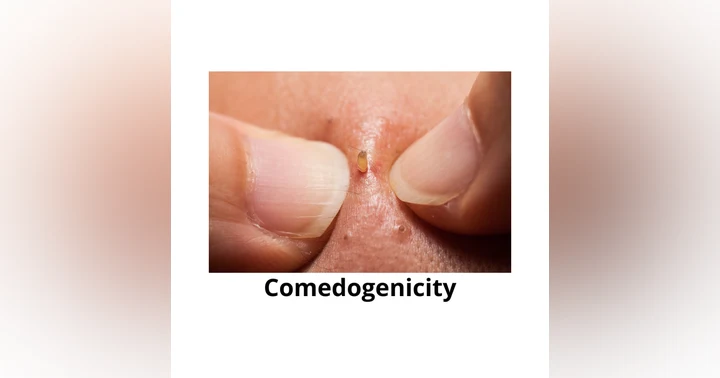
02:55 Dr. Vicki Rapaport: So a comedone in dermatology is a clogged pore. And it can be a closed comedone, which is a whitehead, or an open comedone, which is a blackhead. So something that is comedogenic is something that is clogging, is pore clogging. Whether it's truly pore clogging to your own naked eye or whether it's microscopic, it's clogging the pores in some way.
03:17 Trina Reneá: And people out there, do you know why it's a blackhead? It's because it got oxidized at the surface.
03:24 Rebecca Gadberry: What does that mean?
03:25 Trina Reneá: That means the term “black like a banana.”
03:30 Rebecca Gadberry: Oh, you and your banana analogy.
03:32 Julie Falls: She's so proud of herself with that one.
03:33 Rebecca Gadberry: She is. Well, she's got a great analogy about blackheads with the banana. You want to share it again? I know you did it in another…
03:41 Julie Falls: You squish it. We squish a banana and it spurts out just like gross.
03:45 Trina Reneá: You know how when you open a banana and it goes brown at the top where you leave it open, that's like a blackhead, basically, because the bottom part is white and just the top part is black where it got oxidized, right? It even looks like a comedone.
04:03 Rebecca Gadberry: Yes.
04:04 Dr. Vicki Rapaport: It does. The sebum, the sebum got oxidized.
04:07 Trina Reneá: You squeeze that banana like a pimple.
04:09 Dr. Vicki Rapaport: Also, blackheads are easier to squeeze than whiteheads, typically, because they don't have…
04:15 Trina Reneá: Don’t have a surface.
04:16 Dr. Vicki Rapaport: Yeah, they don’t have a cover on them.
04:18 Rebecca Gadberry: Right. But I wouldn't recommend squeezing them unless…
04:20 Dr. Vicki Rapaport: Correct. I wouldn't either.
04:22 Rebecca Gadberry: Don't do this unless you're a professional.
04:25 Julie Falls: Don’t do this at home.
04:24 Trina Reneá: Let your esthetician do your squeezing, or at least teach you how. I did have some pickers in Dr. Vicki's office that I would have to teach how to extract themselves because they damage themselves a lot.
04:37 Rebecca Gadberry: And if you have a teenager that is picking, take them to an esthetician so that they learn how to pick, instead of doing it on their own.
04:45 Dr. Vicki Rapaport: I don't even teach my patients how to pick because I feel like it's just so dangerous for them to even go there.
04:50 Rebecca Gadberry: They're going to do it, though.
04:51 Trina Reneá: Yeah. That’s why I teach them.
04:52 Julie Falls: Aren't you the one that told me that there's just pickers and non-pickers, right?
04:57 Dr. Vicki Rapaport: Yes.
04:57 Julie Falls: There's people who just… you told that, Trina, too.
05:00 Trina Reneá: Yeah, but also pickers have some other issues too, some stress issues that are also they need some, a little bit of help.
05:07 Rebecca Gadberry: Or control issues.
05:10 Julie Falls: Some OCD stuff, yeah.
05:13 Trina Reneá: Pills and things, right, Dr. Vicki?
05:16 Dr. Vicki Rapaport: Mindfulness training.
05:18 Rebecca Gadberry: That's my other job.
05:20 Trina Reneá: That's right.
05:21 Rebecca Gadberry: Teaching mindfulness.
05:23 Trina Reneá: And then put like yucky stuff on your fingers so you don't pick.
05:29 Rebecca Gadberry: Yeah. There's also a confusion between comedones, especially open comedones, and acne. Because open comedones can appear in any skin type, not just acne. It appears in acne, but you can have dry skin and have open comedones.
05:47 Dr. Vicki Rapaport: Because most people who have that would be combination skin, right? Because they're not going to have comedones where they are dry, but there are definitely people who have dry patches and then oily patches.
05:57 Rebecca Gadberry: Or maybe your whole skin is dry except for your nose.
06:00 Dr. Vicki Rapaport: Yes.
06:01 Rebecca Gadberry: And then you're going to have open comedones on your nose. I'm going to start using blackhead instead of open comedone. I think it's...
06:08 Trina Reneá: Yeah, blackhead. So we hear a lot about ingredients that are pore clogging. Can they cause these blackheads?
06:18 Rebecca Gadberry: Yes, it's called cosmetic acne, which is kind of a misname because what I just said was they're not acne. There are ingredients that are irritating that cause papules and pustules. Those are things, like vitamin E, if it's used, there's too much used or some other ingredients, but you can see that they are acneic, which is an inflammatory disease, because there's redness around the comedone. Whereas if it's not acneic, it's not irritating, that is going to just be pore clogging, if you will.
And what a clogged pore is is sebum, the oil that comes out of your oil gland, and cells, dead cells that have oxidized with the air as they get closer to the air. If you squeeze one of those, it's going to be white underneath, which is all the pus that is formed, and those are dead cells. When you put a product on, if an ingredient is comedogenic or pore clogging, it's going to mimic the ability or the susceptibility of the sebum to oxidation. So the ingredient itself is going to oxidize.
Which is why we think of a lot of oils as being pore clogging. Not all oils are pore clogging. Some of them are. Those are the ones that are easily oxidatable that I've talked about for several episodes, and that's the hemp oil and the borage, the sunflower, the safflower. Those are easily oxidatable.
But there's four things that we have to keep into account before we can say just the appearance or presence of an ingredient is going to clog the pores. That isn't the only thing that's telling you it's able to clog the pores. There's actually four things.
And that's at the top of this list. So I included them there so everybody can have reference to them as well. And that is the quantity of the ingredient used. If you're using more than 5% of a lot of these, and that would be in the upper third of the ingredient list, they're going to be pore clogging.
If you're using 1% or less, it's much less likely to be pore clogging, and that's going to be in the bottom half of the ingredient list. Just the presence of a pore-clogging ingredient is not going to mean that it's going to clog your pores. But if there are other pore-clogging ingredients in there, as well as the one that you're concerned about, then it's more likely to clog the pores.
If it's in there, and this isn't on the list, if it's trapped on the skin with petrolatum or with something like a silicone of some sort, like dimethicone, and it's a really heavy formula, it might be more pore clogging, although dimethicone and silicones are not oxidizable. So they're not going to...
09:35 Trina Reneá: Well, don't they just sit on the surface anyway and just kind of act as a glider?
09:38 Rebecca Gadberry: They sit on the surface, yeah. And they don't oxidize. So they can actually protect oxidation underneath rather than add to it.
You can also have an ingredient like ascorbic acid that has oxidized. And when it oxidizes, it will oxidize in the pore as well.
I remember in about 2001, I was down in Australia. Your ascorbic acid, vitamin Cs were just hitting the market down there. Nobody wanted to use them because they said vitamin C was comedogenic. It isn't comediogenic. But if the product is brown, that will be comedogenic, and the C has gone rancid.
10:22 Trina Reneá: Which has always turned brown.
10:25 Rebecca Gadberry: Always turned brown and that's why we needed to come up with newer and more stable ones.
But the length of time that the product is left on the skin. Let's say you've got a bath oil with a high amount of a comedogenic oil, but you're going to be in that bath for about how long?
10:44 Trina Reneá: 30 minutes.
10:45 Rebecca Gadberry: 30 minutes, half an hour. For me, it's about six hours, but for most people about a half an hour, then you're going to get out, you're going to wipe it off. There will be a little bit left but not enough to be pore clogging.
And then, finally, where the product is used on the body, there are certain areas that are more susceptible to pore clogging, such as your back or between your breasts, your face, the tops of your cheeks, around your eyes. These are more likely than your arms or the palms and soles, or your legs.
11:21 Trina Reneá: Or your calves.
11:22 Rebecca Gadberry: Or your calves, yeah.
11:24 Trina Reneá: We don't get pimples there mostly.
11:26 Rebecca Gadberry: Mostly we don't. And if we do, it's usually an ingrown hair, which is a completely different thing.
11:33 Trina Reneá: Right. Yeah.
11:33 Rebecca Gadberry: But then we also need to consider things in our environment, like tobacco smoke. Whether you smoke or whether you don't smoke, but you're around a smoker. Tobacco smoke is a strong oxidizer. And you can look at people who have smoked for years but don't take care of their skin and they have, I forget what they're called, these little blackheads that occur on the tongue. What are those called?
11:55 Trina Reneá: Comedones?
11:57 Dr. Vicki Rapaport: Well, they're comedones but they're often considered like from the sun. So we'll call them actinic comedones.
12:03 Rebecca Gadberry: Actinic comedones.
12:05 Dr. Vicki Rapaport: But you're right. It's not always actinic. It could be from the smoke.
12:07 Trina Reneá: It could be smokers.
12:10 Rebecca Gadberry: Yeah. There was a study done, and I forget. I got it at home on my computer. I can post it if you're interested. But I think it was 8,000 people were tested. I may be thinking of another study because I've read several this week. But I think it was 8,000 people were tested that were smokers, and 78% of them had this actinic keratosis that you were talking about.
12:32 Dr. Vicki Rapaport: Actinic comedones.
12:33 Rebecca Gadberry: Comedones.
12:34 Julie Falls: From the smoking?
12:35 Rebecca Gadberry: Yeah.
12:36 Dr. Vicki Rapaport: And in this world of THC and CBD and hemp, you said hemp oil is comedogenic. It's not on the list, so we're going to add it. Is that right? It's highly?
12:42 Rebecca Gadberry: Yeah. I put it together in 2010, so I'm going to update it.
12:46 Dr. Vicki Rapaport: We'll add it, yeah.
12:47 Rebecca Gadberry: Yeah, I'm going to update it.
12:48 Dr. Vicki Rapaport: So hemp is highly comedogenic, just to confirm.
12:50 Trina Reneá: But I'm also seeing ceramides on the moderately comedogenic.
12:53 Rebecca Gadberry: Well, actually, hemp is under moderately. Okay.
12:53 Dr. Vicki Rapaport: Hemp is under moderate.
12:58 Rebecca Gadberry: Ceramides are moderately comedogenic. Any of the barrier repair ingredients that are under the barrier repair episode are comedogenic, but they're in the moderate to mild.
13:12 Trina Reneá: So it's okay to use them if you are an acneic person?
13:17 Rebecca Gadberry: Usually. It should be a product formulated for acneic skin. If it has ceramides, it's not using as much as for an extremely dry skin.
And remember, one of our areas is the quantity. That's the first one down here. So how much is in that product?
Also, the length of time and how often you use the product. Let's say, if it's in the bath oil, are you going to use that product every night? You might, but that's not common. Let's say you use that product. Let's say you're going to use that product when we slug, when you're slugging and you put ceramides on and then you put something else on over that. Unless you're slugging every night on a person who tends to get clogged pores, you're probably okay just slugging that one night or once a week.
14:12 Trina Reneá: Yeah. I usually tell people, if you have acne, you probably don't want to be putting Vaseline all over your face. But everybody else can, but not every night. It's not a moisturizer.
14:26 Rebecca Gadberry: Well, it traps moisture in but it doesn't put moisture in.
14:29 Trina Reneá: Right.
14:31 Rebecca Gadberry: And also smog. Living here in Los Angeles and other areas around the country. Smog is an oxidizer as well.
14:38 Trina Reneá: That's why we wash our faces at night.
14:40 Rebecca Gadberry: That's right. But you know what? As often as you wash your face, it won't have a big difference in comedogenicity, as far as getting rid of blackheads. Because they're in there and the more you scrub them, the more it tends to spread the problem. So don't do that.
14:58 Trina Reneá: Get the blackheads out.
14:59 Rebecca Gadberry: Yeah, get them out another way. And the best way is to go to an esthetician and just have them cleaned out. If you use those pore strips, it's going to be pulling off areas where you have pigmentation. And especially if you've got a lot of color in your skin, you can see where you lifted that area for years.
My husband, who is a darker skin tone, we used one on him in 1990s and we can still see where the strip was on his nose.
15:28 Trina Reneá: Oh, God.
15:29 Rebecca Gadberry: Yeah.
15:29 Trina Reneá: That's horrible.
15:31 Rebecca Gadberry: I don't know why because it doesn't make any sense.
15:33 Dr. Vicki Rapaport: Wait? From the what? From the 1990s?
15:36 Rebecca Gadberry: Yeah. We did a snoring strip on his nose in the 1990s.
15:39 Trina Reneá: And it stuck?
15:41 Rebecca Gadberry: No. I mean, I can still see and he can still see. Most people can't see it anymore, but for a while it was obvious. But we can still see if we look. Under a light, we can still see where it was.
15:53 Trina Reneá: Because it tore off some of his skin? And then hyperpigmented him.
15:57 Rebecca Gadberry: Yeah.
15:58 Trina Reneá: Those strips are really...
15:59 Dr. Vicki Rapaport: That doesn't make any sense. Does he have seborrheic dermatitis or does he have…?
16:02 Rebecca Gadberry: No, he doesn't. He doesn't.
16:05 Dr. Vicki Rapaport: Or eczema?
16:06 Rebecca Gadberry: But he's very sensitive.
16:07 Dr. Vicki Rapaport: He's so sensitive.
16:10 Rebecca Gadberry: It's one of the things I love about him.
16:12 Trina Reneá: Aww. So what can we do to help people understand? I mean, it's hard to look at ingredient lists and know what you're looking at. So how do people know if their products are clogging their pores?
16:31 Rebecca Gadberry: Usually, if you're going to get clogged pores from a product, it takes about three to six weeks, from what I understand.
16:41 Trina Reneá: Of using a product?
16:41 Rebecca Gadberry: What do you think, Dr. Vi?
16:43 Dr. Vicki Rapaport: Yes, it definitely takes a little bit of time, and I think people can tell themselves. And if they can't because either they can't see, because some people aren't as aware and, obviously, as vision goes down a little bit. But if they're being told by an esthetician, I think a professional could tell them also which areas. If it's an area that's really common to have blackheads and whiteheads, so for a teen it's very common down here. Obviously the nose.
17:06 Rebecca Gadberry: Where's “here”, because they can't see you?
17:07 Dr. Vicki Rapaport: Sorry,. Like down right, kind of perioral, down by the size of the chin on the jaw line. It's actually very hormonal. Stretch your skin, you could see them.
And if an esthetician finding them, obviously, on the nose, that's really common. Everybody gets blackheads on the nose. But if it's in kind of strange places, it could be the reason. It could be from a product.
17:27 Trina Reneá: I do a lot of testing on myself with products when I'm testing them from the lab and stuff to see if I like them. I'll do it on half my face. So I'll do my regular routine, but then I'll add that one product on half so I can really get a feel for it. Sometimes a product will just, all of a sudden I'll get a big pimple on my cheek or I'll get one on my…
17:50 Rebecca Gadberry: That's inflammation. That's not comedogenicity.
17:54 Trina Reneá: But something about the product is…
17:56 Rebecca Gadberry: Irritating.
17:57 Trina Reneá: Irritating to my skin, which is weird because I don't usually get pimples. So you can usually tell if a product is doing that because it's like an odd breakout.
18:06 Rebecca Gadberry: Right. Well, that could be a peptide or it could be retinol or some of the things that we've been talking about as irritants, but that's different than comedogenicity.
18:19 Trina Reneá: So what is it? What is comedogenicity?
18:22 Rebecca Gadberry: Comedogenicity is where sebum or an oxidizable oil, something that's oxidized by air, like butter is oxidized by air, oxidizes in the pore and hardens and turns black. That's an open comedone. That's what we're talking about.
So if it has any of these, what all of these ingredients on this list have in common is that they are oxidizable. There's an ingredient on here, there's two ingredients. One is squalane and one is squalene. Squalane is not oxidizable. Squalene is highly oxidizable. So keep them separate in your mind. “A” is anti-oxidizable.
19:12 Trina Reneá: Isn't one of those ingredients from a shark oil?
19:16 Rebecca Gadberry: No longer. We use squalane, and squalane is now from olives or is actually being fermented like you would ferment hops to make beer, but you're fermenting this. Actually, it's fermented in Emeryville, California, right outside of Oakland.
19:34 Trina Reneá: But what's squalene then?
19:37 Rebecca Gadberry: Squalene is the unstable or oxidizable form of the same lipid. They are fatty lipids in your skin.
19:47 Trina Reneá: I like squalane.
19:48 Rebecca Gadberry: Me too.
19:49 Dr. Vicki Rapaport: But I think, also just to comment about people, how do they know it's in their product or not. If you're prone to blackheads and whiteheads, I think they should print up this list that we're going to have posted and just… don’t have to memorize it.
20:01 Trina Reneá: Or take a picture of it.
20:02 Dr. Vicki Rapaport: Take a picture of it in their phone, and then when they're shopping for products, just look. And if it has highly comedogenic items on it, don't buy that product. Don't put it on your face. They're probably not going to be buying that product anyway, because on it, it's going to say “noncomedogenic”, “good for acne”. I think the labeling is really, really helpful.
But I think it's really nice to, if they're interested in ingredients, like take a look at this list because it's kind of eye-opening.
20:24 Rebecca Gadberry: And remember, if an ingredient is under moderate or mildly, the only part of the list you really have to be concerned about is the highly comedogenic, so even if you just want to take a picture of that part. But the others, unless there's other ingredients in there that are comedogenic, if these are in this lower half of the container or even the lower two-thirds of the ingredient list, you should be okay with them, even if you're prone to comedones.
And finally, you just mentioned noncomedogenic. That is a claim that you have to support. Not according to the FDA, but according to the Federal Trade Commission. If you do not do the studies to prove that your product is noncomedogenic, you're not supposed to be able to make that claim. So you must, to make that claim, and I'm going to say “must” here, because if you're an ethical company, “not must” legally, you must do the non-comedogenicity study. It's not very expensive, it takes a couple of months to do, and it's definitely worth it.
Some companies, unfortunately, will make a noncomedogenic claim. Those are usually smaller companies that don't know they should be doing the test. Some of them aren't even aware of the test and they're simply claiming non-comedogenicity because they don't use comedogenic ingredients.
If you got blackheads and you were to report them to the FTC or the advertising bureau, the BBB, the Better Business Bureau, then they could receive a fine or even be investigated and you could sue the company.
So it's good business practice. A lot of this is not regulation or law. It's good business practices.
22:22 Julie Falls: I don't see hyaluronic acid on here.
22:24 Rebecca Gadberry: That's because it is definitely noncomedogenic. It is non-oxidizable. Would you like me to add that to the noncomedogenic list?
22:30 Dr. Vicki Rapaport: Yes.
22:31 Julie Falls: Would you mind?
22:32 Rebecca Gadberry: Yeah. I don't mind at all.
22:34 Julie Falls: So, we're not supposed to be slugging with coconut oil, obviously.
22:37 Trina Reneá: No. But cocoa butter is on here.
22:38 Rebecca Gadberry: Coconut oil clogs your blood vessels as well as your pores. It's horrible for you.
22:43 Dr. Vicki Rapaport: Yes. My favorite nutritionist just is appalled that people eat so much coconut oil. She is like, “It is the most clogging, the most harmful for your heart.”
22:54 Trina Reneá: It's horrible for you.
22:55 Julie Falls: Then do you have patients who use it on their skin, Vicki?
22:59 Trina Reneá: Sometimes for dry skin on their body, yeah. But I think some love coconut oil.
23:03 Julie Falls: Yeah, there was a time.
23:03 Trina Reneá: There was a time when coconut oil was a thing.
23:05 Rebecca Gadberry: A couple years ago.
23:08 Trina Reneá: I had clients coming in. I remember I was working at Dr. Vicki's office at the time, and I had a client who was like, “I'm only using coconut oil on my face.” And I watched her face deteriorate. I mean, it got so bad and so clogged. I just watched it happen.
But I told her, like, “I don't think that's really good.”
23:27 Dr. Vicki Rapaport: And now we can have this list, honestly, at the office or at your business, and just give it to them. I think this is great.
23:34 Trina Reneá: Give it to them, yes.
23:35 Julie Falls: Yeah, really good.
23:36 Trina Reneá: Yeah, I love this.
23:37 Dr. Vicki Rapaport: Because sometimes they do believe us because we're professionals, but I think they'll believe it even more if they see it on a list.
23:42 Rebecca Gadberry: If it's written down.
23:43 Julie Falls: It's nice that they can take it home with them.
23:45 Rebecca Gadberry: If it's written down, it must be true.
23:46 Trina Reneá: It must be true.
23:48 Rebecca Gadberry: We're all like that, though, aren’t we?
23:50 Trina Reneá: It's true if we give it to you.
23:53 Julie Falls: Very interesting. Thank you.
23:53 Trina Reneá: All right, ladies. Thank you for letting us know about these ingredients. And cocoa butter is on the highly comedogenic, and there's so many cocoa butter creams out there for people's bodies.
24:06 Rebecca Gadberry: Whereas shea butter is not.
24:09 Julie Falls: It's better.
24:10 Rebecca Gadberry: So shea butter is a much better choice than cocoa butter.
24:17 Julie Falls: So interesting what we grew up with and how things have changed.
24:22 Trina Reneá: Oh, my goodness. All right. Well, let's do some takeaways from this episode. Julie, do you want to start?
24:29 Julie Falls: Sure. I learned how to say comedogenic. That's my takeaway. And I now have this trusty list of things that I'm finding out can be pore clogging. I will trust in this list. Thank you very much, Rebecca.
24:51 Rebecca Gadberry: You're welcome.
24:52 Julie Falls: That's my takeaway.
24:54 Trina Reneá: My takeaway from this episode is that if you have acne or if you get blackheads, be very careful with what you use on your skin. And do pay attention to the highly comedogenic…
25:10 Rebecca Gadberry: Comedo.
25:12 Trina Reneá: Comedogenic ingredients. So just be careful with what you use. If you're dry and you don't get blackheads, I don't think you have to worry as much.
25:24 Dr. Vicki Rapaport: Oh, my take home is that blackheads are really normal, really common. If you're prone to them, read the labels, study the list.
25:33 Rebecca Gadberry: And my takeaway is that an esthetician of how many years doesn't know how to pronounce comedogenic, so why would anybody else?
25:41 Trina Reneá: I'm so sorry.
25:46 Rebecca Gadberry: Thank you.
25:47 Trina Reneá: Great. I was your takeaway.
25:49 Rebecca Gadberry: You were my take away.
25:51 Trina Reneá: Comedo, Komodo-genic.
25:52 Rebecca Gadberry: No.
25:54 Dr. Vicki Rapaport: It's not a Komodo dragon.
25:56 Rebecca Gadberry: And not commode.
25:57 Trina Reneá: Comedone.
25:57 Julie Falls: Comedone.
25:59 Dr. Vicki Rapaport: Yeah. Comedogenetic.
26:01 Julie Falls: But there's no -ene. Comedo.
26:03 Trina Reneá: But I said it again, comedo.
26:05 Julie Falls: No, comedo.
26:06 Rebecca Gadberry: Comedogenic.
26:07 Trina Reneá: Comedogenic. Oh, my God. My takeaway is I'm going to learn how to say this word by the end of the day.
26:12 Rebecca Gadberry: And if you think about it, “genic” means genesis or to begin, “comedo” is comedone. To begin a comedone.
26:21 Trina Reneá: Comedone-nogenic.
26:22 Rebecca Gadberry: Yeah. Sidebar.
26:26 Trina Reneá: Julie is having a sidebar.
26:27 Julie Falls: I'm having a consultation.
26:30 Rebecca Gadberry: Get it in where you can.
26:30 Trina Reneá: All right, everybody. Thanks for joining us today. We will leave you for now. Have a great Saturday, or whatever day you're listening to this.
26:38 Julie Falls: Thank you for listening.
26:41 Dr. Vicki Rapaport: Bye-bye, everybody.
26:41 Trina Reneá: Bye.
26:42 Rebecca Gadberry: Bye.
[Outro] This podcast is so needed in the world right now. There's so much information out there that it's hard to know who to believe and if it's right for you.
We are very excited to be your guides and bring you Facially Conscious. You can find info we talked about today in our show notes and on Instagram, YouTube and Facebook.
Please subscribe, like, and review us wherever you listen to podcasts. This helps others find us.
And if you have any questions or ideas, please send us an email at info@faciallyconscious.com