Fragrance in Skincare Explained — Allergies, Sensitivity, Labels, and Common Myths


 Apple Podcasts
 Spotify
 Castro
 RSS Feed
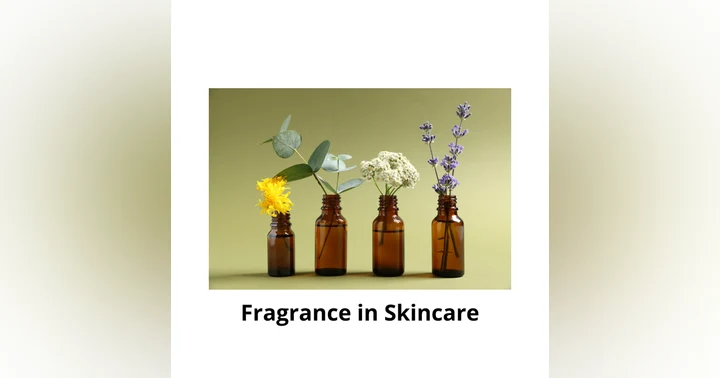
 Fragrance in skincare is one of the most debated—and misunderstood—topics in modern skin health. Is fragrance always irritating? Can you truly be allergic to fragrance, or is sensitivity something different entirely? And are fragrance ingredients really being hidden from consumers?
In this episode, Trina and Rebecca take a thoughtful, evidence-based look at fragrance in skincare products, separating common myths from what dermatology, cosmetic science, and regulation actually tell us. If you’ve ever felt overwhelmed by conflicting advice about scented products, essential oils, or “fragrance-free” labels, this conversation brings clarity without fear or extremes.
We explore:
-
The difference between fragrance allergy vs. fragrance sensitivity
-
How fragrance is regulated by the FDA and cosmetic industry
-
What “fragrance,” “parfum,” and “natural fragrance” really mean on labels
-
Why some people tolerate fragrance well—and others don’t
-
When avoiding fragrance makes sense, and when it may not matter
-
How to make informed skincare choices without eliminating products unnecessarily
Have a question? Send us an email at info@faciallyconscious.com
LIKE, FOLLOW & REVIEW US ON INSTAGRAM, & WHERE YOU LISTEN TO PODCASTS!
Visit our website www.faciallyconscious.com
Linktree | Facially Conscious
Join our new Patreon and Substack for more content from Facially Conscious
Follow Our Hosts On Instagram
Trina Renea - Medically-trained master esthetician and celebrities’ secret weapon
Linktree | Trina Renea, @trinareneaskincare, trinarenea.com and Substack
Julie Falls- Our educated consumer is here to represent you! @juliefdotcom
Dr. Vicki Rapaport -Board Certified dermatologist with practices in Beverly Hills and Culver City @rapaportdermatology and https://www.rapdermbh.com/
Rebecca Gadberry - Our resident skincare scientist and regulatory and marketing expert. @rgadberry_skincareingredients
Credits
Produced and Recorded by The Field Audio
[Intro] Hey, everyone. Welcome back to Facially Conscious with myself, Trina Reneá, Esthetician and Rebecca Gadberry, the Cosmetic Ingredient Guru, highly-acclaimed educator and award-winning journalist. She is the cosmetic industry leader.
We are gathered here together with you to talk about this crazy world of esthetics. It's confusing out there in this big, wide world. That's why we are here to help explain it to you all, subject by subject. We will be your go-to girls. And from our perspective, without giving medical advice, we will keep things facially conscious.
Let's get started!
01:00 Trina Reneá: Hello, hello, hello, and welcome back to Facially Conscious. I am back today. I am Trina and I am here with Rebecca. And we are going to discuss fragrance, deep dive into fragrance. Because fragrance is like a perfume or something. Most people think of fragrance and they think of really smelly, stinky or perfume type things.
01:25 Rebecca Gadberry: Or artificial.
01:26 Trina Reneá: Or artificial. So we want to figure out what the heck they're doing in skincare products, right?
01:35 Rebecca Gadberry: Right. Well, they're fun to smell.
01:37 Trina Reneá: Yeah. They give things scents . So if it says like vanilla and fig or if it says cucumber and things like that. But when I think of that, I think of candles and smelly body creams and stuff like that.
So when I think of skincare products, I think of more natural, or at least I want to go more natural and I don't want smelly products on my face. But why in the world would you put a fragrance in a skincare product?
02:08 Rebecca Gadberry: Especially one that you're paying a lot of money for. People question that all the time. But what's the first thing you do when you open a jar?
02:17 Trina Reneá: Smell it.
02:18 Rebecca Gadberry: Right. So if it doesn't smell the way you expect it to, do you then continue to try it?
02:24 Trina Reneá: No.
02:25 Rebecca Gadberry: No.
02:26 Trina Reneá: And honest to God, that is the first thing that people make a decision on when they're buying a skincare product.
02:31 Rebecca Gadberry: Exactly.
02:31 Trina Reneá: They actually will touch it. The first thing they do is they feel it on their skin and then they go right up to their nose and smell it.
02:37 Rebecca Gadberry: Right. Do you know why we do that?
02:39 Trina Reneá: Why?
02:39 Rebecca Gadberry: Because we're animals.
02:41 Trina Reneá: I am not an animal, Rebecca.
02:43 Rebecca Gadberry: My darling, you are.
02:44 Trina Reneá: Don't call me that.
2:46 Rebecca Gadberry: And our very first sense to ever develop, even beyond touch or sight, was our sense of smell. It is the sense that tells us if we're in danger, because we can smell the enemy before we see it. It's our sense that tells us if food is okay to eat. It's our sense that tells us when we were hunting and gathering, or hunter and gatherers, one or the other, whether a plant was going to be similar to another plant and may work in the same way on the body, or whether it might be interesting to use on our own bodies or as a medicinal. So we smell things because it gives us information. That information is usually whether it's safe or not safe.
03:41 Trina Reneá: Some people have really good sniffers, like chefs. They're really good with that.
03:46 Rebecca Gadberry: In the cosmetic industry, it's called a nose. It means you're a super smeller.
03:53 Trina Reneá: I feel like I'm a super smeller when it comes to candles. I could have been a candle maker.
03:58 Rebecca Gadberry: Yes. And some of those candle places are awesome. A lot of the manufacturers that make candles also have a sideline of making body care because the two go together. And how often have we seen body care line up with candle scents, right?
04:15 Trina Reneá: Right.
04:17 Rebecca Gadberry: Same blend all together.
04:18 Trina Reneá: Actually, the people that make my candles, they just introduced a body care line that you can add your scents into their body care.
04:31 Rebecca Gadberry: Same idea. It's a great idea, because you're enveloping and creating layers of the scents throughout your environment.
04:40 Trina Reneá: I love it. I love scents. That makes total sense why you would put smell over. Because sometimes the natural ingredients in a product, I’ve often asked chemists that I work with, “Can you just take the scent out?” But then I'm like, “Can you put it back in because it doesn't smell good.” And it's just because the natural ingredients don't have a pretty smell.
05:05 Rebecca Gadberry: Don’t smell good. Right.
05:08 Trina Reneá: And people do buy on smell. When you hear people talking about products, they'll be like, “Oh, my God, it smells so amazing.” They would rather have a nice smell almost than they would a product that was better.
05:21 Rebecca Gadberry: And I've talked to people about buying this amazing product, but I could never put up with the smell on my skin. I don't care how good it works.
05:33 Trina Reneá: True.
05:33 Rebecca Gadberry: So you get both sides of the story. Most people are not allergic to fragrances.
05:40 Trina Reneá: That was going to be my next question. Because me as an esthetician, when I ask people if they have any allergies, they'll say, “Oh, to fragrance.” So is it just because their nose doesn't like a smell, they think they're allergic to it? Because how do you know in a product if you're allergic to the fragrance or if it's some other ingredient? There's 50 ingredients in there.
06:01 Rebecca Gadberry: Or if it's an allergy and not an irritation. Usually it's an irritation, not an allergy. The way to make sure of the difference is to go to an allergist, not a dermatologist, but an actual allergist, and have them run what's called the fragrance panel on them and see if they're allergic. There's several hundred different fragrance compounds you can be allergic to.
In the European Union, the countries that are all joined in Europe together, there's a list of 26 different compounds that you have to put on your label to warn people that they're in there. We'll put the list up on our show notes today.
06:40 Trina Reneá: The European fragrance list?
06:42 Rebecca Gadberry: No, it's called the European Fragrance, EU Fragrance 26. We'll just put the list up there. You don't have to know how to get to it.
06:51 Trina Reneá: Okay. And that's basically in Europe, the fragrances that you have to put on your list because there could be an allergen to it.
07:05 Rebecca Gadberry: No, they are allergens.
07:07 Trina Reneá: Oh, do we use those here?
07:08 Rebecca Gadberry: Yes, we do. But we don't notify people that they could be allergic to them.
07:14 Trina Reneá: Meaning like sneezing and stuff?
07:16 Rebecca Gadberry: Or forming hives, yeah, or blisters.
07:18 Trina Reneá: Why would anyone ever put those in their products?
07:21 Rebecca Gadberry: You'd be surprised. There's about 140 different essential oils, and almost all of them have at least one, if not five or six, of those fragrance allergens. Which is why you're more likely to be allergic to an essential oil than you are to something that says “fragrance” on the label.
There's over 5,000 fragrance compounds that can be used to make up different fragrances, including essential oils. Most people are not allergic to all 5,000. I don't know anybody who is.
So when somebody says, “I'm allergic to fragrance,” what kind of fragrance are you allergic to? Usually you're allergic to a citrus fragrance. Those are the most common. Rose and geranium are next, and clove, cinnamon, eucalyptus, those types of fragrances. We'll put the list of common fragrance allergens up there as well.
08:15 Trina Reneá: So if you're allergic to the smell of cinnamon, would that mean that you probably shouldn't eat cinnamon as well, do you think?
08:22 Rebecca Gadberry: It's not the smell of cinnamon. It's on your skin. So if you are allergic to it being on your skin, I can't tell you if it's going to transfer into scent or not.
08:33 Trina Reneá: So citrus is one of the top.
08:34 Rebecca Gadberry: Yeah, citrus is, especially orange and lime.
08:36 Trina Reneá: I can’t eat citrus. That's sad.
08:40 Rebecca Gadberry: Yeah, so go to the allergist if you have an issue. But if somebody says, “I'm allergic to fragrance,” there are different fragrance groups. They are made of different chemicals or these fragrance chemicals. They're called volatile organic compounds. And these different compounds, of which there's over 5,000, can be mixed in a variety of ways to get different types of scents.
09:03 Trina Reneá: So me as an esthetician could say to my client who says, “I'm allergic to fragrance,” I could say, “Have you been to an allergist?” Because they could pinpoint the fragrances for you so that you could use other fragrances and not always have to be fragrance-free.
09:19 Rebecca Gadberry: Right, and open it up. Or you could do your own test in which you just apply a small amount to like a one- or two-inch square on your forearm and wait 48 hours. If it becomes itchy or blistery or a rash forms, you're allergic to that product in some way. It could be the fragrance or something else in it.
09:40 Trina Reneá: And there are some people who have really sensitive skin to all that type of thing. And then there are some people that absolutely don't. But then the fragrance-free things that say fragrance-free on them…
09:53 Rebecca Gadberry: Those don't have fragrance. Whereas unscented has a little tiny bit of fragrance to mask the scent of the product. So stay away from unscented if you really are allergic. Or if you are allergic and you find out from an allergist that you are, find out what kind of fragrance groups you're allergic to. Probably going to be citrus, but there's also your florals, your white florals, your spicy notes, orientals. There's all sorts of different fragrance groups.
10:26 Trina Reneá: Okay. So we mainly put fragrance in products to mask the natural scent.
10:36 Rebecca Gadberry: When it's unscented. When it's unscented, we'll put a small amount in it.
10:40 Trina Reneá: A small amount. Otherwise, you're putting it just for the smell good, usually in product.
10:46 Rebecca Gadberry: For the total three-dimensional experience of using the product.
10:50 Trina Reneá: So it has a nice scent that people are attracted to so they want to buy the product, basically.
10:56 Rebecca Gadberry: It smells like you expect the product to or you look forward to wearing the scent. Scent helps add to the luxury of an experience. So when you're using a skincare product, especially on your face, you want it to smell nice. If it has no scent, a number of people who say, “I want fragrance-free,” will put on an unscented product and say, “It doesn't smell like anything.” So which one do you want?
11:27 Trina Reneá: Right. You want the smell good.
11:28 Rebecca Gadberry: You want the smell good one.
11:30 Trina Reneá: You know what I meant?
11:30 Rebecca Gadberry: Also, fragrance can be functional, what we call functional fragrances, like the eucalyptus in Noxzema or tea tree oil as an antifungal or the pain relief creams. Those are going to have fragrances but they're doing something in the product.
A lot of your acne products now contain tea tree because tea tree oil works on some of the acne bacteria and fungus that's involved with acne.
So you might have a scent, and if you say, “Oh, I don't like the scent, I don't want it in there,” it's not going to work. And you've run into that, I know, in your practice.
12:06 Trina Reneá: Yes. I was going to say, speaking of that, there's a smell, eucalyptus, that is a very strong scent. And when you smell it in a spa, and it's a hint of it and they have it in their products or it's in the steam room or it's in the spa, you automatically think, “Oh, I'm at a spa.” It feels good because you're at the spa.
But I don't like to use eucalyptus products at home in my stuff at home. It's like a specific place for a scent.
12:35 Rebecca Gadberry: Right. And there's probably a thousand different types of eucalyptus that are mixed differently using those different 5,000 compounds. So I could order in the lab when I'm working on a product line, we can order from our fragrance houses, “I want this type of scent in this group smelling like this with an under note of this and a lift note of that.”
Lift notes are what you smell first, under notes or dry downs are what you smell after the product has dried on the skin. And there can be three different scents that you get, including the middle note, which is the one as the product is adapting to the skin.
13:15 Trina Reneá: That's so fun. I remember when I was making my spa, I was like, “We need to have a candle scent that our spa always smells like a smell.” So when people come into the spa, they go, “Oh, this is Spa Lé La.” You know, they wanted that smell. And they loved it. I had to create that. I'm like, “What is that going to be?”
So I went and described an experience to my candlemaker who has a nose. I have three candles, and one I made, but the other two, I described a feeling that I wanted people to feel. They helped me create it by just me telling them what the notes were and how I wanted it to smell.
And we put different oils on different sticks and we put them up higher or down lower and a little more of this, a little more, and it was so fun creating that. It's a feeling that you’re creating.
14:12 Rebecca Gadberry: It's a feeling because your scent and your emotions are triggered by scent. That goes back to when we were, before our brains developed. The emotion of fear will get us moving quickly. And where does that start? It starts with the scent. The emotion of passion or love starts with scent as well. So a lot of who we are is developed around scent.
14:41 Trina Reneá: I love that. I often hear also that fragrance is only put in to hide a bad ingredient.
14:55 Rebecca Gadberry: Oh, my goodness.
14:55 Trina Reneá: Is that true?
14:56 Rebecca Gadberry: Talk about misunderstanding what actually happened. Back in 1977, Congress passed a law called the Fair Packaging and Labeling Act. Through that law, they said, “FDA, you regulate this. You make sure that this is done.”
But what it did was it required all ingredients in cosmetics to be listed on the container. That's why we can see ingredient lists on the container. As a matter of fact, it's listed on the outside of the container, not on the container itself if it's in a box. Because you can pick out what you're allergic to. This was the theory at point of purchase when you're actually looking at the box and put it back if it's got something you're allergic to.
I have a little issue with that because when you become allergic to something, it's after you've used the product, not before. So if you develop an allergy, you don't know that you have an allergy to the product. That's like a little rabbit hole that I just went down, so let's get back to the surface here.
When they did that, the fragrance industry said, “Wait a second, there could be 300, 400, 500 different fragrance compounds in a fragrance. We don't have enough room on the label for that. How are we going to do that? We would make labels stretching out across the room.”
16:18 Trina Reneá: Oh, my God.
16:19 Rebecca Gadberry: So the FDA came back and they said, “Okay, just say fragrance and, for flavor, just say flavor,” because they're also produced from these compounds. And when you put fragrance or flavor on there, we know that that represents a number of other chemicals that can be in the fragrance, so it goes in there.
So if the fragrance is made with a variety of these volatile organic compounds, by volatile I mean that they turn to gas easily and you can smell them, as opposed to something like a fixed oil.
17:00 Trina Reneá: Because I do see on products, it'll say like “grapefruit oil” or “orange oil” or something.
17:07 Rebecca Gadberry: Right. That's the essential oil.
17:09 Trina Reneá: And is that being used as an ingredient for the product?
17:12 Rebecca Gadberry: As an ingredient.
17:14 Trina Reneá: It's not a fragrance that’s being put in.
17:15 Rebecca Gadberry: No, it could be in there for the fragrance. It could be in there for the product. It could be both. But you don’t know.
17:20 Trina Reneá: But you could just put fragrance, if you wanted.
17:22 Rebecca Gadberry: No, you can only put fragrance if it's a fragrance compound. In other words, if there's two or more.
17:28 Trina Reneá: In that?
17:29 Rebecca Gadberry: In the oil that you're using. And fragrances are oils, by the way. So they're oils that evaporate quickly.
17:38 Trina Reneá: So you might see something on a product that says, like, this oil and that oil and this oil and then fragrance as well? That could be a compound.
17:47 Rebecca Gadberry: That's not legal. You either have to list it fragrance, and everything that's in the fragrance goes under fragrance, or you list them all separately. But if you've got essential oils that are part of your fragrance, you can't list them separately from the fragrance.
Now, if you add them separately, that's a different story. That's up to the process.
18:09 Trina Reneá: My head just swirled around.
18:11 Rebecca Gadberry: I know.
18:12 Trina Reneá: I'm like, what?
18:13 Rebecca Gadberry: I didn’t want to bring this up, but you brought it up, so okay.
18:16 Trina Reneá: I'm like, I'm so confused.
18:18 Rebecca Gadberry: Okay, so if I'm making a product and I've got my fragrance oil, I've got my grapefruit oil.
18:24 Trina Reneá: And your fragrance oil being a blend of more than two, in one oil.
18:28 Rebecca Gadberry: Right.
18:29 Trina Reneá: So you could have grapefruit, lemon, lime, and orange, and all in one drop.
18:35 Rebecca Gadberry: Container.
18:36 Trina Reneá: So that's your fragrance.
18:37 Rebecca Gadberry: That would be my fragrance.
18:39 Trina Reneá: And then?
18:40 Rebecca Gadberry: And that could go on as natural fragrance, or you can list all of the essential oils separately. You should never see essential oil on the label. It should always just read “oil”, not “essential oil”. Okay. Again, regulation says…
18:55 Trina Reneá: But if you had lavender there, it would be listed separately.
18:59 Rebecca Gadberry: It would be listed separately. So lavender oil, clove oil, orange oil. They might all go in the same container as a pre-blend, and then you put it in. You can list those separately. But as soon as you start adding fragrance compounds, not the oils themselves but the chemicals that make up the oils, is that clear?
19:23 Trina Reneá: Yes, it is making sense.
19:25 Rebecca Gadberry: Okay, so when we take a look at fragrance, the chemistry of fragrance is very complex. There's a number of different compounds or chemicals or molecules that can go into making up the fragrance.
So you can use an essential oil in there, but you can also use what I call chemical isolates or the pure chemicals, like geraniol or ethyl acetate or camphor or pinene or terpineol, or there's a variety of them. So when you start putting in the different chemicals, then you're dealing with the catch-all term of fragrance.
20:08 Trina Reneá: Okay. So people won't know necessarily what fragrances are in there if you put that.
20:17 Rebecca Gadberry: What fragrance compounds are in there, right.
20:18 Trina Reneá: Which they could be allergic to that, something in the compound.
20:21 Rebecca Gadberry: Which is why I'm saying when you go to the allergist to find out if you're allergic, find out what type of family of fragrance you're allergic to. Because the different families will have the different fragrant chemicals.
20:34 Trina Reneá: Right. So you're never going to know if your product only says fragrance.
20:38 Rebecca Gadberry: Yes, you will. Because if it smells like oranges, it's a citrus family. So you can probably use something that's a white floral or…
20:47 Trina Reneá: Lavender.
20:49 Rebecca Gadberry: Or lavender or an herbal blend. This is why the allergist is so important, because, as you were saying at the beginning, you can open a whole other library of fragrances for you to use.
21:06 Trina Reneá: Right. You don't have to do all fragrance-free forever and have no scents in your life, which is so boring.
21:12 Rebecca Gadberry: It's boring and it's not fabulous.
21:17 Trina Reneá: So the fragrances used in Europe, they use fragrance. They don't not use fragrance. They just don't use those 27 that are on that list.
21:25 Rebecca Gadberry: 26 that are on the list. But let's go back to hiding compounds in fragrance. As we develop fragrances, we found out that there are certain ingredients that are put in there, certain chemicals.
And remember when we started at the beginning of this season, we were talking about everything is a chemical, but light and electricity. So get over your issue with chemicals because you are a chemical factory, your body is, and so are products and foods and everything else around you. Anything that you can touch, feel, smell is a chemical. Some work with our bodies, some don't.
And on certain fragrance compounds, they can work with your body. A few of them will not. So on certain people, not even you might be able to use every fragrance that's out there.
But we have an issue with fragrance because it's an oil. So when we put it into a product, we want to make sure that it extends into the product. Well, that it doesn't sit in one area of the product or it doesn't rise to the top and separate from the product. If it does, then that could be a pure oil. That could really cause an irritation. You want to distribute this less than 1% usually of the fragrance oil through the product.
To do that, we put in what are called fragrance extenders. These are things like your phthalates that we talked about under clean beauty ingredients, that people have a concern about, about fetal abnormalities and genital issues, etc. If you're interested in those issues, listen to that particular podcast.
23:11 Trina Reneá: On Clean Beauty?
23:12 Rebecca Gadberry: Right, on Clean Beauty. So going back, phthalates are used as chemical extenders. Toluene is used as an ingredient to enhance the extraction of the plant fragrance chemicals from the plant, and it will come along for the ride if it's not removed in an essential oil. And toluene has similar issues to phthalates.
Those are just listed under the fragrance. In other words, they're not listed on the container, so you don't know if they're there.
This goes into understanding and knowing your brand. So if your brand advertises CO2 extraction for fragrances, that's great. There's no toluene in it. There's probably no phthalates in it either. But if your brand doesn't, then you might want to ask your brand representative, or talk to them on their website. A lot of these brands have chat rooms. Or just don't use fragrance if you're worried about it.
24:18 Trina Reneá: Yeah, because as a regular person, to be able to go deep diving into it, it's like you've really got to have a sensitivity and really a strong like for something to dive into it like that, right?
24:30 Rebecca Gadberry: Or a strong concern.
24:32 Trina Reneá: Or a strong concern. Yeah. I've had a couple clients who have developed an allergy. They can only use certain things. They have to figure out what that ingredient is, and it makes their skin super dry and irritated and red. It's unfortunate, but there are some people like that out there.
24:52 Rebecca Gadberry: There are. And, again, an irritation is more common from fragrance or any product, and it differs significantly from an allergy.
25:02 Trina Reneá: Cool. Well, I think that's a good deep dive into fragrance. I feel satisfied today. Do you?
All right. Well, let's wrap her up.
25:14 Rebecca Gadberry: Okay.
25:14 Trina Reneá: If you guys have questions, of course, you know, you can email us, and we will see you in the next round. Bye.
25:22 Rebecca Gadberry: Goodbye.
[Outro] This podcast is so needed in the world right now. There's so much information out there that it's hard to know who to believe and if it's right for you.
We are very excited to be your guides and bring you Facially Conscious. You can find info we talked about today in our show notes and on Instagram, YouTube and Facebook.
Please Subscribe, Like, and Review us wherever you listen to podcasts. This helps others find us.
And if you have any questions or ideas, please send us an email at info@faciallyconscious.com