Honey in Skincare: Benefits, Science, and How to Use It for Acne, Aging, and Skin Barrier Health
Why Honey Still Matters in Modern Skincare
In a landscape dominated by lab-engineered actives and complex formulations, one question continues to surface among both professionals and consumers: can a natural ingredient like honey truly compete with modern skincare science?
The answer is more nuanced than a simple yes or no.
Honey sits at an intersection that often creates confusion—natural versus evidence-based skincare. It’s frequently marketed as both, yet rarely explained in a way that bridges medical understanding and esthetic application.
In this episode of the Facially Conscious podcast, our panel explores honey not as a trend, but as a case study in how traditional ingredients can hold up under modern scrutiny. The conversation moves beyond claims and into mechanisms, formulation realities, and clinical relevance.
The Science Behind Honey’s Skin Benefits
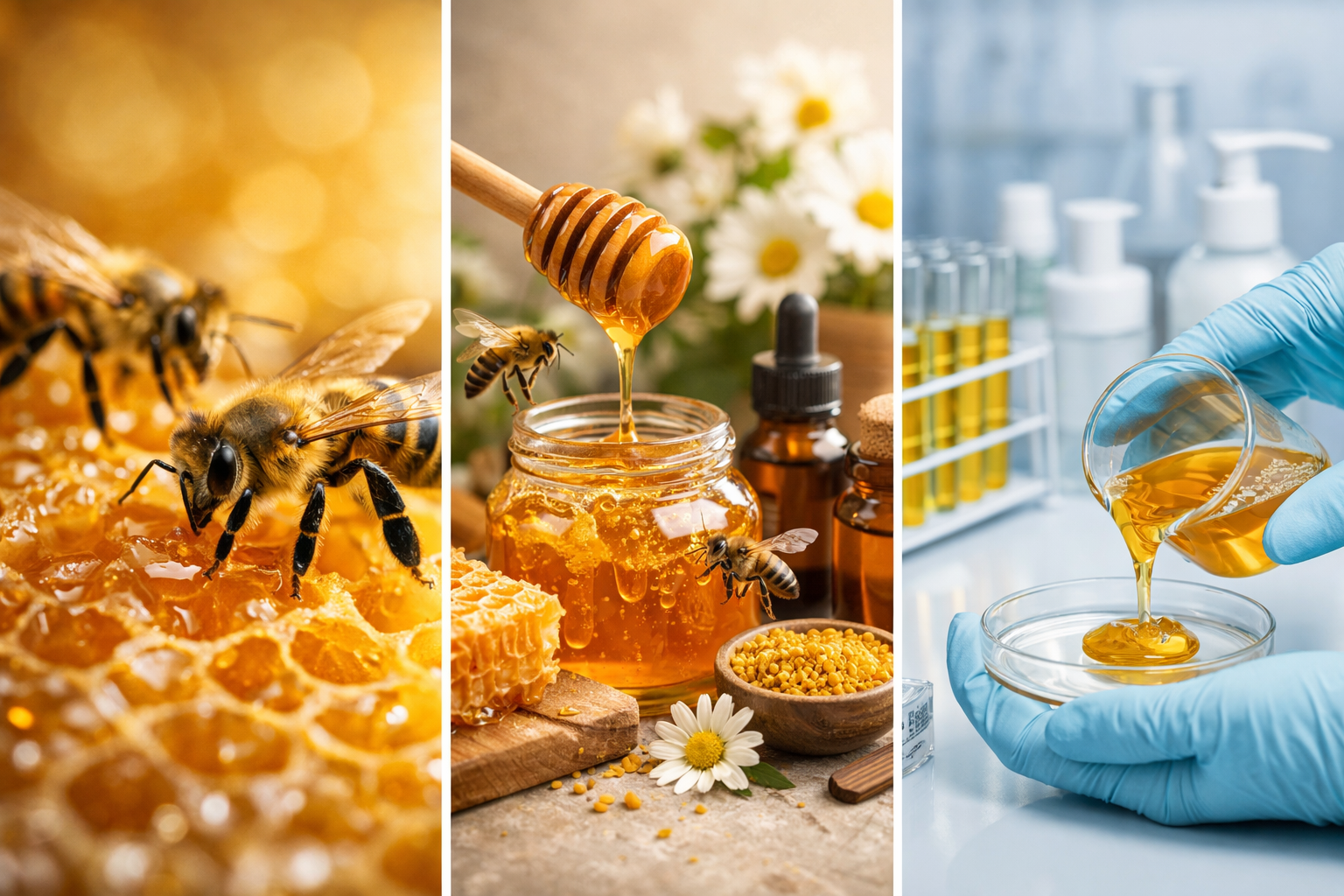
Honey is often simplified as a soothing, natural ingredient—but chemically, it’s far more complex.
It contains over 200 bioactive compounds, including:
- Enzymes (like glucose oxidase)
- Amino acids
- Organic acids
- Vitamins and minerals
- Polyphenols (antioxidants)
Antimicrobial Activity (Acne + Skin Integrity)
One of honey’s most studied properties is its ability to inhibit microbial growth.
- The enzyme glucose oxidase produces low levels of hydrogen peroxide
- Certain varieties (like manuka) also contain non-peroxide antimicrobial compounds
- This creates a broad-spectrum antimicrobial effect
Clinical relevance:
- Supports acne management by reducing surface bacteria
- Helps protect compromised skin (minor wounds, post-treatment skin)
Anti-Inflammatory and Antioxidant Support (Aging + Sensitivity)
Honey’s antioxidant content helps neutralize free radical damage, which contributes to:
- Premature aging
- Inflammation
- Skin barrier dysfunction
Darker honeys, such as buckwheat, tend to have higher antioxidant levels, making them particularly relevant in anti-aging and environmental protection protocols.
Humectant Function (Barrier Repair + Hydration)
Honey acts as a natural humectant, meaning it draws moisture into the skin.
This supports:
- Skin hydration
- Barrier function
- Reduced transepidermal water loss (TEWL)
Why this matters:
Barrier health is foundational. Ingredients that support hydration and reduce irritation are especially valuable in both clinical and esthetic settings.
Not All Honey Is the Same: Why Type Matters
A key point often overlooked in skincare conversations is that honey is not a standardized ingredient.
Its properties vary significantly depending on:
- Floral source
- Geographic origin
- Processing methods
Manuka Honey (Acne + Antimicrobial Use)
- Contains methylglyoxal (MGO)
- Strong, consistent antimicrobial activity
- Often used in medical-grade wound care
Best suited for:
- Acne-prone skin
- Compromised or infection-prone skin
Buckwheat Honey (Antioxidant Support)
- Darker, richer in polyphenols
- Strong antioxidant profile
Best suited for:
- Aging skin
- Environmental damage protection
Wildflower and Other Honeys (General Support)
- Variable composition
- Still provide hydration and mild antimicrobial benefits
Best suited for:
- Everyday skincare
- Cost-effective formulations
What Research Tells Us About Honey in Skincare
Emerging research, including work from Dr. Ferhat Ozturk, reinforces an important shift:
Honey is not just a traditional remedy—it is a measurable, functional ingredient.
Key findings include:
- Different honey types produce distinct biological effects
- Raw, minimally processed honey retains more activity
- Benefits come from synergy between compounds, not a single active
This last point is particularly important for formulation science. Honey’s complexity is difficult to replicate synthetically, which explains its continued relevance.
Practical Applications: How Professionals Use Honey
For Acne-Prone Skin
- Spot treatments for active breakouts
- Incorporated into calming or antibacterial masks
Why it works: balances antimicrobial action with hydration—unlike many drying acne treatments.
For Sensitive or Compromised Skin
- Supports barrier repair
- Reduces irritation without stripping
Clinical insight: useful in patients who cannot tolerate aggressive actives.
For Inflammatory Skin Conditions
- May support conditions like eczema or psoriasis (adjunct use only)
- Helps reduce dryness and irritation
Important: Not a replacement for medical treatment, but can complement it.
How to Identify High-Quality Honey in Skincare Products
As honey becomes more popular, formulation transparency matters more than ever.
What to Look For:
- Raw or minimally processed honey
- Clear sourcing information
- Certifications (e.g., UMF for manuka)
- High placement in ingredient list
What to Be Cautious Of:
- “Honey extract” instead of real honey
- Fragrance-based claims without functional concentration
- Vague labeling with no sourcing details
Beyond Honey: Other Bee-Derived Skincare Ingredients
Honey is part of a broader category of bee-derived actives:
Propolis
- Strong antimicrobial and anti-inflammatory properties
- Common in acne-focused formulations
Royal Jelly
- Nutrient-dense
- Associated with skin regeneration and collagen support
Beeswax
- Occlusive barrier support
- Locks in moisture
Bee Venom
- Studied for circulation and collagen stimulation
- Requires careful use due to sensitivity risk
Key Takeaways for Professionals and Skincare-Curious Readers
- Honey is evidence-supported, not just tradition-based
- Type and processing matter significantly
- It offers multi-functional benefits: antimicrobial, antioxidant, hydrating
- Best used as part of a broader skincare strategy, not a standalone solution
- Ethical sourcing impacts both quality and sustainability
A More Thoughtful Way to Approach “Natural” Skincare
Honey challenges a common false divide in skincare: that ingredients must be either natural or scientifically valid.
In reality, it demonstrates how both can coexist—when examined carefully.
This episode of Facially Conscious expands on that idea through the lens of formulation science, clinical insight, and real-world application. If you’ve ever questioned where natural ingredients truly fit in modern skincare, this conversation offers clarity without oversimplification.
Listen to the Full Episode
To hear the full interdisciplinary discussion—including deeper insights from cosmetic chemistry, clinical practice, and ingredient sourcing—listen to this episode of Facially Conscious.
Have a question? Send us an email at info@faciallyconscious.co
LIKE, FOLLOW & REVIEW US ON INSTAGRAM, & WHERE YOU LISTEN TO PODCASTS!
Visit our website www.faciallyconscious.com
Linktree | Facially Conscious
Join our new Patreon and Substack for more content from Facially Conscious
Follow Our Hosts On Instagram
Trina Renea - Medically-trained master esthetician and celebrities’ secret weapon
Linktree | Trina Renea, @trinareneaskincare, trinarenea.com and Substack
Julie Falls- Our educated consumer is here to represent you! @juliefdotcom
Dr. Vicki Rapaport -Board Certified dermatologist with practices in Beverly Hills and Culver City @rapaportdermatology and https://www.rapdermbh.com/

The Skin Master
Co-host | When Trina Renea became an esthetician she realized the key to success was lifelong learning - a goal that sets her apart from most skin care practitioners.
For over 30 years, she’s explored the fields of cosmetic chemistry, medical esthetics, dermatology, and plastic surgery, becoming an expert in a wide expanse of professional skin care brands, equipment, and treatments. She is a member of the Society of Cosmetic Chemists with three certifications in cosmetic sciences from UCLA and continues to attend spa, medical, esthetic, and scientific conferences worldwide.
Now considered a skin master due to her broad expertise, Trina is a consultant to the Southern California beauty industry and medical esthetic community, selecting and training staff, developing treatments, guiding product selection, and helping professionals best serve their clients.
In 2004, she founded the Facial Bungalow, a clinical spa offering advanced skin care technologies where she continues to work one-on-one with clients to this day. In 2008 she created Trina Renea Skincare.
Is Prescription Acne Treatment Now OTC?