Navigating the Skincare Product Jungle: What Dermatologists and Estheticians Want You to Know

Why Choosing Skincare Products Feels So Confusing
Walk into any beauty retailer or scroll through skincare online, and you’re met with thousands of products promising clearer, smoother, younger-looking skin. From luxury serums to drugstore staples, the messaging is often the same—but the results are not.
So how do you know what actually works?
This is the central question explored in the Facially Conscious Podcast episode, “All Those Products.” Through a grounded conversation between a board-certified dermatologist, a seasoned esthetician, and an educated skincare consumer, the discussion moves beyond trends and into something more useful: how to evaluate skincare with clarity.
The takeaway is simple but often overlooked—effective skincare is not about brand loyalty or price point. It’s about understanding ingredients, consistency, and how skin actually functions.
The Skincare Product Explosion: What Changed?
From Professional Guidance to Open Market Chaos
There was a time when skincare products were primarily recommended and dispensed by trained professionals—dermatologists and estheticians who understood both the formulations and the skin.
Today, that landscape has shifted.
With the rise of e-commerce and social media:
- Anyone can launch a skincare brand through private labeling
- Products are widely available without professional guidance
- Marketing often replaces education
This has created a saturated market where:
- Similar formulas appear under different brand names
- Price does not always reflect formulation quality
- Consumers are left to navigate complex choices alone
Why This Matters
Without foundational knowledge, it becomes difficult to distinguish:
- Evidence-based formulations vs. marketing claims
- Functional ingredients vs. filler ingredients
- Short-term appeal vs. long-term skin health
The 5 Essential Steps of an Effective Skincare Routine
Rather than focusing on brands, a more reliable approach is to focus on function. A well-structured skincare routine typically includes five core steps:
1. Cleanser: Supporting the Skin Barrier
A cleanser should remove debris, oil, and environmental buildup without disrupting the skin barrier. Over-cleansing or using harsh formulas can lead to irritation and imbalance.
2. Antioxidants: Protecting Against Environmental Damage
Antioxidants help neutralize free radicals caused by UV exposure and pollution.
Key insight:
Blended antioxidants are often more effective than single-ingredient formulas.
Common examples include:
- Vitamin C
- Vitamin E
- Ferulic acid
- Resveratrol
3. Exfoliation: Improving Skin Function and Product Absorption
Exfoliation removes dead skin cells and supports cell turnover.
Options include:
- Chemical exfoliants (AHAs, BHAs)
- Physical exfoliants
Important consideration:
Over-exfoliation can impair the skin barrier and increase sensitivity. Frequency and method should be tailored to the individual.
4. Moisturizer: Maintaining Hydration and Barrier Integrity
All skin types require hydration.
A well-formulated moisturizer:
- Reduces transepidermal water loss
- Supports barrier repair
- Enhances overall skin function
5. Sunscreen: The Most Effective Preventative Step
Daily sunscreen use remains the most evidence-based intervention for:
- Preventing premature aging
- Reducing hyperpigmentation
- Protecting against UV damage
Why More Products Don’t Mean Better Results
A common mistake is using multiple products that perform the same function.
Examples:
- Layering multiple vitamin C serums
- Using redundant moisturizers
- Overcomplicating routines
A more effective approach:
- Identify the purpose of each step
- Choose products based on ingredients, not branding
- Keep routines intentional and consistent
How Long Skincare Products Take to Work
The 6–8 Week Rule
One of the most important—and often misunderstood—principles in skincare is timing.
Skin operates on a biological cycle. Most products require 6 to 8 weeks of consistent use to show meaningful results.
Why?
- Skin cell turnover averages ~28 days
- Visible changes require multiple cycles
What This Means in Practice
- Switching products too quickly limits results
- Half-used products often represent missed outcomes
- Consistency matters more than novelty
The Role of Samples
Samples are useful for:
- Testing texture and tolerance
- Identifying immediate irritation
They are not reliable indicators of long-term effectiveness.
Understanding the Business Behind Skincare Products
Private Labeling and Product Similarity
Many skincare products are not uniquely formulated.
In private labeling:
- A base formula is manufactured
- Multiple brands apply their own branding
- Minor modifications may be made
This can result in:
- Similar formulations at very different price points
Why Distribution Channels Matter
When products move into large retail environments:
- Formulations may be adjusted to meet pricing demands
- Ingredient concentrations may change
- Performance may shift
This explains why some products feel different over time or across retailers.
The Risk of Counterfeit Skincare Products
Online marketplaces, especially unauthorized sellers, introduce risks:
- Expired or improperly stored products
- Missing or altered active ingredients
- Counterfeit formulations
For both professionals and consumers, sourcing matters.
Professional Guidance vs. Self-Selection
One consistent theme from the discussion is the value of professional input.
Working with a dermatologist or esthetician provides:
- Skin analysis tailored to individual needs
- Ingredient-based recommendations
- Greater likelihood of product consistency and compliance
There is also a behavioral component:
- Products recommended through consultation are more likely to be used consistently
- Consistency increases the likelihood of results
Key Takeaways: A Smarter Approach to Skincare
- Focus on ingredients and function, not branding
- Build a routine around five essential steps
- Allow 6–8 weeks to evaluate results
- Avoid unnecessary product duplication
- Be mindful of where products are sourced
- Seek professional guidance when possible
Continue the Conversation
This discussion only scratches the surface of what was explored in the episode.
For a deeper, more nuanced conversation on how skincare products are developed, marketed, and used in real clinical and esthetic settings, listen to the full episode of the Facially Conscious Podcast.
Have a question? Send us an email at info@faciallyconscious.co
LIKE, FOLLOW & REVIEW US ON INSTAGRAM, & WHERE YOU LISTEN TO PODCASTS!
Visit our website www.faciallyconscious.com
Linktree | Facially Conscious
Join our new Patreon and Substack for more content from Facially Conscious
Follow Our Hosts On Instagram
Trina Renea - Medically-trained master esthetician and celebrities’ secret weapon
Linktree | Trina Renea, @trinareneaskincare, trinarenea.com and Substack
Julie Falls- Our educated consumer is here to represent you! @juliefdotcom
Dr. Vicki Rapaport -Board Certified dermatologist with practices in Beverly Hills and Culver City @rapaportdermatology and https://www.rapdermbh.com/

The Skin Master
Co-host | When Trina Renea became an esthetician she realized the key to success was lifelong learning - a goal that sets her apart from most skin care practitioners.
For over 30 years, she’s explored the fields of cosmetic chemistry, medical esthetics, dermatology, and plastic surgery, becoming an expert in a wide expanse of professional skin care brands, equipment, and treatments. She is a member of the Society of Cosmetic Chemists with three certifications in cosmetic sciences from UCLA and continues to attend spa, medical, esthetic, and scientific conferences worldwide.
Now considered a skin master due to her broad expertise, Trina is a consultant to the Southern California beauty industry and medical esthetic community, selecting and training staff, developing treatments, guiding product selection, and helping professionals best serve their clients.
In 2004, she founded the Facial Bungalow, a clinical spa offering advanced skin care technologies where she continues to work one-on-one with clients to this day. In 2008 she created Trina Renea Skincare.
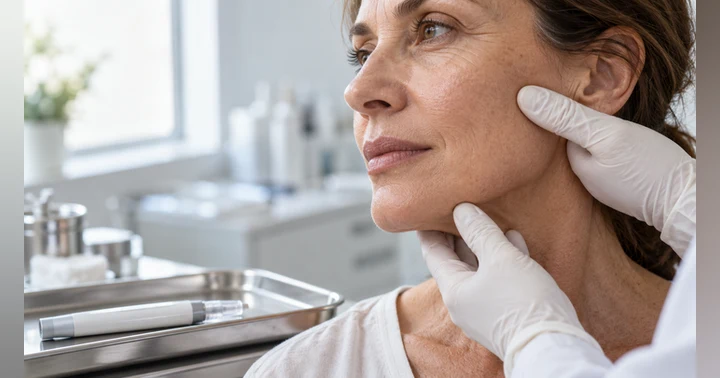
What Happens to Your Face on GLP-1s? A Dermatologist and an Esthetician on "Ozempic Face"