The Ultimate Guide to Hydrating Skincare Ingredients: Glycerin, Hyaluronic Acid, and Skin Barrier Science
Why Skin Hydration Is More Complex Than It Seems
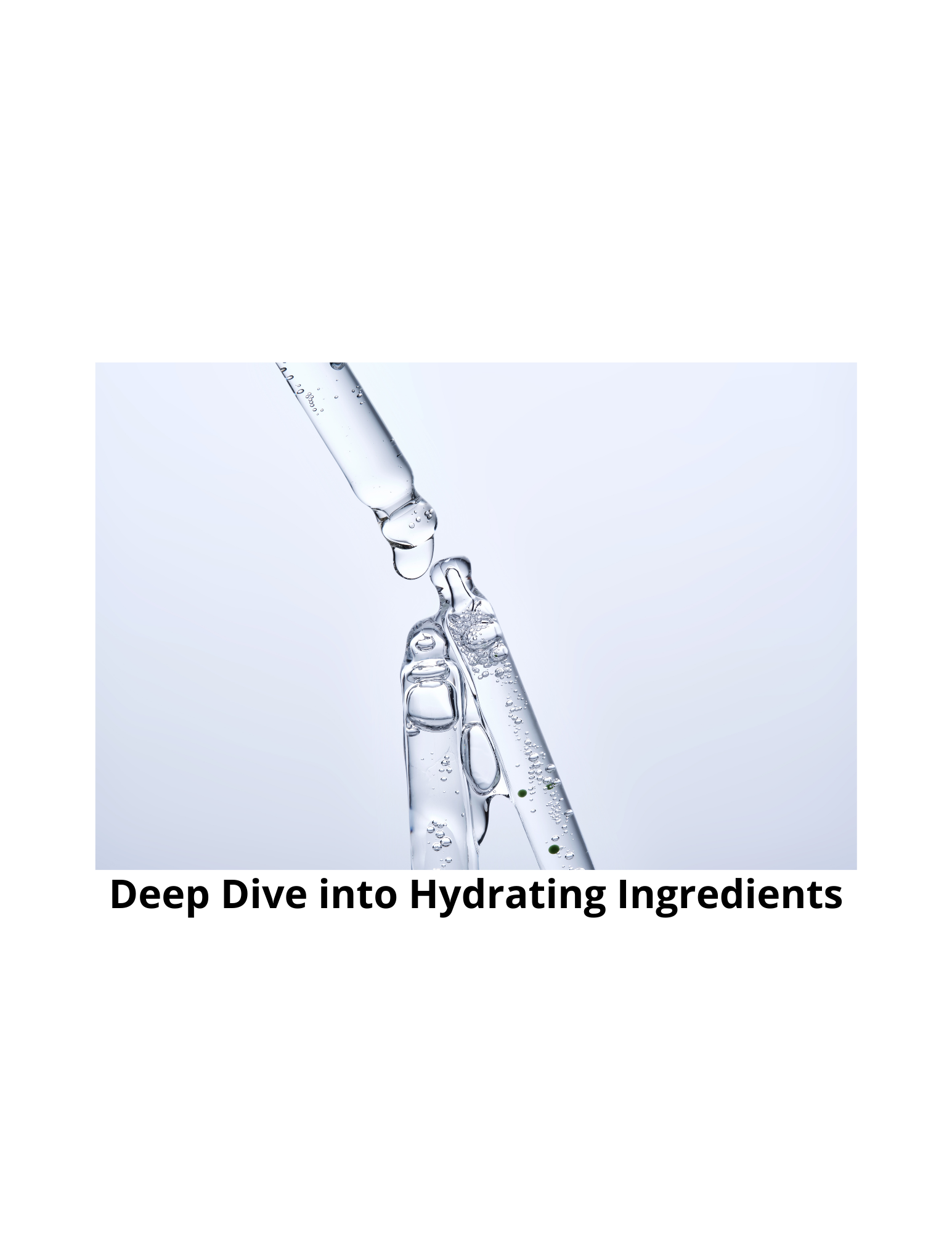
Hydration is often treated as a simple step in skincare—but in reality, it’s one of the most misunderstood. Patients and professionals alike frequently ask: Are hydrating ingredients actually adding water to the skin, or just preventing its loss?
The answer lies in understanding how ingredients interact with the skin barrier, environmental humidity, and internal water balance. In this episode of the Facially Conscious Podcast, esthetician Trina Renea and cosmetic ingredient expert Rebecca Gadberry explore the science behind hydrating ingredients—clarifying what truly works and why.
What Does “Hydration” Mean in Skincare?
Hydration refers to the water content within the skin, particularly in the stratum corneum. Maintaining this balance depends on three key components:
- Humectants – attract and bind water
- Emollients – smooth and soften the skin
- Occlusives – reduce water loss
A well-formulated product supports all three—not just one.
Glycerin: The Most Reliable Hydrating Ingredient
Why Glycerin Still Leads Modern Formulations
Glycerin remains one of the most effective and extensively studied humectants in skincare. Despite its long history, it continues to outperform many newer ingredients in both clinical and real-world use.
How Glycerin Works
- Attracts water from the environment and deeper skin layers
- Holds moisture in the upper epidermis
- Improves skin softness and flexibility
Beyond immediate hydration, glycerin plays a deeper role in skin barrier function by supporting the production of filaggrin—a protein essential for natural moisturizing factors (NMFs).
What to Look for on Labels
For meaningful results, glycerin should appear within the first five ingredients, indicating a functional concentration.
Understanding Humectants (And Their Limitations)
Humectants are essential—but they are not foolproof.
Key Consideration: Water Source Matters
If environmental humidity is low and the formula lacks balance, humectants may draw water from deeper layers of the skin, potentially contributing to dehydration over time.
A Well-Formulated Product Includes:
- Humectants (e.g., glycerin, hyaluronic acid)
- Occlusives (e.g., oils, silicones)
- Emollients (e.g., fatty alcohols, lipids)
- Barrier-supportive pH
The “Washout Effect”
Certain formulations—especially those with excess emulsifiers like stearic acid compounds—can strip natural moisturizing factors during cleansing. This highlights the importance of gentle, barrier-conscious cleansers.
Glycerin + Hyaluronic Acid: A Functional Pairing
Why These Ingredients Work Better Together
Hyaluronic acid is known for its ability to bind large amounts of water, while glycerin improves hydration distribution and retention.
Together, they provide:
- Surface hydration (glycerin)
- Water-binding capacity (hyaluronic acid)
- Multi-level hydration support
This combination reflects a more complete hydration strategy, rather than relying on a single ingredient.
Natural Moisturizing Factors (NMFs): The Skin’s Internal System
The skin naturally contains compounds designed to maintain hydration. These include:
- Urea
- Amino acids
- Lactates
- Sugars (glucose, fructose)
- Minerals
Why NMFs Matter
These components regulate water balance and support the integrity of the skin barrier. However, factors like aging, over-cleansing, and environmental stress reduce their presence.
Interestingly, glycerin supports filaggrin breakdown, indirectly boosting NMF levels—linking topical hydration with internal skin function.
Additional Hydrating Ingredients Worth Understanding
Panthenol (Pro-Vitamin B5)
- Enhances barrier repair
- Reduces transepidermal water loss
- Provides both hydration and soothing effects
Sodium PCA
- A naturally occurring NMF component
- Highly effective at binding moisture
Saccharide Isomerate
- Plant-derived carbohydrate complex
- Provides long-lasting hydration, even after rinsing
Aloe Vera
- Contains polysaccharides that hydrate and calm the skin
- Particularly beneficial for sensitive or compromised skin
How to Choose Truly Hydrating Skincare Products
Practical Guidelines
- Check ingredient order → Hydrators should appear early in the list
- Look for combinations → Multiple humectants often perform better
- Consider formulation balance → Hydration requires more than one ingredient type
- Avoid over-cleansing → Protect natural moisturizing factors
- Adapt to your environment → Dry climates require additional occlusion
Key Takeaways for Professionals and Consumers
- Hydration is not just about adding water—it’s about maintaining balance within the skin barrier
- Glycerin remains one of the most effective and reliable hydrating ingredients
- Combining humectants (like glycerin and hyaluronic acid) improves results
- Supporting natural moisturizing factors is essential for long-term skin health
- Formulation—not just ingredients—determines effectiveness
Continuing the Conversation
Hydrating skincare ingredients are often simplified in mainstream advice—but as this discussion highlights, the reality is far more nuanced. Understanding these mechanisms allows for more informed decisions in both professional treatments and daily routines.
To explore this topic in greater depth, including formulation insights and clinical considerations, listen to the full episode of the Facially Conscious Podcast.
Subtle shifts in how we understand hydration can transform how we approach skin health—both in practice and at home.
Have a question? Send us an email at info@faciallyconscious.co
LIKE, FOLLOW & REVIEW US ON INSTAGRAM, & WHERE YOU LISTEN TO PODCASTS!
Visit our website www.faciallyconscious.com
Linktree | Facially Conscious
Join our new Patreon and Substack for more content from Facially Conscious
Follow Our Hosts On Instagram
Trina Renea - Medically-trained master esthetician and celebrities’ secret weapon
Linktree | Trina Renea, @trinareneaskincare, trinarenea.com and Substack
Julie Falls- Our educated consumer is here to represent you! @juliefdotcom
Dr. Vicki Rapaport -Board Certified dermatologist with practices in Beverly Hills and Culver City @rapaportdermatology and https://www.rapdermbh.com/

The Skin Master
Co-host | When Trina Renea became an esthetician she realized the key to success was lifelong learning - a goal that sets her apart from most skin care practitioners.
For over 30 years, she’s explored the fields of cosmetic chemistry, medical esthetics, dermatology, and plastic surgery, becoming an expert in a wide expanse of professional skin care brands, equipment, and treatments. She is a member of the Society of Cosmetic Chemists with three certifications in cosmetic sciences from UCLA and continues to attend spa, medical, esthetic, and scientific conferences worldwide.
Now considered a skin master due to her broad expertise, Trina is a consultant to the Southern California beauty industry and medical esthetic community, selecting and training staff, developing treatments, guiding product selection, and helping professionals best serve their clients.
In 2004, she founded the Facial Bungalow, a clinical spa offering advanced skin care technologies where she continues to work one-on-one with clients to this day. In 2008 she created Trina Renea Skincare.
New FDA Sunscreen Guidelines, Skin Cancer Facts, and What SPF Numbers Actually Mean