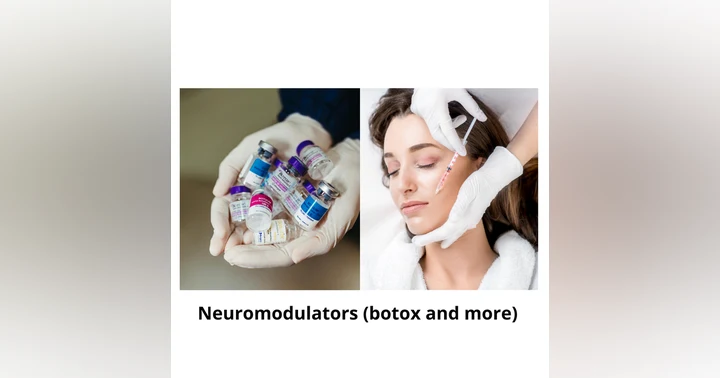
DAXXIFY vs Botox Explained: Dr. Doris Day on Neuromodulators, Fillers & Injection Fatigue


 Apple Podcasts
 Spotify
 Castro
 RSS Feed
 In this episode of the Facially Conscious Podcast, we’re joined by Dr. Doris Day, a board-certified dermatologist based in New York City, to discuss recent developments in neuromodulators and facial fillers—including the FDA approval of DAXXIFY, the first new Botox competitor in decades.
Dr. Day offers clear, clinical insight into how DAXXIFY compares to Botox, what makes it different, and what patients and professionals should realistically understand about its performance and longevity. From there, the conversation naturally expands into a growing topic in aesthetic medicine: filler fatigue.
Is filler fatigue a real phenomenon, or simply a misunderstood concept? We explore what happens when facial fillers are overused, how unnatural distortions can occur over time, and what dermatologists look for when prioritizing facial balance, structure, and long-term skin health.
This episode is designed to help listeners cut through speculation and trends, offering thoughtful, experience-based guidance from a trusted medical expert. Whether you’re skincare-curious, an aesthetics professional, or someone considering injectables, this conversation emphasizes education, moderation, and informed decision-making.
In this episode, we discuss:
-
What DAXXIFY is and how it compares to Botox
-
What FDA approval means for new injectable treatments
-
Differences among neuromodulators used in cosmetic dermatology
-
What “filler fatigue” refers to and how it may present over time
-
How overuse of dermal fillers can affect facial structure
-
A dermatologist’s perspective on natural-looking aesthetic outcomes
Have a question? Send us an email at info@faciallyconscious.com
LIKE, FOLLOW & REVIEW US ON INSTAGRAM, & WHERE YOU LISTEN TO PODCASTS!
Visit our website www.faciallyconscious.com
Linktree | Facially Conscious
Join our new Patreon and Substack for more content from Facially Conscious
Follow Our Hosts On Instagram
Trina Renea - Medically-trained master esthetician and celebrities’ secret weapon
Linktree | Trina Renea, @trinareneaskincare, trinarenea.com and Substack
Julie Falls- Our educated consumer is here to represent you! @juliefdotcom
Dr. Vicki Rapaport -Board Certified dermatologist with practices in Beverly Hills and Culver City @rapaportdermatology and https://www.rapdermbh.com/
Rebecca Gadberry - Our resident skincare scientist and regulatory and marketing expert. @rgadberry_skincareingredients
Credits
Produced and Recorded by The Field Audio
[Intro] Hey, everyone. Welcome back to Facially Conscious with myself, Trina Reneá, Esthetician and Rebecca Gadberry, the Cosmetic Ingredient Guru, highly-acclaimed educator and award-winning journalist. She is the cosmetic industry leader.
We are gathered here together with you to talk about this crazy world of esthetics. It's confusing out there in this big, wide world. That's why we are here to help explain it to you all, subject by subject. We will be your go-to girls. And from our perspective, without giving medical advice, we will keep things facially conscious.
Let's get started!
00:59 Dr. Vicki Rapaport: Good morning, my skin beauties. Everybody's skin is looking dewy and fresh this morning in this unusually wet Southern California morning.
01:09 Trina Reneá: It is. It's so weird. It's such strange humidity.
01:12 Julie Falls: It is like East Coast.
01:13 Rebecca Gadberry: Yes.
01:14 Dr. Vicki Rapaport: Perfect for our guests. Today, we have a very exciting podcast with a very special guest joining us to discuss the newest, hottest, latest FDA-approved neuromodulator, which is a Botox rival. And we will also discuss the phenomenon called filler fatigue. If you don't know what that is, stay tuned to get the juicy details.
I would love to introduce our guest today, is Dr. Doris Day. She is my friend and colleague. And she is not to be confused with the famous actress, although I think she was actually named after her.
Dr. Doris Day is a board-certified dermatologist and she has a thriving private practice in New York City. That I'm actually trying to go and shadow her one day, but it's proving to be difficult because we're both very busy. And she is a clinical professor of dermatology at NYU Langone Medical Center, where she has been honored with many teaching awards.
She is an educator, an orator, a media personality. She's a doctor, a speaker on Doctor Radio on Sirius XM. She gives master classes, and, truly, her talents are endless.
She is an author of three books. The most recent one is called Beyond Beautiful. She is a wife, a mom, a recent mother-in-law, and I can attest she is a great friend and a traveler. She's also a dog mom. I feel like she just has an overall passion for life. And did I mention, by the way, that she is gorgeous and tall with perfect skin, hair, and teeth?
02:44 Trina Reneá: And so young.
02:45 Julie Falls: And so young. You can connect with her on Instagram at @drdorisday or online at w… oh, www, who uses that anymore? At dorisdaymd.com where you can shop her skincare line and read about her practice.
Welcome, to the fabulous Dr. Doris Day.
03:05 Trina Reneá: Yay!
03:06 Julie Falls: Welcome.
03:08 Dr. Doris Day: That was so sweet. Thank you so much. I have one more. I think my biggest achievement so far is, and I don't know if you know this, but the best moms get promoted to grandma. I am now a grandma.
03:21 Trina Reneá: No.
03:22 Julie Falls: That is the best.
03:26 Dr. Vicki Rapaport: I was going to include that in the bio, but I realized I didn't actually know that for sure. So congratulations.
3:32 Dr. Doris Day: Thank you. He's five months old. You might hear him in the background because we have him for the weekend. My kids have plans. Yes, we look for reasons to keep them occupied so we can steal the grandbaby.
03:42 Julie Falls: Oh, my gosh.
03:43 Trina Reneá: That's so sweet.
03:45 Rebecca Gadberry: Congratulations.
03:46 Dr. Vicki Rapaport: I can't believe you have time for that, Doris. That's just incredible.
03:48 Rebecca Gadberry: I can't believe she's old enough to have a five-month-old grandson.
03:52 Trina Reneá: I know. You look so young.
03:52 Rebecca Gadberry: My goodness. You look fabulous.
03:54 Dr. Doris Day: Thank you. I'm just going to ride on that.
03:59 Rebecca Gadberry: The biggest accomplishment.
04:00 Dr. Vicki Rapaport: That's right. I think we should just dive right in. There was a huge FDA-approved medication in this billion dollar industry of neuromodulators. It's going to be a Botox rival. It has the name Daxxify. I would love for Doris to speak on this because she is truly the injecting expert.
04:25 Dr. Doris Day: I think it's so interesting that we think of them all as Botox rivals. I never really think of these things as competition but as ways to get more people to understand that these products really are standard of care, state of the art. They're here to stay and that we can do a lot of great things with them.
We already have several products on the market. We have four. We have Dysport. We have Botox, as you mentioned, Jeuveau and Xeomin. And now we have a fifth one, which is Daxxify.
Daxxify is really interesting because it started out as a topical in theory. They saw the way that this protein that it has helped it absorb and it could have effects where you go to the doctor, instead of giving you an injection, they would apply the cream. You'd sit there, it would take an effect in the crow's feet and then you'd go home.
But the FDA wanted data that showed that it was safe for injection because it was going to be absorbed in the skin. So they had to switch gears, do this study. It took years. They had some setbacks in the way the plant was reviewed. COVID held it back. So they had all these problems. Then on September 8th, it finally, finally got the FDA approval.
One of the things that happened, though, was that as they started to do their studies for the injectable, they noticed two things. One is that they seem to observe… and a lot of these people who did the clinical trials for Daxxify had done the clinical trials for Botox early, early on. So Jean Carruthers, who was in the Botox trial was in the Daxxify trial. She had her own comparisons.
I remember speaking with her as things went along and she said, “These patients are really happy. Not only do they look better beyond what you'd expect from a neuromodulator, but their skin looks better. They seem to have even better results and they seem to be lasting longer.”
So what happens is when a new product comes on the market, everybody who's already on the market panics a little bit. Allergan is good at that. So they look for ways to say, “Well, you know, it's a 40-unit dose, which is we are a 20-unit dose indication for that area. So if we doubled our dose, we'd be the same as them.”
But Botox actually has published data done by the same people who did the studies for them and for Daxxify that showed that if you double the dose, you don't get double the length of improvement necessarily. So their claim at the time that they did those studies was that you don't have to use more to get that result to last that three to four months.
Also, when they did the study for Botox, it was a one-grade improvement. And for Daxxify, they had to show a two-point improvement. The FDA got a little stricter in how much difference you had to see in order to get the approval. So there's a whole bunch of different ways.
And what it really comes down to is that these drugs are all considered biologics. They have their own unique recipes. So you can't compare a unit of Botox to a unit of Dysport to a unit of Jeuveau or Xeomin or Daxxify. So to say 20 units to 40 units with Dysport, it's a 300 unit bio. We do a whole different set of dosing for Dysport than we do for Botox.
So I think of it as like being different languages. You might get a few words if you know one language to another, because there might be overlap in some of the vocabulary or some of the words that have sort of morphed over from one language to another, but the languages are different. So you have to speak the language of the product that you're using.
07:55 Trina Reneá: I have a question. Why would you choose, if they all are doing the same thing which is relaxing the muscle, why would a doctor choose one over the other or for a patient? Is the patient going to come in and be like, “I want this one.”? How do you guys decide if there's five different ones?
08:17 Dr. Doris Day: Well, we have 15 different fillers now and it's the same idea there where they are slightly different. They have different nuances about them. And if you use enough of all of them, you get those nuances.
One thing you have to understand is that every time you get a neuromodulator treatment, you're different because that last treatment affected you. Your life, whatever you're going through right now is going to affect how you're moving. And my observation over 20 years of practice and injecting all of these products is that if you do it right, the person will still be able to move. You're not going to freeze anything. You're just going to redirect energy. And you can help them move in more positive ways.
And different products do it slightly differently. So what it may come down to is that we might use one product in one area for the between the eyes, another for the crow's feet, a different product for the neck, a different for the masseters. But it's really understanding the nuances of the product, getting comfortable with one.
I have a few patients who feel like they see a difference or notice a difference from one to another, but most patients can't tell and most doctors can't tell.
And many doctors might do it by pricing and they'll charge their patients that day. I think that's a mistake. I don't change my pricing based on which product I'm using. I'm going to pick what's best for my patient and just tell them that this is what we're going to use today, unless they have a very strong preference.
I mean, I don't know why somebody would go in and demand a product when the doctor feels like another product would be better. That's a relationship with the doctor.
09:51 Dr. Vicki Rapaport: And Doris touches on all these different options that we have as injectors. We do that. We make those decisions all the time. It's a heavy decision that many factors weigh in.
But I think that where this product might fit really nicely, at least in my experience, will be crow's feet. Because I feel like crow's feet just don't last as long as in between brows and forehead. I think Botox, Dysport, Jeuveau, Xeomin, they last a good amount of time. But crow's feet, I feel like sometimes people six, eight weeks later it's gone.
I know that it can be different. But I'm very excited for Daxxify for crow's feet specifically.
10:26 Trina Reneá: Have they done the studies for that?
10:29 Dr. Vicki Rapaport: No. It's actually only FDA-approved for the glabella. Right, Doris?
10:33 Dr. Doris Day: Yep. That's where they always start is between the eyes. But once it's FDA-approved, we use it where we want. And we were using Botox in the crow's feet way before it was FDA-approved there.
That's one of the annoying things about this whole FDA approval process, is that when you have a product and you show that it's safe in an area and the mechanism of action in another area isn't very different, you still have to go through the entire FDA process as if it doesn't exist in order to get that approval. And so it's so costly to get that approval that a lot of companies are like, “You know what? We won't market it that way. Everyone's going to use it that way anyway and it'll be fine.”
11:09 Dr. Vicki Rapaport: Exactly.
11:12 Dr. Doris Day: One of the things, though, if you have a product that lasts longer, and everyone's going to point this out, and certainly the competing companies are going to point it out, that if you have a side effect, if you should be one of those unlucky few who get a lid droop or a brow droop, that's also going to be long lasting.
And I always tell patients that if you love the results, it never lasts long enough. But if it's not the results you hoped for, it's going to last way too long.
11:35 Julie Falls: That was going to be my next question. Are there solutions to dissolve it, like filler? No?
11:43 Dr. Doris Day: No. There's no neutralizer. There isn't a neutralizer. Sometimes, well, I think what's going to happen is there's always a learning curve with a new product. When you have something that lasts longer, there's going to be a learning curve.
So my thing is I don't like being the first one to use most of these products. I will be in the second group that will have access to this, not the first group. They're going to sort of ramp it up slowly. And I'll see from the first group what they say. A lot of them are close friends of mine who've done the studies and who have more experience with the product.
Then what I often do is I start slower. I may not use the FDA-approved dosing. I might go lower on the dosing and see. I know for me personally, I'm very sensitive to these products. So I might use a quarter of what somebody else needs. I would start in patients who feel like they really just don't get results that last long enough from the other products, not a first-time person, and then I would start at a lower dose and then monitor and see the effects I get, and in my hands what it's doing.
The same company that came out with Daxxify just came out with four new products, the RHA line. I was in the first group for RHA1 Redensity. I think that is such a game changer of a product for areas around the mouth. I've not seen another product that does what this product does.
So I think there's always room for a great new product. And I always say there's always room for one more good one. Anytime we get a new product on the market and someone's like, “Well, we've got so much stuff,” well, there's always room for one more good one. And there are things that we still need to accomplish.
I think we're still in the infancy of what we can do in aesthetics. We're still trying to understand. Now we've learned we don't want to freeze everyone. I personally think we should be super careful in areas like the forehead, because the forehead muscle is an elevator. It's lifting the brows and it's really the only elevator of the brows. So if you inactivate that muscle, you're going to age faster. You'll drop the brows. You may achieve your goal of having no lines, but you're going to defeat the purpose because you won't look better and you'll certainly look older and age faster.
So it's really understanding anatomy, aesthetics, muscle action, and then using the products in a way that's going to help somebody age in a positive direction, not necessarily chase every line and wrinkle.
14:10 Dr. Vicki Rapaport: Agreed.
14:11 Trina Reneá: I so agree with that. I feel like you need a face sculptor, somebody who works with it constantly, all the different ones all the time, who is really skilled with it to get that look. Because a lot of people do, even the younger girls who are in their 30s, even their 20s are looking older than they are by using all this stuff. I'm like, “Oh, no, you're aging yourself.”
14:31 Dr. Doris Day: It's so sad.
14:33 Dr. Vicki Rapaport: Right. And I agree. When you have a good dermatologist, plastic surgeon, PA, injector, they really will help you decide what's best for your face. And again, whether it's this new FDA-approved product or a different one. Doris had mentioned these other four products that this company…
14:52 Trina Reneá: Yeah, what is that?
14:53 Dr. Vicki Rapaport: They're fillers, actually. They're nice fillers. They're hyaluronic acid fillers, a little bit different. But perhaps that is a perfect segue into the filler fatigue, unless you guys have more questions about Daxxify and neuromodulators.
15:06 Trina Reneá: What's the name of the company who made Daxxify?
15:10 Rebecca Gadberry: Revance.
15:10 Dr. Doris Day: Revance.
15:11 Trina Reneá: Revance?
15:14 Dr. Doris Day: R-E-V-A-N-C-E.
15:16 Dr. Vicki Rapaport: Yes.
15:17 Rebecca Gadberry: And Daxxify has two X's in it, D-A-X-X-I-F-Y.
15:22 Dr. Vicki Rapaport: Right. All medications love to have X's, Y's, W's. We don't know why.
15:27 Dr. Doris Day: I think it's because they're running out of words, running out of names.
15:29 Rebecca Gadberry: Yeah, I think so too.
15:31 Trina Reneá: Is Revance a new company that's making all these fillers and this Botox-like product or they've been around for a long time?
15:43 Dr. Doris Day: I don't know. I haven't… they've been around…
15:44 Julie Falls: Let's ask our chemist here.
15:47 Rebecca Gadberry: Well, let me look that up.
15:49 Dr. Vicki Rapaport: No, I agree with Doris. I'm not sure. They're the newest on the market in terms of what we know in America. I don't know if they've been in Europe or whatnot.
15:58 Rebecca Gadberry: Well, they were founded 20 years ago in Silicon Valley. They're now out of Nashville. And they're a biotech company. It's called Revance Therapeutics, Inc. If you look online, it's R-E-V-A-N-C-E.
There's been a lot of publicity about this ingredient or this injectable as well as Revance. The stock went up like 15%, 20% the day after they made the announcement. That day was September 8th of 2022.
If you look on our September 9th Insta on Facially Conscious, we've got some information, including a quote from Dr. Vicki, about the introduction of this material into the market. So if you want to read about it, just go to our Insta or look it up.
16:50 Dr. Vicki Rapaport: Yeah. Great.
16:53 Trina Reneá: And they just introduced the four new fillers as well? Like this all came at one time or it's…
16:59 Dr. Vicki Rapaport: The newest one just came out, what's called Redensity. It's more for hydrating. So you can hydrate lips without making them look too large. They're really nice for lines around the mouth. Doris, do you want to comment on RHA1, which is the newest one?
17:14 Dr. Doris Day: Yeah, it's my new favorite of all favorites. Because what I love about it is that it helps with those lines, what people call barcodes or smoker's lines around the mouth, but without adding bulk.
17:25 Trina Reneá: Well, everybody wants to hear what it is.
17:28 Dr. Doris Day: Yeah, but before, you were making a trade-off. If you don't have upper teeth show, that makes you look older. Your upper lip, if you add volume there or anything that has any weight, it gets heavier, pulls down, and it doesn't look good. So your lines will be gone, but that distance between your nose and your upper lip gets longer, and then you look older or you get more projection, and that doesn't look good either.
So what I find is, one is the lower lip and chin is where I address first. But then when I want to address those lines directly, I had other products, but they didn't last very long. This one just helps get rid of those lines so beautifully but without adding weight or volume. It's as invisible as a product can get. I just love what it does and how long it lasts.
I posted a picture on my Instagram of someone I had used a few of the different RHA products on. I try to always post natural results where it's the kind of work that I do, as opposed to dramatic.
18:26 Rebecca Gadberry: When is this going to be available? Because I want to make an appointment with Dr. Vicki the following day.
18:33 Dr. Vicki Rapaport: It's available.
18:35 Julie Falls: It's available. She's using it. It's a hyaluronic.
18:39 Dr. Vicki Rapaport: Yeah, hyaluronic. I'd like to get into the filler fatigue concept, because I know Dr. Day has a grandbaby to attend to.
So filler fatigue, in my understanding, is it's a combination of two different things. Either too much filler over time, not achieving the results anymore that it used to give you, you know, lifting and youthfulness, and/or too much placed in the wrong area that's aging you and just actually making it look worse. Do you have a better definition, Doris, on filler fatigue?
19:16 Dr. Doris Day: I had to go look it up because I was wondering what it actually meant. Everything I looked up said it was too much filler over time. So it's deflating, reflating, deflating, reflating, or just blowing up a balloon and then keeping on blowing it up.
One of the things when I was talking about being in the infancy of what we know in aesthetics, I was lucky enough to be one of the investigators for the first filler that got approved in the U.S., which was Restylane. I was able to use it for a few years before it even was on the market, and I've been using all of them ever since.
One of my observations is that these fillers last so much longer than what's in the FDA studies. When an FDA study ends, that's the claim that they can make because that's when they stop looking. But if you look at the data of where the patients are at the end of the study, many of them are still at the peak or almost at the peak of what those products can do.
So we don't know how long the products last and we're not using it in the way that they were FDA approved. We're putting them deeper in the skin and sometimes more superficial in the skin. We're putting them in areas like under the eyes or the jawline or the neck, or the temples where it's not approved. We're doing it in all sorts of areas.
And what I've learned is that in the midface, it can last two to four to five, even longer years. Nasolabial folds tend to last. The lower face doesn't last very long at all. So if somebody comes in and they want their midface corrected and they want cheekbones and they need lower face reflation, I tell them that we can do the midface but then you have to commit to coming in more often to do the lower face.
The mistake, and I think where filler fatigue comes in, is that people and the companies teach their buyers, their injectors, and I'm sad that there's so many on the market with so little training, but they teach them that you need your patients on a schedule. They call them clients sometimes, which drives me crazy. But you need your patients on a schedule to come in every three to six months for their injections.
And I see people coming in every six months or four months. They had injections under their eyes or injections in their cheeks, because they were told that this is what you have to do and they followed.
But the product is still there. That's how you end up with the filler fatigue, is that nobody is treating the individual. They're treating a schedule and they talk about patient retention. How is your patient retention? They're always coming in, the reps, and saying, “Let's look at your patient retention.”
I go, “You know, I tell my patients to come in when they miss me.” And sometimes they come in and I tell them, “Go home because you don't need it yet.” But you have to be willing to say no.
21:48 Dr. Vicki Rapaport: Yes.
21:50 Julie Falls: You're very unique in that, though.
21:53 Trina Reneá: A lot of doctors don't do that.
21:55 Rebecca Gadberry: Question.
21:56 Julie Falls: Oh, go ahead.
21:57 Rebecca Gadberry: This is Rebecca. When we talk about filler fatigue, what does that look like? Is that like duck lips or where you see lumps in the skin? Sometimes I see them out here, especially in California. It looks like there's stuff collecting under the skin.
22:13 Dr. Doris Day: This is how I think of it. I think of that person who gets Botox in the forehead because they don't want forehead lines, so the brows drop from above. Then they don't like their tear troughs, which, half the time, aren't even really there and so they get filler from below.
So now they've dropped their brows, made their eyes smaller from above, they've overfilled from below, their cheeks and their tear troughs. Now, that pushes their lower eyelid up, so now they have these small squinty eyes, flat forehead, big cheeks, duck lips and then hyper-exaggerated jaw line.
22:13 Trina Reneá: Sorry, I see those people all the time.
22:49 Dr. Doris Day: Yeah, because now the jawline thing is in and everybody's trying to recreate the look of a masseter or just that angled jaw. It's such an inauthentic look. It becomes a caricature of what true beauty is.
23:04 Rebecca Gadberry: Yes.
23:05 Julie Falls: Right. And then the whole concept of body dysmorphic syndrome can happen. So when these patients come in every three to six months as directed, they don't even remember what they used to look like. They get used to that extra full lip or cheek and it actually just looks like it literally is disfiguring. So we need people like Doris. We need people who are face sculptors.
I feel like I'm very conservative. I feel like I do a really nice job. I do a little bit at a time. I think we really need these people to also remind patients, “Hey, we maybe need to dissolve some of this.” That's the beauty, actually, of the hyaluronic acid fillers is they can be dissolved and we can bring back people's natural beauty.
23:45 Julie Falls: I'm just looking at Doris's Instagram. Doris, I'm a fan of yours. I called your radio station. We had an extensive conversation about rosacea.
23:53 Trina Reneá: That's Julie Falls, by the way.
23:55 Dr. Doris Day: That’s awesome.
23:55 Julie Falls: I'm the only non-professional here. I'm actually a voice actor. I'm not a skin professional, but they call me that.
24:02 Trina Reneá: She's the voice of the public.
24:03 Julie Falls: Yes, I'm the voice of the public. And I think I sent my son, who was living in New York at the time, to your office. He was thrilled and very happy.
24:11 Dr. Doris Day: Aww, thank you, Julie.
24:12 Julie Falls: Yes, but I'm looking at your Instagram and there are before-and-afters that I'm kind of astounded by. The women look like… we just did a whole neck episode and these women look like they've had their lower faces done, and you say without surgery.
I just want to encourage everybody to go on her Instagram and see her before-and-afters, because that's what I'm asked probably most often. What can I do about my lower jaw and my neck? I'm always like, “You're probably going to end up having to need surgery.” But this is showing that you may not.
24:53 Dr. Doris Day: Well, sometimes surgery is the best answer, and I do refer to surgical colleagues on a daily basis. And some people… one of the first questions I ask a patient is, “Are you thinking of having a facelift or would you have a facelift?” And for that patient who has that in mind, I refer them to a plastic surgeon, because I don't do a facelift and I'm not trying to make someone look like they've had one. So I want someone who either never had a facelift or who's had one and wants to maintain it. That's the kind of patient.
25:20 Dr. Vicki Rapaport: Can I give a practical tip? Would be patients ask me all the time about a dermatologist in Tucson or a dermatologist in Louisiana. Often, I do have colleagues that I refer people to, but I don't know every single dermatologist everywhere. But what I do think is really practical is if people are really interested in Doris's work but they live in a state where, obviously, Doris doesn't live. Call Doris's office. Call the AAD. Get really good referrals from…
25:48 Dr. Doris Day: ASDS.
25:49 Dr. Vicki Rapaport: ASDS, AAD.
25:50 Rebecca Gadberry: Can you explain what those mean?
25:52 Trina Reneá: What's ASDS?
25:53 Dr. Vicki Rapaport: American Society of Dermatological Surgery, and AAD is American Academy of Dermatology. I encourage people when they ask me for a dermatologist in Florida, I'm like, “Well, I know that…” I have this one doctor in Miami. She might not be in Palm Beach, but I say, “Call this Miami office. They might know a really good dermatologist in Palm Beach.”
So don't hesitate to call a dermatologist that you see on Instagram for referrals that are closer to your home, because they will send you to somebody great.
26:23 Dr. Doris Day: I refer so many to Vicki and they're so happy. They call me and they say thank you. Because sometimes you get overwhelmed by the choice of doctors and it helps to have a source that you trust to refer them, a colleague that they trust.
26:36 Dr. Vicki Rapaport: Yeah, for sure.
26:37 Julie Falls: But getting back to what you do, that looks so amazing. Is it just like a series of different things?
26:45 Dr. Doris Day: Yes. It's a combination. I've been loving Sofwave. That's one of my newer devices. I have Thermage and Ultherapy. Sofwave uses ultrasound. And I always tell people that you're aging in different dimensions. We have to approach it in different dimensions.
So skincare is a huge component of it. I have a line that I've worked on, but I certainly carry other ones. I don't think there's any one line that's perfect for everyone. I used to work in a research lab and I'm really into ingredients, so I'll try to find the best fit for each patient.
But good quality skin looks beautiful. If you have paper thin, discolored, blotchy skin, even if you contour it perfectly, it's going to look older. So we have to address the skin.
Then we want to try to restore collagen. I'm a big fan of hormone correction or hormone replacement therapy in people who are good candidates. I think women are very poorly served by the lousy publicity and media around the Women's Health Initiative that led women to be afraid of hormone correction. You need estrogen to make collagen. So if you're perimenopausal, please see a doctor who knows how to do it.
I don't prescribe it, but I refer people to that every single day. I believe that we're saving lives by doing that, because it lowers risk of dementia, osteoporosis, heart disease, and collagen breakdown.
And then we talk about devices which can help tighten and lift. I love my Fotona. Sofwave is great as well. Fotona is a laser that helps tighten.
And then we have the neuromodulators, which we do very, very carefully and precisely. The RHA Redensity 1 filler is great for the neck. Hyperdilute Radiesse. It's not a hyaluronic acid filler but it's a biostimulatory filler. And Sculptra is another biostimulatory product that can help restore your body's own natural collagen.
So it's really understanding that it's a slow process. I don't want people to look dramatically different from when they walk in to walk out necessarily because I don't do plastic surgery. I think that's what plastic surgery does. I want people to go out and go out with their friend for lunch and their friend goes, “You look really good. I know you. What did you do? Because you look really good.” But not be able to tell what they did, but just to say you look great. That's, I think, the best compliment.
29:00 Dr. Vicki Rapaport: Amazing, amazing advice.
29:02 Trina Reneá: Yes. I agree.
29:03 Julie Falls: Love it. Love it.
29:05 Trina Reneá: Yeah, I think everything you said is spot on. And the hormone correction situation, I get a lot of clients who are going through that. They're so afraid to take estrogen because they think they're going to get all these cancers and it's so scary. I didn't know that there's been research beyond that.
29:25 Dr. Vicki Rapaport: Oh, it's very beneficial.
29:29 Dr. Doris Day: The research always showed benefit. It was the headlines that got people afraid. They looked at people who were in their 70s and 80s because it was a longevity study, instead of people in their 50s. So they were well past menopause. Some of these women had obesity, diabetes. They went from four out of a thousand rates of breast cancer to five out of a thousand. And the headline was your relative risk increase of breast cancer is 25% or 27%, but your absolute risk is less than 1% more. It's just you always need to know the absolute risk, not the relative risk.
So that was a problem. If you look at women who start younger, before they pass through menopause, when you start to supplement as your body needs, and just understand that hormone correction is lower dose estrogen than in hormone contraceptives. So people take hormone contraceptives their whole life and then they get the menopause and they go, “No, I'm going to power through. I don't want cancer.” You've had estrogen your whole life.
Menopause is a disease. It's just that we all get it so we don't call it that. We should stop calling prostate cancer a cancer, because all men get it, right? So why is it a disease if all men eventually get it? 95% of men they say, when they die, if they do autopsies, they'd have prostate cancer. So we treat that pretty aggressively.
But with women going through menopause, which is essentially partly killing us, we talk about this low risk of breast cancer. You have to dose it right and you have to see somebody who knows how to do it. That's why I don't prescribe it because I wouldn't be able to follow it appropriately, but I know it's important.
31:07 Dr. Vicki Rapaport: Amazing. What a treat. I love that concept.
31:10 Julie Falls: There's so much information.
31:12 Dr. Vicki Rapaport: There's so much more to talk about. Doris, we want you on all the time.
31:15 Trina Reneá: Yeah, can we have you back sometime?
31:16 Julie Falls: Thank you so much.
31:17 Dr. Doris Day: Anytime. This was fun. Thank you for having me.
31:19 Dr. Vicki Rapaport: This was really wonderful, Doris. I appreciate you so, so much. I know my co-hosts do as well. And I love that you came in from NYC all the way out here in California. We love you to bits.
31:32 Trina Reneá: We wish you were here in our studio.
31:33 Dr. Doris Day: Thank you. Me too.
31:35 Rebecca Gadberry: Well, it's nice to meet you. I've been following you for years. This is Rebecca. It's wonderful to meet you. We're actually on Zoom, everyone, so we can see each other. She is absolutely gorgeous. Lovely person.
31:48 Dr. Vicki Rapaport: She is.
31:49 Trina Reneá: And take care of that little baby of yours.
31:53 Dr. Doris Day: Yeah, I will. I'm going to go eat him up now. He slept and I was watching him. I just couldn't close my eyes. I wanted to stare at him. He's so delicious.
32:00 Trina Reneá: Aww.
32:00 Rebecca Gadberry: Aww, that's wonderful.
32:03 Dr. Vicki Rapaport: Be well, Doris.
32:03 Julie Falls: Thank you so much.
32:04 Dr. Doris Day: Thank you. So nice to meet you.
32:05 Trina Reneá: Bye.
32:06 Rebecca Gadberry: Bye-bye, Sweetie. Bye-bye.
32:06 Dr. Doris Day: Nice to meet you. Bye.
[Outro] This podcast is so needed in the world right now. There's so much information out there that it's hard to know who to believe and if it's right for you.
We are very excited to be your guides and bring you Facially Conscious. You can find info we talked about today in our show notes and on Instagram, YouTube and Facebook.
Please Subscribe, Like, and Review us wherever you listen to podcasts. This helps others find us.
And if you have any questions or ideas, please send us an email at info@faciallyconscious.com

Board-Certified Dermatologist and Founder of Day Dermatology & Aesthetics
Guest | Dr. Doris Day is a board-certified dermatologist and founder of Day Dermatology & Aesthetics in New York City. Highly sought after for her clinical expertise, she regularly lectures at national and international medical and aesthetic meetings, teaching other physicians the art and techniques of soft tissue fillers, laser treatments and facial rejuvenation with a focus on the importance of assessment and understanding the global aesthetic. In addition, she consults on product development and marketing strategies for such companies as Allergan, Galderma, Merz, L'Oreal, and P&G, where she serves on medical advisory boards and training panels to help grow their brands.
Between 2004 and 2018, Dr. Day published three books for consumers: 100 Questions and Answers About Acne (2004), Forget the Facelift: Turn Back the Clock with Dr. Day’s Revolutionary Four-Step Program for Ageless Skin (2006), and Beyond Beautiful: Using the Power of Your Mind and Aesthetic Breakthroughs to Look Naturally Young and Radiant (2018); and has hosted her own award-winning two-hour live call-in radio show for Sirius XM’s Doctor Radio since 2008.
Her specialties include laser dermatology, cosmetic dermatology, product development, and medical/broadcast journalism.