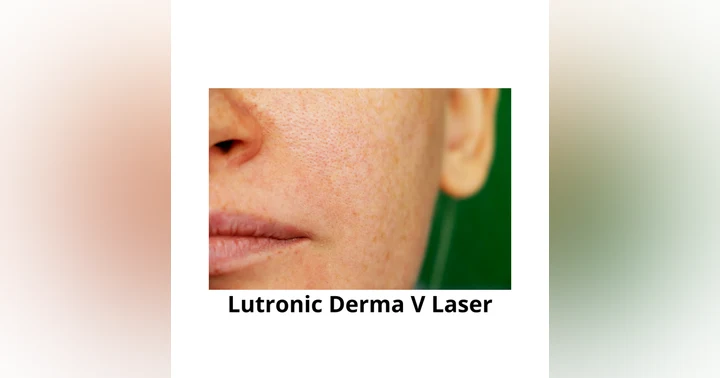
Lutronic Derma V Laser Explained: Uses, Technology & Clinical Insight with Dr. James Wang



In this episode of the Facially Conscious Podcast, we welcome back Dr. James Wang of Metropolis Dermatology for an in-depth discussion on a new laser technology in dermatology: the Lutronic Derma V Laser.
As one of the first dermatologists in the U.S. to use this device, Dr. Wang shares firsthand clinical insight into how the Derma V laser works, what skin concerns it is designed to address, and how it fits into modern dermatologic care. Rather than focusing on trends, this conversation centers on laser science, patient selection, and realistic expectations.
We explore how dermatologists evaluate new laser devices, what differentiates the Derma V laser from existing vascular and pigment lasers, and why understanding treatment goals and skin type matters when considering in-office procedures.
Dr. Wang is a double board-certified dermatologist and dermatopathologist, with training from Harvard Medical School, UCLA, and Memorial Sloan Kettering Cancer Center. His expertise provides a grounded, clinical perspective for listeners seeking clear information about professional laser treatments without exaggerated claims.
In this episode, we discuss:
-
What the Lutronic Derma V Laser is and how it works
-
Skin concerns commonly treated with the Derma V laser
-
How new laser technologies are evaluated for safety and effectiveness
-
What patients should understand before considering laser treatment
-
How laser procedures fit into long-term skin health planning
Have a question? Send us an email at info@faciallyconscious.com
LIKE, FOLLOW & REVIEW US ON INSTAGRAM, & WHERE YOU LISTEN TO PODCASTS!
Visit our website www.faciallyconscious.com
Linktree | Facially Conscious
Join our new Patreon and Substack for more content from Facially Conscious
Follow Our Hosts On Instagram
Trina Renea - Medically-trained master esthetician and celebrities’ secret weapon
Linktree | Trina Renea, @trinareneaskincare, trinarenea.com and Substack
Julie Falls- Our educated consumer is here to represent you! @juliefdotcom
Dr. Vicki Rapaport -Board Certified dermatologist with practices in Beverly Hills and Culver City @rapaportdermatology and https://www.rapdermbh.com/
Rebecca Gadberry - Our resident skincare scientist and regulatory and marketing expert. @rgadberry_skincareingredients
Credits
Produced and Recorded by The Field Audio
[Intro] Hey, everyone. Welcome back to Facially Conscious with myself, Trina Reneá, Esthetician and Rebecca Gadberry, the Cosmetic Ingredient Guru, highly-acclaimed educator and award-winning journalist. She is the cosmetic industry leader.
We are gathered here together with you to talk about this crazy world of esthetics. It's confusing out there in this big, wide world. That's why we are here to help explain it to you all, subject by subject. We will be your go-to girls. And from our perspective, without giving medical advice, we will keep things facially conscious.
Let's get started!
01:01 Trina Reneá: Good afternoon, ladies and gentlemen, and welcome to Facially Conscious.
01:07 Julie Falls: It sounds like you're hosting a horror movie or something.
01:10 Trina Reneá: Good afternoon.
01:11 Julie Falls: Exactly. I love you.
01:14 Trina Reneá: Hi, everybody. We're back.
01:15 Dr. Vicki Rapaport: Good afternoon. Hi.
01:17 Trina Reneá: Good afternoon.
01:17 Dr. James Wang: Hi.
01:19 Trina Reneá: Oh, did you hear that male voice? Dr. Wang is back.
01:22 Dr. James Wang: I'm being singled out.
01:25 Trina Reneá: Hello, and today we are doing Episode 25, which is Lutronic’s Derma V laser. And we have Dr. Wang here to discuss with us about that Derma V. So those of you out there who have been told about this laser or think you might want to do it, we're going to find out all about it today.
So Dr. Wang, how are you?
01:49 Dr. James Wang: I'm doing very well. It's great to be back.
01:51 Trina Reneá: Good to have you. Thanks for coming.
01:53 Dr. Vicki Rapaport: Your skin looks really good today, Dr. Wang. What did you use today on it?
01:55 Dr. James Wang: Thank you. Oh, a little bit of everything, you know. My secret patented skincare routine.
02:02 Dr. Vicki Rapaport: Olive oil?
02:03 Dr. James Wang: Definitely not.
02:04 Trina Reneá: Aquaphor?
02:05 Dr. James Wang: Definitely not that either.
02:08 Dr. Vicki Rapaport: I had a whole plan of things I wanted to put on my face today, but I actually really just put sunscreen on. I was sort of in a hurry. How about you?
02:14 Dr. James Wang: I feel like I'm always trying new things and trying to figure out what it is that... because I have actually very sensitive skin. So I know that if I try it and I don't break out or peel from it, then all my patients can tolerate it. So I like to do everything myself first.
02:26 Julie Falls: That’s good.
02:27 Trina Reneá: Yes, I see you on Instagram doing things on yourself. I see people in your office and you're on the table.
02:32 Dr. James Wang: I do everything, whether it's like a technology, a laser, a skincare product, because I have to tell people how it feels and what it does.
02:39 Dr. Vicki Rapaport: Yeah, I agree.
02:40 Trina Reneá: Well, what if something happens?
02:41 Dr. Vicki Rapaport: And if you love it, you are going to be genuine about it. And if you don't know anything about it, you're not going to really be able to explain the benefits.
02:48 Dr. James Wang: Absolutely. I try not to use the filter on Instagram.
02:51 Dr. Vicki Rapaport: Try not to? So you do?
02:55 Dr. James Wang: No, I don't. I'm part of the older generation where I don't do the whole smoothing. Even on Zoom meetings, I don't have the enhancing effect that they always have.
03:04 Trina Reneá: It's so much more fun to do it.
03:04 Dr. Vicki Rapaport: You don't need to. Your skin is absolutely gorgeous.
03:07 Dr. James Wang: I think the lighting in here. It's the nice, glowy, yellow lighting.
03:09 Dr. Vicki Rapaport: Oh, take the compliment. You look beautiful. You look amazing. I mean, your skin is gorgeous.
03:16 Trina Reneá: Just don't mess it up with anything that somebody could damage your skin with.
03:20 Dr. James Wang: I know. I'm a minimalist in many ways. For me, it's like I don't want to treat things that I'm not sure what I'm treating. That's my philosophy on skin care and skin in general.
03:30 Dr. Vicki Rapaport: So what do you love about the Lutronic Derma V? And can you give us the whole scoop? Because I am not familiar with that laser at all.
03:36 Trina Reneá: Yeah, what is a Derma V?
03:39 Dr. James Wang: I would be shocked if you've heard of Derma V because I think we're the fourth clinic or fifth clinic in the U.S. to actually have this laser. It was newly released within the last year. It's a brand new laser, brand new technology.
Actually, the person who's really responsible for building the older lasers, and they're great. The Vbeam and the PDL lasers, Excel V, these are the devices that you may have heard of, and they do a really great job. But each of them kind of had their pros and cons and things that they weren't able to treat very well. So there was this actual need to really combine what each one is capable of doing into one platform. That's what the Derma V is.
So very excited to have it. I actually begged Lutronic to bring that into the clinic because we had an older IPL originally and it just wasn't doing the job. It felt quite warm. It was uncomfortable. People were kind of redder than they wanted to be over time. So I was just looking for something that was kind of fast, as painless as possible, safe, and can really treat all types of blood vessels, whether they're those tiny little annoying red ones to those little red dots that people have in their bodies and are always concerned that it's skin cancer.
05:04 Trina Reneá: Oh, I have those. Can you take those off?
05:06 Trina Reneá: Yeah, they're called cherry angiomas, and people always think it's like a bad thing. But those are mostly genetic but, certainly, some sun damage can do that too. It's great for those…
05:14 Dr. Vicki Rapaport: I have a good story about cherry angiomas. Do you want to hear?
05:16 Dr. James Wang: Yeah. Sure.
05:16 Trina Reneá: Yes.
05:17 Dr. Vicki Rapaport: Okay. So cherry angiomas, they're really common. And if you have them, you can have thousands of them on your body.
05:23 Trina Reneá: Can you tell us what they look like so everybody knows?
05:24 Dr. Vicki Rapaport: They're pin point bright red specks to half of a pinky nail-size red mounds. Bright, bright, bright, bright, bright red. And you can have hundreds of them.
05:37 Trina Reneá: Like blood red and they're raised and they're like little bumps.
05:38 Dr. Vicki Rapaport: Blood red, yeah. 100% benign. If you have them on your abdomen and you're a surfer, they bleed. It's annoying, but they're benign. They'll just live, stay there forever.
But I had a patient who came in and wanted to know what they were. She was the most adorable thing. I explained to her what they were. They were genetic. They were absolutely benign. You should leave them because you have hundreds of them. It's going to take forever to treat them.
“Oh, I would never want to treat them. I can't believe my body makes such a beautiful color.”
06:08 Dr. James Wang: I love that.
06:09 Dr. Vicki Rapaport: And it was such a different take.
06:11 Trina Reneá: She just wanted to make sure that they weren't cancerous or something.
06:13 Dr. Vicki Rapaport: She wanted to make sure she wasn't dying of skin cancer, right. And I was like, “Thank you so much. Go. Goodbye. Be your beautiful self, because I'm so impressed.”
06:21 Trina Reneá: That's so cool.
06:23 Dr. James Wang: That's such a wonderful story because I think that is the philosophy that I also approach. When someone comes in and they are coming for a consultation, I'm never imparting my own views on someone else. When someone comes in, you presume someone wants that spot off, but you could be completely mistaken. They'd be like, “Oh my gosh, I love this spot. I've always had this. This is who I am.” Right?
So when doing an evaluation, I always tell people like, “Tell me the top two things when you look in the mirror that really bother you? We only treat those things first.” Now, we let people know what are possible but I never say, “Oh, and we'll get rid of those freckles for you.” They could be like, “What do you mean? I love the freckles.” It's kind of offensive.
07:00 Dr. Vicki Rapaport: Yes.
07:00 Trina Reneá: I honestly think it's like, “What are you saying about my freckles?”
07:01 Julie Falls: Trust me, I’ve had consultations with doctors and they're like, “You know, by the way, you really should have a tummy tuck too while you're at it.”
07:08 Dr. Vicki Rapaport: Your tummy?
07:10 Julie Falls: Trust me. So that's so refreshing and lovely.
07:15 Dr. James Wang: Absolutely.
07:16 Trina Reneá: It's really disturbing when doctors say things like that. I went to a doctor's appointment with one of my clients. He wanted to get the bags under his eyes taken out so we went to an eye doctor who does the surgeries. So I sat with him because I wanted to hear what he had to say. And so the doctor was explaining to him, like, “I can take the fat out with a laser and then we can put some filler in there.”
And I said, “Why would you take out the fat and then fill it back up?”
And he said, “Oh, because we take out the fat to get rid of the puff, but then it can be flat and then you can see some dark so then we put a little bit of filler in.” He's like, “Kind of like what you could use. You could use a little filler under there.”
I was like, “What did you just say?” I was like, “I am not here for a consultation.”
So of course I stare at myself in the mirror every day and I push on the area and like, what would it look like if I had filler under there?
08:10 Dr. James Wang: As a provider, you have a great responsibility not to make people get whole body dysmorphia.
08:13 Trina Reneá: Insecure. Yes.
08:16 Dr. Vicki Rapaport: It's so uncool.
08:17 Trina Reneá: It's horrible.
58:17 Trina Reneá: It's uncool. I agree.
08:19 Dr. Vicki Rapaport: I mean, and 100%, and I'm sort of adamant about this, it is 100% for that doctor's pocketbook. It is not to make you happier. If you're happy with your face then you’re not going to mention…
08:29 Trina Reneá: And if I didn't ask you, don't bring it up. I hate it when people do that. If a doctor even starts to try to go at me and say, “Well, would you…” I'm like,. “Don't, don't, don't tell me. I don't want to know. I'm fine.” Unless I come to you with something.
08:44 Dr. Vicki Rapaport: Good. And you’re confident with that, like that woman was with her cherry angioma color. I thought that was such a...
08:48 Dr. James Wang: That's lovely. That's great.
08:50 Dr. Vicki Rapaport: Sorry, a little segue to that.
08:54 Trina Reneá: So Derma V is for red veins. Is that what it is?
08:58 Dr. James Wang: It's red and purple and blues. So you could use it to leg veins, the spider veins you can do on the legs or the difficult to treat, some people have these bluish larger veins around the eyes.
09:13 Trina Reneá: I've seen that.
09:15 Dr. James Wang: It really bothers some people, you know. Kind of runs across like diagonally, and that's all they see when they look in the mirror. So it does a really nice job at clearing those as well.
09:23 Trina Reneá: How does it?
09:25 Dr. James Wang: The laser is actually two wavelengths. It's also 1064 and 532, but a completely different pulse width. So it's actually able to hit larger targets. Instead of pigmentation, it's actually hitting different colors. This one actually allows those larger vessels to absorb the laser energy.
And the way these lasers work is that you're basically delivering energy specifically to that vessel that you want to treat. It causes a heating of the blood inside the vessel. The blood kind of like, it sounds kind of crazy but it boils the blood a little bit. It damages the inside lining of those blood vessels and then the blood vessels will actually shrink down and your body takes up those dead blood vessels. That's how the ones work.
I love treating vascular because we actually, and this laser is really good at it is that it has the cryo cooling which is the most effective cooling on the planet. It's super cold. It's like negative 200-something degrees.
10:16 Trina Reneá: Meaning it doesn't hurt when it hits?
10:18 Dr. James Wang: It doesn't hurt but also… well, it can hurt a little bit because you're actually inducing heat deeper, but what it's doing is protecting that top layer of the skin so you don't get pigmentation. Pigment sits at the top so if you're able to protect that, cooling the skin at the very top, you're going to be only hitting the blood vessels, hitting blood vessels while hitting the top.
And so the cryo cooling is really key technology in Derma V because you can actually adjust. Like I adjust the spray before the laser fires, the amount of time. There's delay, and then also the spray that happens after.
10:50 Trina Reneá: Is the spray the cold part that you're talking about?
10:53 Dr. James Wang: It's liquid nitrogen.
10:54 Trina Reneá: Okay.
10:55 Dr. James Wang: So it does a little jet of cold air right before and right after to protect the skin there.
The laser can also do pigmented spots, the browns. We change the setting so that there's actually no protection of the skin. That's when you peel off those little sunspots too. So all these platforms have kind of a wide range of things you can do, but I love this laser mostly for the vascular treatments.
11:19 Julie Falls: So this would be for rosacea?
11:20 Dr. James Wang: It's great for rosacea. Actually, a lot of our patients were switching over from more IPL technologies to this. And even within rosacea now, we've kind of learned over time since the new laser, I have three or four different settings I have for different types of rosacea. How fine the vessels are, how red someone is. Is it flushing? Is it baseline redness? Is it bumps?
At our dermatology office, we're able to do that medical evaluation and figure out what specific subtype. We don't just fire the same setting on every patient. It's truly a customized thing. You'll see us adjusting that setting just for someone's skin, because we're seeing it's a little bit different than the last person. And so we're going to make that adjustment. And we know how to make those adjustments so it's safe.
12:02 Dr. Vicki Rapaport: Not all rosacea is created equally.
12:03 Julie Falls: I went to you for rosacea and broken capillaries. I think this is the one you used on me. And then the second time, the follow-up, I think you changed the settings a bit.
But you mentioned this taking the place of things like the Vbeam. I remember years ago going and having a Vbeam and my face was bright purple, like eggplant. This had no downtime, so what a difference.
12:32 Dr. James Wang: We can certainly make your face look like an eggplant. It's able to do that. But we choose not to because I'm pretty conservative with these things. You actually don't need that endpoint to get the results you need. It used to be the fact that we thought we had to actually do purpuric settings or make people bruise to get rid of those blood vessels but it's really not the case. We're able to actually do a nice job these days where… and my patients are relatively young in general, like between 20 and 40. It's like no one really has time to have downtime. Most of our patients can only tolerate about three days maximum.
People with the rosacea are already red, right? Their skin is already sensitive. And so the last thing I want to do is make someone even redder and make their face balloon and swell, which is what happens if you over-treat.
13:15 Trina Reneá: Does it ever burst the capillaries? Like I did a Vbeam a while ago around my nose area, maybe 15 years ago and it burst the capillaries. So it looked like purple lines coming out of where the vessel was. I called the company and was like, “Is this going to stay like this forever?” And they said, “No, that's just the cap, the vein burst and it's just the blood that came out of it and it's going to disappear in a little while.” And it did. It went away. But I didn't know and they didn't tell me that was going to happen and it was scary.
13:54 Dr. James Wang: And it's about expectations, right? It's about the counseling. No one wants to be told of a side effect after the side effect happens. You always want to let people know beforehand.
14:02 Dr. Vicki Rapaport: I'm sort of surprised they didn't tell you about the downtime. Like, that's what we… like, “This is going to be red. You can cover it.”
14:08 Trina Reneá: You know, it was right when the technology came out. It wasn't the dermatologist who did it. It was her girl who does all the lasers. She did not tell me. I was actually observing that day at the office and I was watching her do this laser on somebody else. And then at the end when the patient left, she's like, “Do you want me to just heat your things?” So it wasn't like I was having a consultation or anything. But she didn't tell that girl either.
14:36 Dr. James Wang: But it's also hard sometimes to know, right? Sometimes…
14:39 Trina Reneá: It didn't happen right away either. It happened the next morning when I woke up.
14:42 Dr. James Wang: Delay. This is why sometimes we never want to rush people into a laser treatment because If you're taking vitamin E or fish oil, all these things, aspirin, Plavix, all these things that can thin your blood, those are kind of like… also, if you're on these things, you can get a bruise. So people kind of know beforehand.
Also, a bruise setting on one person is not the bruise setting on someone else. So it really depends on the size of the vessel, depends on the fragility of the blood vessels, the blood thinners, all these things kind of play into that. But certainly, in a consent form, you will always have bruising and risk of redness. Even scarring can happen with any laser.
So I always tell people worst case scenarios so people know what to expect. I mean, knock on wood, these things don't happen very regularly in most places that know how to use these lasers. But people going in to do lasers have to know that there's never a no-risk laser.
15:36 Dr. Vicki Rapaport: And can I ask you about leg veins? Because, in my practice, I do sclero on the legs. People ask me all the time, “Oh, can you laser my legs?” I'm like, “Oh, lasers don't work on the legs. They're great for the face, but I'll sclerotherapy the legs.”
And sclerotherapy is, well, there are a couple of different things you can inject into these vessels, but I just do hypertonic saline because I feel like it's the safest. So does this laser work really well on leg veins, really tiny ones?
15:58 Dr. James Wang: It works really well on spider veins. Varicose veins I still send to a vein specialist. As I said, I'm a big believer in specialists because of the training. So anything that's bulging out or kind of just deeper or big blue…
16:08 Dr. Vicki Rapaport: No, I would never touch those.
16:11 Dr. James Wang: Yes. And this is an absolute evaluation, this is why I think going to a medical dermatologist is really important because we can parse out the things that are hard to treat and things that are easy to treat. Not everything is the same. Not every vein is the same.
Dr. Vicki is obviously really great at doing sclerotherapy. I am terrible at it.
16:28 Dr. Vicki Rapaport: I love sclerotherapy.
16:29 Dr. James Wang: I cannot do sclerotherapy.
16:30 Dr. Vicki Rapaport: I love it.
16:34 Dr. James Wang: And there are things that every doctor you go to, there'll be things that they're good at they do all the time, and there are things that they're not so good at. I think the key is really, like I think honesty goes a long way in medicine and in dermatology. So if this is something you're not doing regularly, it's never a good idea to practice on patients. So I will refer out.
But we definitely, like with this laser, because of the cooling, it's very safe because you can protect those veins from hyperpigmentation, which is the biggest concern when we do lasers. Is that when you get a bruise on the nose, for example, Trina, those will go away fast. When you get a bruise on your lower leg, and if any of you have experience injuring your skin on your leg, those, the pigmentation from that can last years.
17:15 Dr. Vicki Rapaport: Oh, yeah. Horrendous.
17:17 Dr. James Wang: Yeah, it could last years, and it happens.
17:19 Julie Falls: Oh, yeah. I went to a facialist once who said, “Oh, let me get rid of that thing on your leg.” She had a little tiny cauterization needle.
17:25 Trina Reneá: Which is totally illegal for her to be using, by the way.
17:27 Dr. Vicki Rapaport: Can we talk about that? Because I hear that all the time.
17:28 Julie Falls: Well, you know who it is, Trina.
17:29 Trina Reneá: I know. That’s insane.
17:31 Julie Falls: She hit me with that and I was like, “Great.” I have a scar there. It's been 20 years.
17:35 Dr. Vicki Rapaport: She didn’t know what to do. She didn’t know the machine.
17:36 Trina Reneá: Oh, she makes me so mad.
17:38 Julie Falls: She was a maniac, this woman. She was also put in jail for putting plastic in people's faces. And I wish I could say her name.
17:46 Trina Reneá: Couldn't we, because she's in jail?
17:49 Julie Falls: She's not anymore now. She's in New York with some fancy, fancy concierge service. I think it's like $10,000 for a facial.
17:54 Trina Reneá: Oh, yeah. I know who you’re talking about.
17:56 Dr. Vicki Rapaport: So she's basically a narcissist who just preys on patients and does whatever she wants, because that’s frightening.
17:59 Trina Reneá: Yeah.
17:59 Julie Falls: Yeah.
18:01 Trina Reneá: 100%.
18:02 Julie Falls: Yep. And I didn't know.
18:02 Trina Reneá: And she built a bunch of little mini-me's that are floating around Los Angeles.
18:06 Dr. Vicki Rapaport: Oh, you know who she is.
18:07 Julie Falls: You got it. Oh, yeah. She sure does.
18:09 Trina Reneá: We'll talk about it after.
18:09 Dr. Vicki Rapaport: Right. So the lasers for the veins are getting better and better and better. Vbeam versus Excel V, I had the reps come in. I was interested in getting either Vbeam or Excel V. Excel V came in. It was like this thing could have cured cancer. The way they talked about it, how amazing the technology was, I was like… but it was like not very expensive and it was really tiny. I chose not to purchase it because I just wasn't sold on it. And so it sounds like the Derma V is even better than the Excel V.
18:40 Dr. James Wang: I've used Vbeam and Excel V on leg veins in the past and I found that the Vbeam is really great for red but it can't do blues, because it's a 595 nanometer wavelength so you cannot hit blues. You can only hit reds. So Vbeam I'd still love for reds.
Excel V can treat the leg veins but I’ve had a higher complication rate. Excel V I feel like the cooling is not good enough. The contact cooling just is not the same as cryo cooling, which is much colder, and so you run the risk of the PIH much more.
19:10 Dr. Vicki Rapaport: Got it.
19:11 Dr. James Wang: Excel V was designed to treat veins and it does a wonderful job, but I think the side effect profile is a bit high. So Derma V actually have the option of switching back and forth between PDL-like efficacy and it's actually, I don’t want to get too technical, but there's like the way that the pulse is distributed, either the long single pulse or the addition of multiple small pulses, which is one of the major differences between a Vbeam, a PDL laser and the Excel V. So you have the option of switching back and forth on the Derma V, which is really crazy. Because if you've used one and you're like, “I don't feel comfortable with the new laser,” you literally can put on a Vbeam setting and treat it all the settings could be just like a Vbeam.
You know what? I’ve done Excel V before. You can switch it to an Excel V-like setting and literally do the same thing Excel V, except no numbing, no gels. It just hits immediate.
20:02 Trina Reneá: Okay, quick question. Is Excel V and Derma V made by the same company?
20:06 Dr. James Wang: No, Excel V is Cutera. That's been out in the market a lot longer. But the original original is actually PDL Vbeam. And James Bartholomuesz, who's the chief technology officer at Lutronic, actually was part of building the original Vbeam and the Excel V. So this is his next generation.
20:26 Dr. Vicki Rapaport: And this is a question really for me as a dermatologist, but also for people out there just to understand how lasers are priced, why they are priced so high because they cost us so much. Can you give me an idea about what it would cost me to buy a Derma V?
20:40 Dr. James Wang: So Derma V's are very specific. It's a very, very complex laser to build and so they're not even releasing it to non-dermatologists. For me, that shows that there's a lot of ethics behind it, because it's not just about the profit. They want people who know what they're doing so people can actually get results safely. Right?
So it's a limited release to dermatologists with a lot of training because this is not a beginner laser. This laser is very complicated. Hollywood Spectra is also a very complicated laser. There are other platforms that are simple to use and simple to train on. But Hollywood Spectra and Derma V require both an assessment of the skin of the patient and then figuring out, like, how do I tailor to that specific person?
A laser like this can cost anywhere between $150,000 to $300,000 a platform for the initial purchase. There's oftentimes also a lot of these lasers, not Derma V specifically, will have consumable costs. Each time you run a cycle, a company will charge something or the disposable tip itself is hundreds of dollars per tip. There's also maintenance contracts upwards of $20,000 a year, just in case it breaks.
So lasers are very expensive to maintain.
21:57 Julie Falls: Can you lease them?
21:59 Dr. James Wang: Some companies have a lease back method, but I don't love that method because it will actually, it incentivizes the provider to actually recommend it more than they should because they are leasing it. So they're having this pressure to make a profit.
22:20 Julie Falls: Yes, I have been on the other side of that, so, yes.
22:23 Dr. James Wang: I don't think it's ethical to do that. And it's not a good way.
22:26 Trina Reneá: I know doctors who share lasers. Like, they have them a couple of days a week and then another doctor will borrow. Like they share it. Right?
22:36 Dr. James Wang: Yeah, I think that's fine. I don't love moving lasers around. Lasers are very sensitive equipment. Some are probably fine. There are hundreds of mirrors on some of these lasers. When a laser is moved, if any part of that mirror is malaligned, you're going to get a change in either the spot size, the energy. So whenever I move a laser from one location to another, I actually have the laser company come and move that laser for me. I never move a laser on my own. These things are very sensitive and so I'm always concerned that it's actually going to damage the laser itself.
23:10 Dr. Vicki Rapaport: And some doctors share lasers but the laser remains in an office, like it will remain in the surgery center. Like OB GYNs who do MonaLisa or vaginal rejuvenation, the laser will be there and like 10 doctors sort of use that laser. Which is great because it is like buying a house.
And I am curious because, and I understand I like the theory or the philosophy that they're only selling to derms because, like you said, you have to understand the skin structure, you have to understand all the downside. They're not going to sell it to a med spa because they don't want their laser to get a bad rap on Instagram, like, “I got burned by the Derma V.” You got burned by the Derma V because the person wasn't trained and didn't do what they needed to do to give you a really good treatment. So I do like that.
But it is important for people to understand it costs 100k to 300k for these lasers. That's why it's a thousand bucks a session, $200 a session. They're not really probably getting a great laser because it's not… and the pressure of the lease thing, that question you were saying Julie, when a doctor purchases a laser, they're financing it. They're paying that monthly “lease”. It's just a bank payment.
So, I mean, there's always pressure on doing procedures to pay for the lasers but that's why, hopefully, a doctor makes a smart purchase because they know that their practice can absorb it. They're not going to have to like do 50 procedures in a stressful situation to pay for that monthly payment. But we're not paying cash for these things. Like we have a monthly nut to pay.
24:38 Julie Falls: I remember everybody pushing those Ulthera machines like crazy. They had bought those things and nobody wanted to…
24:46 Dr. James Wang: Pricing is such a funny thing. It depends on where you are. But I find that the price of these lasers sometimes… the reason I like Lutronic, and I have other lasers too so Lutronic is not the only company I work with, but the reason I like them is because so much of their budget actually goes into R&D. They're actually creating new technology. They're not just buying a company that has the old technology and making it fancy. And then 80% of their budget is on marketing and billboards and things like that to get people in.
Because, ultimately, what patients, and I think that's why patients come to us is that they're coming in for the expertise and they're coming in for a truly customized evaluation and good technology regardless of the brand. I think brands are important, and it's amazing someone knows about Derma V or something specific, but they're looking to dermatologists to guide them.
And so people come to us aren't like, “I'm coming here for XSculpt.” I won't name anything. But certainly, patients come to us don't care what we use. They're coming to us so we can make a recommendation for them.
25:46 Trina Reneá: To fix something.
25:48 Dr. Vicki Rapaport: For a result.
25:49 Trina Reneá: For a result.
25:51 Dr. James Wang: I know it's a little different kind of mindset as a med spa. I think it's actually harder to be at a med spa where it's all about name recognition and what device you have, right? But as a dermatologist, I think they're coming in for the expertise rather than a certain brand. And that gives me leeway to truly choose the best lasers that work rather than on a specific brand that has good marketing, but I'm not totally sold on the technology itself.
26:19 Dr. Vicki Rapaport: Well, and also dermatologists, we're seeing so many other things. We're doing so many other things. We're doing so much medical. We're doing skin cancers. We're doing acne. So we don't feel pressure to always do lasers all day long.
I know that you also do medical derm. You do a lot of cosmetics but you do…
26:33 Dr. James Wang: I love medical derm.
26:35 Dr. Vicki Rapaport: It's so nice because it's like if somebody doesn't want to do, for instance, Ultherapy, whatever, Julie, when you said you were pressured to do Ultherapy, I never did Ultherapy. I sent so many patients to a different dermatologist for Ultherapy because even I was sold on the technology.
But I didn't want to buy that $200,000 laser, so I remember referring out like 10 people a month. I'm like, “Why aren't I doing this?” I didn't want that pressure. So sometimes it is nice. You get that feeling from the doctor. If they're pushing, pushing, pushing, you probably don't really want to do it because there's some kind of strange situation going.
We have so many other things that we have going on. Like if people don't want to do what we recommend, that's okay. Eventually, they come back because they trust us, and they're like, “That sounds good. They gave us a great consult. I like that price point. I think it's going to work.” So you just have to be true to yourself, you know?
27:19 Julie Falls: I had a referral to go and have a lymphatic massage on my face. So I went to this doctor in, I guess it's West Hollywood. I'm not sure. I'd heard of him. A plastic surgeon recommended him. I went there and he had a nurse who does this wonderful lymphatic massage.
I had three people come in, and they handed me, just towards the end of my treatment, they handed me a book of recommended treatments that they thought that I should do, upwards of like $5,000 or something.
28:01 Trina Reneá: She shared that to me.
28:01 Dr. Vicki Rapaport: A book?
28:02 Julie Falls: Uh-huh. A book.
28:04 Trina Reneá: I was like, “What?”
28:05 Julie Falls: And totally unsolicited. And I've heard terrible things about this doctor and this type of stuff that they pull there.
28:13 Dr. Vicki Rapaport: You just wanted the lymphatic massage.
28:15 Julie Falls: Exactly. I maybe asked a question about a laser. That's probably what led to…
28:20 Dr. Vicki Rapaport: For our podcast, not for yourself.
28:24 Julie Falls: I mean, run, don't walk from these type of people, you know.
28:29 Trina Reneá: So can I ask with this Derma V, mostly it's to hit those veins in your face or on your legs or wherever. If people are going for that, that's the laser you're going to kind of go to. But how much is a treatment? Does it happen right away? One treatment and the veins are gone?
28:48 Dr. James Wang: Oftentimes it does. So if you're treating specific veins, we do see that result pretty. I would say, like I tell people two, maybe, for some of these specific vessels, but it's just really a powerful platform. We're able to kind of hit it really hard.
The things that take more sessions are that, like, overall flushing. I tell people it's like tree branches. We're literally pruning the tree branches each time we do a laser. So if you have chronic rosacea, we have medical ways to treat it.
But I find that medical treatments for rosacea can be helpful to a certain point. There's usually a plateau at which you're like, you're going to get that baseline redness regardless. I think the bumps can be taken care of well medically, but the lasers will help with the bumps too. But I just find that most people, by the time they come to see us, they're already really frustrated with the rosacea. They've been given this and that, and that medication topical and oral antibiotics on these things.
29:42 Dr. Vicki Rapaport: Don't forget they've been to their naturopath to try and fix their rosacea, which didn’t work.
29:46 Dr. James Wang: Yeah. The thing is we actually have a clinical trial arm in our clinic and we are learning more about rosacea and the effects of microbiome and gut flora on the skin, and so it's one of these things that I’ll tell people like, “Tell me what you're at least taking.:” But there'll be things like, “Oh, you probably shouldn't be on that one.”
So there's a lot we don't know about rosacea and so I tell people there are ways for us to try to figure out what it is that your triggers are. It's the medical stuff. Others are like, “You know what? I just want to do a laser.” It's true. People want to do it because people don't want to do something every single day. Lasers are kind of satisfying in some ways because it's like it's external. So you know you're not messing anything up inside. And then you're like, “I'll come in twice a year and get a laser and look great. I don’t have to worry about this for six months.” That's a that's a big value-add for a lot of people, versus like, “I'm going to use this cream or gel every night.”
30:39 Julie Falls: Yeah, but meanwhile, there could be an inflammation situation that they're not paying attention, you're right, connected to the gut or whatever else is going on. If it's severe enough, I think your skin is kind of the portal. It's telling you what's going on.
30:52 Trina Reneá: Right.
30:53 Dr. Vicki Rapaport: You’re right.
30:53 Dr. James Wang: Yeah. Absolutely.
30:55 Dr. Vicki Rapaport: But I only made fun of the naturopath because I do have a couple of patients that are like, “No, no, no, I don't want that prescription. No, no, no, I don't want to do the laser. I'm just going to go to my naturopath.” So then I feel like a slap in the face a little bit. Like, why did you even come to me, because I'm not the naturopath. I'm not going to know what to do. But they won't do the other arms that they need, of the treatment that they need to do.
And I agree with you. It's everything. It's gut. It's food. It's environmental. It's maybe going to the allergist. It's obviously doing lifestyle changes. And it's also medication, topical, maybe oral. And the laser. It's everything.
31:31 Julie Falls: Drinking, drinking, drinking.
31:32 Trina Reneá: Especially when you're dealing with rosacea, which is like it's a forever thing you're dealing with.
31:34 Dr. James Wang: It's so tough.
31:37 Dr. Vicki Rapaport: And for those people who have it so severe, they just can't just change their diet.
31:41 Dr. James Wang: It's also misdiagnosed a lot. I feel like people come in, “I have acne,” and it's like, “That's not really acne.” So there's a lot to be said about misdiagnosis as well as the different treatments that are out there and what people read on TikTok and stuff like that about putting like lime juice or lemon on their face. A lot of things are like probably shouldn’t be doing that.
31:57 Trina Reneá: TikTok and Instagram people drive me crazy with their make-believe things they tell you.
32:02 Dr. James Wang: There's some good information out there, actually. There's always people who do a little bit of research and actually make those educational, but I think those little anecdotes are really dangerous, especially anecdotes that are paid or sponsored because there's literally a contract that prevents people from saying anything bad about something. I think that's also a big issue.
But I do think that they can be great avenues for educating people on how a process looks, or before they go in for a laser, they're really anxious. They're like, “Oh, that's how that process will go.” So they come in, they already have expectation. I think that could be the helpful aspect of social media.
32:32 Dr. Vicki Rapaport: Yeah.
32:33 Trina Reneá: Yes.
32:35 Julie Falls: They've done all the journeys, like the Accutane journeys are so great. Patients can look at those people on social media.
32:40 Dr. James Wang: Absolutely.
32:41 Dr. Vicki Rapaport: And then they can really understand like, “Oh, yeah, yeah. I remember that journey. They talked about how dry their lips were.” Yeah, you're right.
But can I just ask a question about TikTok, social media? What is that woman's voice, that robotic voice? Can they please change that? Why has it not been changed yet?
32:54 Dr. James Wang: Robotic?
32:58 Trina Reneá: You can actually pick the voice that you want.
33:02 Dr. Vicki Rapaport: It's absolutely horrendous.
33:03 Trina Reneá: And you can put your words in that you want, and then you can pick the voice. But many people pick that girl.
33:07 Dr. Vicki Rapaport: But everybody chooses that woman.
33:09 Dr. James Wang: I think it's the default.
33:11 Dr. Vicki Rapaport: Oh, my God. It's absolutely horrendous.
33:14 Trina Reneá: You know who taught me this? My 11-year-old daughter.
33:16 Julie Falls: I just was going to say it.
33:18 Trina Reneá: She's like, “Mom, we can change the voice.” I was like, “Oh, my God, there's voices. You can pick a voice for your words?”
Because I was like, “Can we just do that thing where it does the captions?” And she's like, “It can actually have a voice.” I was like, “Oh, my God.”
33:31 Dr. James Wang: Yeah, it's pretty funny. They mispronounce things all the time. I think there recently was one where there was an influencer who posted. We don't work with influencers in that way, but certainly it was a patient of ours. It was like we had the word “collagen” and the robotic voice was like, “And it even gives you coll-again.” I'm like…
33:49 Trina Reneá: Coll-again?
33:50 Dr. James Wang: It's kind of funny. I feel like it kind of helps with the whole TikTok is silly. TikTok is silly, right? Like, there's little catchy things. So it doesn't bother me because I know that's the whole point of it and it's very short and very brief. So I find it to be kind of funny.
34:02 Dr. Vicki Rapaport: Well, when you're a perfectionist, you're probably like, “Oof, I don't like that.” But actually, it's kind of cute.
34:07 Dr. James Wang: It's not my post, so I'm okay with it.
34:11 Trina Reneá: All right, everybody, we're going to wrap this Derma V thing up. But I have to tell the audience here what is the price of a treatment for, do you do it by area? Like, if I just want the sides of my nose or an entire leg, like how do you price it?
34:27 Dr. James Wang: Yeah. It's actually, for us, it is a specific area type of pricing. But the range would be like $350 to $650 or $750 per area, depending on what you want to do.
34:38 Trina Reneá: Like $350 for an inch?
34:40 Dr. James Wang: No, just for like if I'm treating all the blood vessels on the nose, for example. But I think there will be variability as well, just because right now it is a brand new laser. It is one of the things that there isn't too much comparison in terms of what's on the market. But I like to price this similar to what a lot of people price like the Excel V or other things, because we're already been treating with these other technologies for a long time.
My goal is to make sure people can have access to it. It's really to make sure that, because. blood vessels themselves it's different from like a sunspot, which is truly cosmetic in many ways. Sometimes the bright red of rosacea is disfiguring and people are always so self-conscious about it. I want to make sure that people can actually do this.
And they know it takes some maintenance over time, so I don't like to price these things high at all. Certainly, we have a lot of costs. This laser is very expensive, but for me, I don't finance my lasers. So I actually like to know that it's something that we have in the clinic for people.
And I don't have to think about each individual person I'm treating. I really just recommend it when people need it. So for me, it's not a big revenue generator or like a big profit kind of thing. For me, I see it as almost like a medical laser. I think rosacea is a medical condition that makes a lot of people really self-conscious.
35:58 Trina Reneá: So if somebody was like, “I have these veins on the side of my calf,” and it's like half the calf area. And then they're like, “I also have these veins around the side of my nose, and I have a blue vein on my eye area. Can you treat all that?” Do you just come up with a price kind of based on…?
36:15 Dr. James Wang: Yes. Absolutely.
36:16 Trina Reneá: How do your people decide how much something like…?
36:20 Dr. James Wang: We have some guidelines for it, but certainly it depends. Everyone is so different. And the veins can be more difficult to treat than others, right? With blood vessels, especially on the legs, I always do a test spot and have people come back a month later to see, because there's still risk. Any laser, anything with heat is going to have risk.
36:36 Trina Reneá: A risk of what?
36:37 Dr. James Wang: Of pigmentation.
36:37 Dr. Vicki Rapaport: Hyperpigmentation.
36:38 Dr. James Wang: But even hypertonic saline can have some risk of PIH as well.
36:41 Dr. Vicki Rapaport: Oh, for sure.
36:42 Trina Reneá: Wait, what is that? What did you just say?
36:44 Dr. Vicki Rapaport: That's what I inject. He was saying even the hypertonic saline, which is what I use to do sclerotherapy.
36:48 Trina Reneá: It can also cause pigmentation?
36:50 Dr. Vicki Rapaport: Hyperpigmentation on the legs is very common. I mean, it goes away, but it can take years.
36:55 Trina Reneá: Because you're sticking a needle into the skin and injecting into a vein. But it can still cause a topical…
37:01 Dr. Vicki Rapaport: Not typically. So typically what happens, in my experience, the vein itself looks actually pretty good. Pretty rarely does the actual vein become hyperpigmented, but you spill out like a little bit in the skin before you're actually in the vein or as you're stopping the injection. And that little bit that's in the soft tissue can hyperpigment. It's very irritating. And any irritation can bring on inflammation, which can bring on pigment.
37:24 Dr. James Wang: This is why I need a professional injector like Dr. Vicki because if someone doesn't know what they're doing, you're going to get that pigmentation. And oftentimes, you won't know before you do it. You're like, “Oh, it's just injecting some salt water into my veins.” But it's high risk, and so people have to know. Just like anything else that you’re doing.
37:38 Trina Reneá: You got to be a skilled injector.
37:41 Dr. James Wang: Yeah, i don't want to spill too much of the hypertonic saline into the surrounding tissue.
37:45 Trina Reneá: Okay. Oh, the other thing. Does it hurt? Did we talk about that? Does the Derma V hurt?
37:53 Dr. James Wang: So because of the cooling, it's much more comfortable. So we don't typically do topical numbing, although, again, we offer it.
38:00 Trina Reneá: Doesn't the topical numbing make the veins disappear?
38:03 Dr. Vicki Rapaport: It can. It depends on which topical numbing that you use.
38:07 Dr. James Wang: Yeah. Ours actually makes a lot of our… so the topical numbing we use makes it redder, which actually allows more of the target to actually be there for the laser. Actually having redness from the numbing is great.
38:18 Dr. Vicki Rapaport: Which numbing are you using?
38:21 Dr. James Wang: We use a lidocaine-tetracaine combination of 23%, 7%. And we use plasticized numbing. It's a great one. It's really night and day from what we used to use. We used to use BLT, like 20-10-10 even, and it was not as good as the 23-7 LT, so that was very different.
38:37 Trina Reneá: This is doctor talk.
38:40 Dr. James Wang: Sorry about that. But numbing does make a difference. It does make a difference. We don't use numbing for everything. But people who really can't tolerate any discomfort, that's the case.
But things that do hurt, larger veins do hurt because they're absorbing more energy in the skin, so it will feel quite warm. Now, the pulse is only like less than one second, right? It really eases that temporary discomfort. But if someone is doing like a whole leg, I usually recommend doing a test spot and then doing areas at a time, not doing the whole area.
39:11 Dr. Vicki Rapaport: Also, because Dr. Wang likes to go in and out of the rooms. He doesn't want to spend an hour on your legs, probably.
39:18 Dr. James Wang: It's not even that. I think if someone truly has a whole leg full of varicose veins, we have to wonder why. There's some other thing going on. It's just not spider veins cosmetic anymore. It becomes there may be some underlying blockage of a vein. And those patients, they should get scans.
39:34 Dr. Vicki Rapaport: I agree.
39:35 Dr. James Wang: The medical part always comes first and the cosmetic part comes second.
39:40 Dr. Vicki Rapaport: I had a patient with, just a quick doctor speak, terrible stasis dermatitis, which is like brown pigment on the shins, and freezing cold feet, red freezing cold feet. She came to me for this brown pigment, can I laser it?
I said, “You know, you have stasis dermatitis. This is a circulation problem. Who's your internist? Has he or she ever evaluated for your circulation?”
“No, he's never evaluated for my circulation.”
I said, “You need to go. Go to the vascular surgeon. It's a non-invasive ultrasound. They can evaluate your flow.” Like, “No, we're not doing this.”
And that's, again, back to this going to somebody who understands that not all pigment is created equally. Not all locations are benign problems. You have to get the full evaluation before you're jumping in to get a laser treatment.
40:21 Trina Reneá: Which is also why you go to a dermatologist rather than sometimes a med spa for certain things like this, I would say.
40:28 Dr. Vicki Rapaport: I would say all the time.
40:33 Trina Reneá: I don't know. I don't refer to med spas, so I don't know that much about them. I'm sure there's probably some that have, like, doctors on staff that see the patients first, maybe. I don't know.
40:44 Dr. Vicki Rapaport: We'll talk about med spas another time.
40:45 Trina Reneá: Yes, med spa is an episode of its own.
40:46 Dr. Vicki Rapaport: But I agree there are some good and some bad about them, yeah.
40:50 Trina Reneá: Okay, so does anyone else have a question? Any questions about the Derma V? Do we all understand what it is?
40:56 Julie Falls: I think so.
40:57 Trina Reneá: The price of it, the downtime? One question I did have is, when you say you do a test spot, do they go home and come back?
41:06 Dr. James Wang: Yep. You have to give at least four to six weeks for it to see the final, because sometimes the pigmentation doesn't happen until a couple weeks later. You don't want to do a whole area and then realize later that the pigmentation is there, so we're very cautious.
Because I've done sclerotherapy before. I've done different lasers before. I've seen how dangerous some of these things can be. And so that's where the experience comes in. If you're brand new, you have no idea, you're just firing a laser. I think it's easy to be like, “Oh, yeah, the vein is gone.” But once you see complications, and anyone who does any procedure will see them, it's like how do you learn from them?
And so, over time, I get more conservative. We get better at what we do over time, like anything else. But it's really how you take away any complications. The key is letting patients know ahead of time that these are possibilities, because everything has some trade off.
41:55 Trina Reneá: What about on the face? Is it the same, or more on the legs with the hyperpigmentation? Do you also do testing on the face?
42:02 Dr. James Wang: No. On the face, we're pretty comfortable with the face because we do a lot of that. We're familiar with kind of prior lasers like Vbeam and Excel V. We know the settings to use. So we have great success on the face with kind of minimal side effects. But I still tell everyone it's possible.
42:18 Julie Falls: Can I ask a quick question, both of you? Do you ever say to your patients, as far as the sclerotherapy and the lasers for the spider veins, do you ever ask them if they're on hormones, birth control, or any kind of hormones? Can that be a cause of some of these veins? That's what I've been told. Just curious.
42:41 Dr. Vicki Rapaport: Good question. Yes. I mean, in terms of when we see a new patient, we'll get a good history and medication list. But in terms of leg veins, being on hormones, whether it's birth control or IUD with hormones or other exogenous hormones, it doesn't really... it can affect and you can get more leg veins but it doesn't necessarily mean that the treatment won't work for them. They don't have to be off hormones to get laser or leg or sclerotherapy on their veins.
43:09 Julie Falls: In other words, if they're on the hormones, they're not going to continue to just keep coming back with more…?
43:13 Dr. Vicki Rapaport: Not necessarily. Veins, not necessarily, the way melasma can be really, really, really sensitive to hormones. But for instance, like if somebody has a recent pregnancy and all of a sudden they get all these leg veins and they want to have future pregnancies, it's up to them. Do they want to treat their veins in between their pregnancies, because they probably will get more veins? That's totally fine. Some women want to wait until all their pregnancies are finished, then they want to treat their leg veins. But it's not really a contraindication to be on hormones.
43:39 Julie Falls: What about like HRT? Because I was told if you really want to get rid of them, you have to go off all hormones.
43:45 Dr. Vicki Rapaport: What's your opinion? With veins, not necessarily. But I think melasma…
43:48 Dr. James Wang: I think they come back. I really do. No matter how you treat it, I think it's going to come back. All vessels are tree branches. There's a reason why they develop in the first place. So I think you can treat them and knock that one out, but the body is going to try to make more.
And I find that most of my patients aren't willing to wear compression stockings. This is why it's so difficult. You do a great job doing sclerotherapy and they don't do the compression. Then three or four months later, some of these things, even after the damage, can reopen if they're not absorbed by the body.
I do tell people that when we do lasers, we're actually physically destroying those blood vessels in many ways. We can always sprout new shoots from their leg.
44:28 Dr. Vicki Rapaport: But the hormones don't influence it, necessarily any more aggressively in your…
44:33 Dr. James Wang: The thing is, most people are on hormones for a reason. I don't like to take people off of medications that they're using for other medical indications, because, as you said, we're treating the aftereffects of those things. So as long as we can do it safely, other people know that. Now, if they certainly feel like they want to go off of those things, they can. But I tend not to play around people's medications for medical indication.
44:56 Dr. Vicki Rapaport: Right, for a cosmetic reason.
44:57 Dr. James Wang: For a cosmetic reason. That's right.
44:59 Trina Reneá: All right. Let's do some takeaways. You ready, Julie?
45:02 Julie Falls: You go first.
45:02 Trina Reneá: Me? No.
45:04 Dr. Vicki Rapaport: I can give you my takeaway.
45:06 Trina Reneá: There we go.
45:06 Dr. Vicki Rapaport: My takeaway is that I'm loving having a dermatologist next door to my couch here and bounce things off of on our podcast.
45:18 Dr. James Wang: My takeaway is I love having a dermatologist next door to me. But in addition to that, I think we're talking about Derma V as well and just letting people know that technologies advance significantly. The Derma V is actually a great laser that combines multiple aspects of the PDL, Vbeam as well as the Excel V on one device. And it has the cryo cooling, so it's actually the safest of all the devices currently, because it's able to protect the skin as it's treating blood vessels.
45:47 Trina Reneá: My takeaway is that I didn't know that this laser, or these types of lasers could cause hyperpigmentation. On the legs, I think that it's best to, even if the doctor doesn't say to do it, to request a test spot before you move further. And wait four to six weeks to see how that goes so you don't hyperpigment all at once like in the moment. That is my takeaway.
46:13 Julie Falls: I think if people ask me about rosacea treatments, you can do just so much with all of the antibiotics and all the topicals. These wonderful new lasers are another thing to have in your arsenal, and go for it. Try everything. And stop drinking.
46:37 Dr. James Wang: That's the hard part.
46:38 Trina Reneá: That's the hard part.
[Outro] This podcast is so needed in the world right now. There's so much information out there that it's hard to know who to believe and if it's right for you.
We are very excited to be your guides and bring you Facially Conscious. You can find info we talked about today in our show notes and on Instagram, YouTube and Facebook.
Please Subscribe, Like, and Review us wherever you listen to podcasts. This helps others find us.
And if you have any questions or ideas, please send us an email at info@faciallyconscious.com

Board-Certified Dermatologist & Dermatopathologist
Guest | Dr. Wang is a Harvard and UCLA-trained double board-certified dermatologist and dermatopathologist. He specializes in diagnosing and treating skin cancers, psoriasis, eczema, and acne (including the safe use of Accutane). He is also an expert in anti-aging skin care, injectables, as well as laser treatments for scars, sunspots, and broken blood vessels. He has been named each year as Superdoctor, Top Doctor, and Top Dermatologist in various publications in the Los Angeles area.
He attended college at Washington University in St. Louis, where he graduated summa cum laude and Phi Beta Kappa in biology. He earned his MD from Harvard Medical School and, concurrently, his MBA in healthcare policy from Harvard Business School.
From Boston, he came to southern California to complete his medical internship at UCLA-Olive View Medical Center and his dermatology residency training at UCLA. His interest in the microscopic diagnosis of skin conditions ultimately led him to complete a clinical fellowship in dermatopathology at the world-renowned Memorial Sloan Kettering Cancer Center and Weill Cornell/NY-Presbyterian Hospital in New York City. He is a specialist in diagnosing skin cancers, such as basal cell carcinoma, squamous cell carcinoma, and melanoma.
He has published numerous peer-reviewed articles and textbook chapters, as well as given presentations at national and international conferences. The Pacific Dermatology Association awarded him the Arnold W. Gurevich Prize. In addition, he received an international grant from the American Academy of Dermatology to… Read More