Why Do My Brown Spots Keep Coming Back? A Dermatologist and an Esthetician on Pigmentation
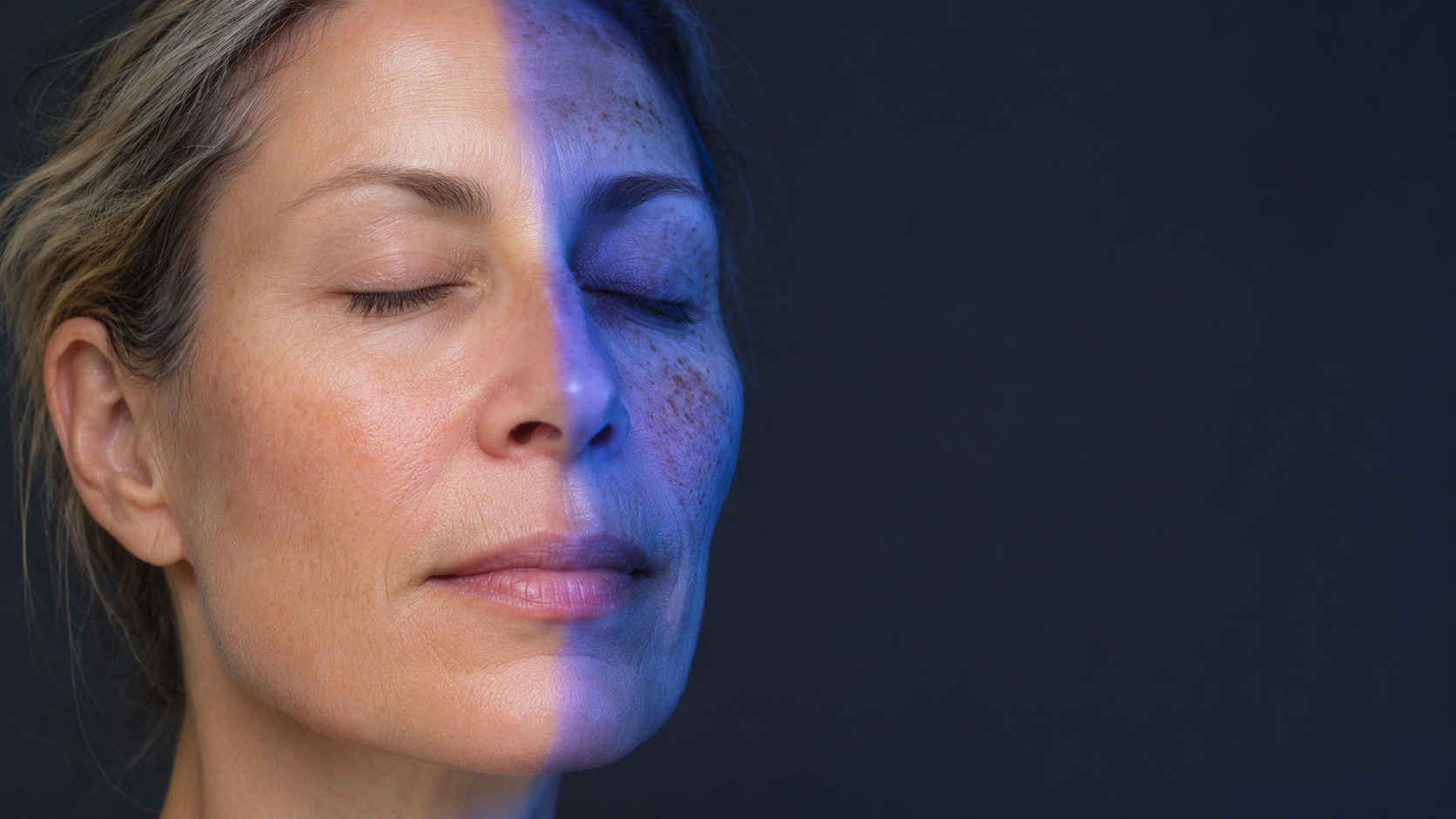
You treat a brown spot. It fades. You spend one week at the beach, and there it is again, as if it never left.
On this week's Facially Conscious episode, Why Do My Brown Spots Keep Coming Back?, board-certified dermatologist Dr. Vicki Rapaport, esthetician Trina Reneá, and consumer advocate Julie Falls talk about why. It's one of the most common concerns we hear from women as they get older, and one of the most misunderstood.
Pigmentation is a beast
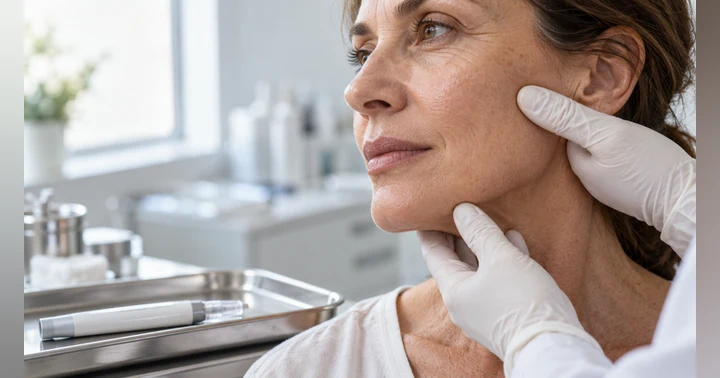
Trina opened with the plain truth: pigmentation is hard to treat. Results depend on what kind of pigment you have, what you're willing to do at home, how much you're willing to spend, and whether your expectations match reality. As she put it, her job as an esthetician is to explain how pigment moves up and down in the skin, that some of it is epidermal (closer to the surface) and some is dermal (deeper), and that it's a lifelong management, not a one-time fix. Most of the time, she's working alongside a dermatologist, with prescription medications and lasers in the mix.
The types of pigmentation
Dr. Vicki made the point that everything starts with knowing what you have. People assume there's one kind of pigment and one answer for it. Here's how she broke it down.
Sunspots (lentigos). The flat brown spots from sun exposure. The "age spots" and "liver spots" on the backs of the hands are the same thing.
Freckles (ephelides). Also triggered by sun, but a different thing from sunspots.
Post-inflammatory hyperpigmentation. Darkening that follows any kind of injury: an acne lesion, a kitchen burn, a rash. Some areas clear easily, some don't, and much depends on the injury itself.
Redness. People often call redness pigmentation, and Dr. Vicki agrees. It's just pink pigment instead of brown. Broken capillaries get lumped in too, though those are vascular.
White spots (hypopigmentation). Trina raised this one. Dr. Vicki explained that white sunspots are very difficult, because there's no laser that targets white. White patches from dry skin or eczema are treatable. Vitiligo, which is a loss of pigment, is a medical condition and is also treatable.
Friction darkening. Where skin rubs, at the neck, underarms, and inner thighs, it can darken and thicken. Dr. Vicki called it nearly impossible to treat, and then shared something encouraging: in patients losing weight on GLP-1 medications, it's clearing. Trina summed it up: less friction, so the pigment fades on its own.
How a dermatologist treats brown spots
For sunspots and other brown pigment on the face (melasma is the exception and needs its own approach), Dr. Vicki starts with a strong IPL, which she finds clears about 80% of it. Then she asks for very strict sun avoidance and an excellent sunscreen. If more help is needed, she prescribes a compounded cream with retinoic acid and alpha arbutin. Hydroquinone is still the gold-standard fading agent, but it can be irritating. Alpha arbutin is a gentler relative of it. The retinoic acid resurfaces the skin, and the alpha arbutin fades the pigment.
For redness, the answer is light, specifically a vascular laser like Vbeam or IPL. Peels don't help pink, but if there's redness plus uneven tone, Dr. Vicki likes a series of light peels to even out the rest. Julie said that combination has helped her.
How an esthetician works with pigment
Trina's approach is worth spelling out, because it shows what a good esthetician and a good dermatologist do together.
First, education. She explains how melanin cells work, how heat makes pigment worse, and how topical products can help but only if the pigment is in a place they can reach. She tells clients how to live with it at home: stay out of the sun, wear the hat, skip really hot showers.
Then, if a client wants to go further, she connects them with a dermatologist, and she often suggests starting with IPL, because it targets both the reds and the browns. When the client comes back, Trina can show them what happened. The pigment that lifted was at the surface and treatable. The pigment that stayed is usually deeper. Now they know they're dealing with two different problems.
From there, she maintains, with facials, products that help suppress melanin, brighteners, and sunscreen. And she doesn't promise more than she can deliver. "I don't promise any promises with pigmentation," she said. No cure-alls. No fix-its. Just guidance, for as long as it takes.
The realistic timeline
This may be the most useful part of the episode. Dr. Vicki tells her patients it's 6 to 12 weeks before they'll see any improvement at all, and 3 to 12 months before they'll see real change. Jumping from product to product before then is how people convince themselves nothing works.
Trina added the part people least want to hear: once it's lighter, it's maintenance forever. Stop, and you go to the ocean and it comes right back. Julie, who has learned this from both of them over the years, put it simply. It doesn't disappear. It lies dormant.
The good news is that protection pays off. Julie remembered a plastic surgeon telling her years ago, after she left Miami, that sun damage can partly reverse if you stay out of the sun. Dr. Vicki agreed: a small percentage does improve once the skin isn't being hit again and again.
Prevention starts young
Pigment gets harder to treat with age, so Dr. Vicki's first message was for listeners between 12 and 30: be strict about the sun now. Trina shared that her own 15-year-old daughter is part of a trend of teens checking the UV index to tan, without sunscreen. What she tells her: be nice to your older self.
Dr. Vicki's advice to parents: if you show a teen what skin cancer looks like, show it on someone young. A picture of older skin won't feel relevant to them.
And look behind your ears. Trina told the story of a client with flaky ears and a perfectly round brown spot behind one of them that the client had never seen. Trina told her to get it checked, then realized it rubbed off. It was hair dye caught in a thin, harmless growth Dr. Vicki identified as a likely seborrheic keratosis. Behind the ears is a spot dermatologists want you to check, for pigment and for skin cancer.
Tinted sunscreen, senolytics, and the under-$20 aisle
Julie asked whether tinted sunscreens can actually fade pigment. Dr. Vicki's view: a tint by itself prevents pigment from getting worse but doesn't treat it, unless the formula includes real fading ingredients, and those are hard to keep stable in a sunscreen. Mineral sunscreens with zinc oxide and titanium dioxide tend not to irritate the skin, and less irritation means less pigment. As Julie said, just wear sunscreen. It doesn't have to be fancy, tinted, or expensive.
On senolytics, the new products aimed at "zombie" senescent cells that can contribute to pigment, Dr. Vicki was honest. They're coming, but she hasn't seen a study that shows they work yet. Trina expects the zombie-cell marketing to arrive first.
And for anyone on a budget, Dr. Vicki said there are fading products at Sephora under $20 that work if you're consistent. You'll find her picks in Dr. Vicki's favorites on our ShopMy page, linked at the bottom of this blog.
Consumer Corner: should you put glycolic acid on your lips?
Julie brought a social media clip about "lip basting," where glycolic acid is applied for lip lines and sealed under a thick ointment. Dr. Vicki called it an interesting concept. Glycolic acid has been used for fine lines since the 1990s, and resurfacing signals collagen to build. But she thinks anything under 10% won't do much, and if you get a rash, it isn't worth it. She'd even seal it with diaper rash cream.
Trina's line was firm. Around the lips, yes. On the lips, no. The lip itself is thin and different from facial skin, and glycolic acid can burn and crack it. Use it in a cream on the lines around the mouth. Dr. Vicki's warning: some will get on the lip anyway, so be careful.
Our takeaways
Julie: there are many forms of pigmentation, there's no quick fix, and it may be a forever thing. Dr. Vicki: be consistent and don't give up. If it isn't working, move to the next level of treatment, and ask your esthetician and your dermatologist. Trina: it takes three to 12 months to lighten, and then it's maintenance. Don't try to treat it alone, because you can make it a lot worse.
Keep going
Listen to the full episode, Why Do My Brown Spots Keep Coming Back?
Join the Facially Conscious Substack for extended content and deeper dives
Read Trina's personal take on the episode, as the esthetician in the room, on her Substack
Links

The Highly-Educated Consumer
Co-host | From the surf of Miami to the hills of Hollywood, Julie Falls spends her days working in the entertainment industry and the rest of her time questing after all things skin throughout Los Angeles, Beverly Hills, and anywhere her job takes her. She is the ultimate super-curious and highly-educated consumer our listeners can relate to - making her the perfect counterpart to the rest of the Facially Conscious team. Known as Julie.com (@juliefdotcom) to her friends, she knows way more than she should for someone who’s never gone pro. In fact, for every skin care product, procedure, ingredient, or tool out there, there’s a good chance Julie’s already looked into it. If there’s a question about skin or skin care, Julie.com’s the one to ask it - and the highly skilled pros at Facially Conscious are the ones to answer.
Is Prescription Acne Treatment Now OTC?